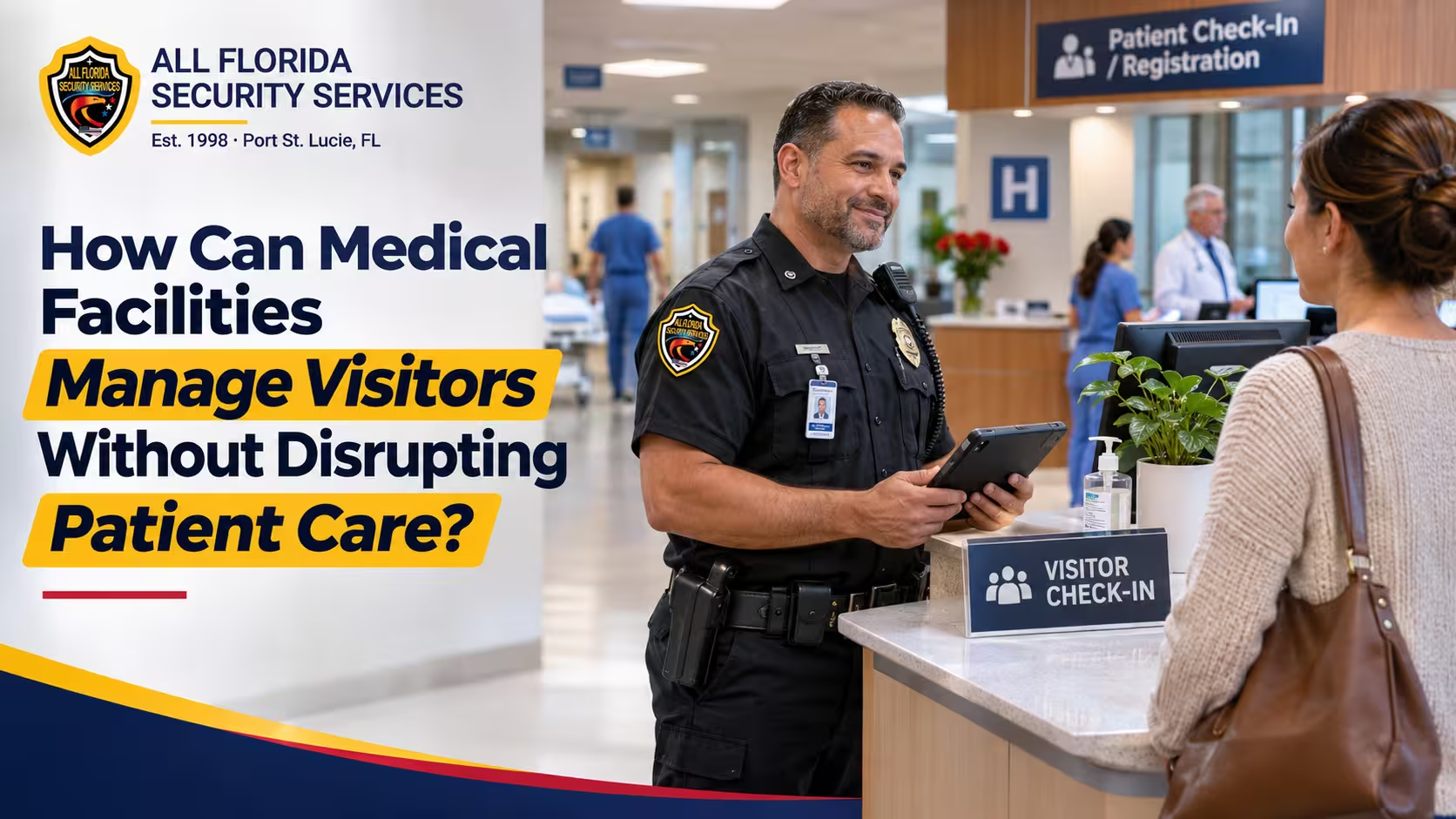
A busy hospital lobby can quickly become overwhelmed when several families arrive at once, patients check in for appointments, and visitors ask nurses for directions to their loved ones. Meanwhile, staff are moving between departments, and some clinical areas need restricted access. If visitor check-in is poorly managed, these situations can create delays, confusion, and unnecessary interruptions to patient care.
Medical facilities need a visitor management process that keeps entry organized, directs people to the right areas, and protects patients without making legitimate visits unnecessarily difficult.
Make Check-In Simple and Consistent
Visitor management begins at the front desk or designated entry. Staff should greet visitors, explain the check-in process, and collect only information needed under the facility’s policy. Depending on the site, this may include a name, reason for visit, destination, patient or appointment confirmation, and identification verification.
A consistent process avoids repeated questions. Reception staff should know when they can approve entry, when a clinical unit must confirm a visit, and when security should step in. Clear signs and a designated check-in point also reduce visitors wandering through hallways.
Use Visitor Badges and Destination-Based Access
A visitor badge makes it easier for staff to distinguish approved visitors from people who may be lost or entering without authorization. Badges should be visible and, where practical, indicate the permitted destination or visit type without displaying sensitive patient details.
| Visitor type | Typical access approach |
| Patient visitor | Confirm visit and follow the approved route |
| Appointment guest | Direct to registration or the relevant clinic |
| Vendor or contractor | Verify purpose, contact, and work area |
| Delivery personnel | Use designated drop-off points or approved routes |
Badges should be returned or deactivated at departure when the system supports it. Staff should not treat a badge as permission to enter every clinical area. Access remains limited to the destination and rules approved by the facility.
Match Visitor Rules to the Unit and Situation
A general lobby process may not be suitable for every department. Emergency departments, intensive care units, behavioral health areas, maternity units, and outpatient clinics can have different needs. Visitor limits may depend on patient condition, space, infection-control precautions, privacy, or clinical activity.
The policy should explain visiting hours, exceptions, and who can authorize them. When a family member arrives outside normal hours or a patient needs support, front desk personnel should have a clear way to contact the appropriate nurse or administrator rather than making assumptions or issuing automatic denials.
Keep Clinical Staff in the Communication Loop
Visitor security works best when reception and officers can quickly confirm what a care team has approved. A reliable contact path helps staff manage changes without repeated clinical interruptions.
Useful coordination practices include:
- Maintain an approved contact list for units and shift supervisors.
- Share only the visitor information needed to confirm access.
- Establish a process for urgent, compassionate, or exceptional visits.
- Notify the unit when a visitor is waiting for approval.
- Document unusual access decisions according to facility procedure.
For example, a visitor arriving during a procedure may need to wait. Reception can notify the unit once, explain the delay, and provide updates without repeatedly calling clinical staff.
Protect Patient Privacy Without Overcomplicating Access
HIPAA protects identifiable health information held by covered entities and their business associates. Visitor policies support privacy by limiting public discussion of patient details, controlling access to clinical areas, and training staff to handle questions discreetly.
However, HIPAA does not create one universal visitor screening rule for every medical facility. Facilities should base visitor authorization and restrictions on their own policies, patient preferences, care needs, safety risks, and applicable laws. Staff should avoid confirming sensitive information to someone whose authorization has not been established.
Plan for Accessibility and Different Visitor Needs
A smooth process accounts for visitors who use wheelchairs, have hearing or vision limitations, speak another language, or need help understanding directions. Visitor screening should not create avoidable barriers or turn routine visits into stressful encounters.
Facilities can provide clear signs, accessible counters, alternative communication, interpreter resources, and seating for visitors awaiting approval. Staff should offer directions or appropriate assistance instead of sending visitors through restricted corridors.
De-Escalate Delays and Escalate Security Concerns
Visitors may become upset when visiting hours change, access is denied, or a patient’s condition is uncertain. Officers should use a calm tone, listen without arguing, explain the next step, and avoid sharing information they are not authorized to provide.
A simple escalation path prevents confusion:
- Reception explains the policy and checks for an approved exception.
- A supervisor or clinical contact confirms the decision when needed.
- Security responds to threats, attempts to enter restricted areas, or escalating behavior.
- Staff document the incident and notify the appropriate administrator.
All Florida Security Services can support visitor management by coordinating front-entry security, access checks, and professional responses in line with facility procedures. The role is to help maintain a controlled environment while treating visitors respectfully and avoiding unnecessary disruption to patient care.
Measure Whether the Process Is Working
Review visitor procedures using practical indicators beyond badge counts. Leaders can track check-in wait times, incomplete registrations, unauthorized access attempts, complaints, repeated calls to clinical units, and visitor incidents.
These trends can reveal confusing signs, understaffed check-in periods, or unclear unit rules. Share adjustments with reception, security, and clinical teams to keep procedures consistent across shifts.
Frequently Asked Questions
Should every hospital visitor show identification?
Facilities may require identification based on their visitor policy, location, or risk level. The process should be clearly communicated and applied consistently, with a plan for visitors who cannot provide standard identification.
Can visitors go directly to a patient’s room?
That depends on the facility’s access rules and the unit. Visitors may need to check in first, receive a badge, and follow a designated route. Restricted areas require separate authorization.
How can visitor screening avoid delaying appointments?
Use clear signs, a staffed check-in point, simple instructions, and a process for confirming appointments. During busy periods, additional reception or security support can help prevent queues from spilling into clinical areas.
What should staff do if a visitor becomes disruptive?
Staff should avoid arguing, explain the applicable rule, and contact a supervisor or security when needed. Threats, attempts to enter restricted areas, or safety concerns should follow the facility’s escalation and incident-reporting procedures.
Are visitor restrictions required by HIPAA?
HIPAA protects patient information, but it does not prescribe one visitor limit or screening procedure for every facility. Healthcare organizations set access policies based on privacy, care needs, safety, and applicable requirements.
Final Thoughts: A Visitor Process That Supports Patient Care
Visitor management should protect clinical areas without making patients and families feel unwelcome. Consistent check-in, visible badges, unit-specific access, respectful communication, and clear exception procedures help medical facilities reduce confusion while supporting the flow of appointments and care.
All Florida Security Services provides medical facility security support, including visitor access coordination and security personnel who help enforce site procedures. A well-planned visitor process allows staff to focus on patients while visitors receive clear directions and appropriate assistance.