
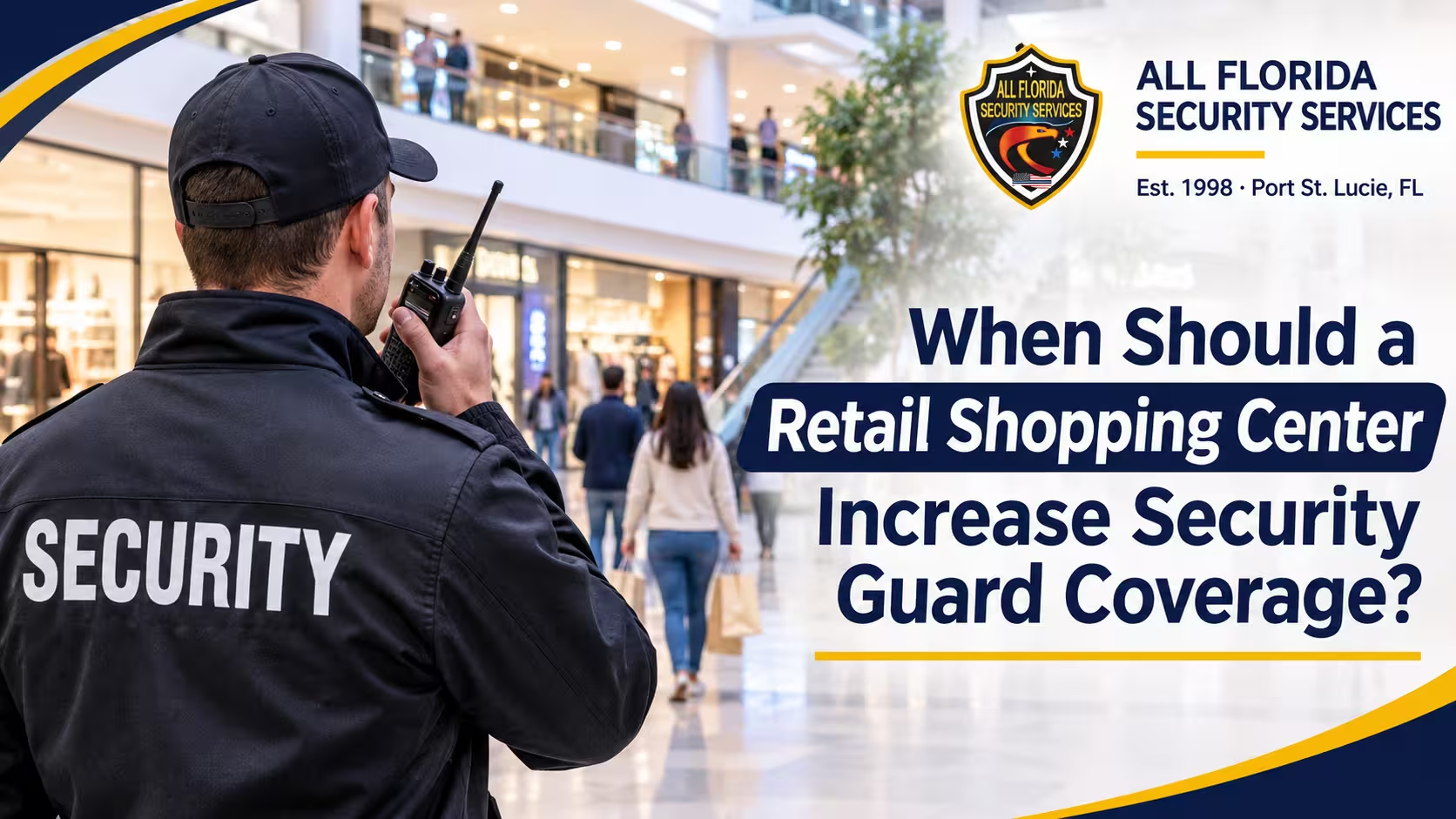
A Florida shopping center may have enough guards on a quiet weekday morning but fall short on a Saturday evening, during a holiday rush, or after several stores extend their hours. If tenants begin reporting thefts, parking lot disturbances, or slow responses in the same areas, the property manager has a reason to review the existing schedule rather than assume the coverage still fits.
Increasing staffing does not always mean adding guards around the clock. The decision should be based on where incidents happen, when visitor activity changes, and whether officers can respond without leaving other areas unprotected.
Let Incident Patterns, Not One-Off Events, Drive Changes
One isolated complaint may not justify a staffing increase. Repeated incidents in the same location or time window are more useful indicators. Managers should review guard logs, tenant reports, camera observations, and calls for assistance over several weeks.
Look for patterns such as:
- Theft or disturbances recurring near the same entrance or storefront.
- Vehicle break-ins concentrated in a particular parking section.
- Complaints that guards are unavailable when staff needs help.
- Officers repeatedly leaving fixed posts to respond elsewhere.
- Incidents clustering after dark, at closing time, or on weekends.
If several reports point to the same coverage gap, consider adding an officer during that period or assigning a patrol to the affected zone.
Match Coverage to Peak Shopping Hours
Foot traffic changes throughout the day and week. A center may be quiet at opening, busy after work, and crowded on weekends. Seasonal sales, school breaks, tourist activity, and promotional events can also create short-term demands.
| Period or activity | Possible staffing adjustment |
| Weekend afternoon rush | Add patrol presence at busy entrances and pedestrian routes |
| Holiday shopping | Temporary officers for crowd flow and parking activity |
| Late restaurant or entertainment hours | Extend coverage after retail stores close |
| Promotion or special event | Assign guards near event space, entrances, and traffic points |
| Early opening or late closing | Adjust shifts to cover tenant and customer movement |
Use traffic counts, tenant hours, and incident logs to determine when extra coverage is needed. Managers should consider the type of activity and previous incidents rather than relying on foot traffic alone.
Reassess Parking Lots and Property Layout
Security gaps often appear outside the storefronts. Large parking areas, poorly lit walkways, multiple access roads, loading zones, and isolated corners can be difficult to cover from one fixed post. A vacant unit, construction project, or landscaping change may also create a new blind spot.
During a site walk, note:
- Parking areas with repeated theft, vehicle damage, or suspicious activity.
- Entrances and exits with limited visibility.
- Vacant storefronts, rear corridors, and service doors.
- Loading areas used outside normal business hours.
- Walkways between distant sections of the property.
If one officer cannot reach recurring problem areas promptly while maintaining other assignments, added coverage may be warranted.
Take Tenant Complaints Seriously and Verify Them
Store employees may notice issues before they appear in formal incident reports. Examples include customers lingering near staff entrances, repeated unwanted interactions, arguments outside a store, or employees feeling exposed during closing procedures.
Property management should record complaints with the time, location, and specific behavior reported. Ask whether other tenants have noticed the same issue and review available footage or patrol notes when appropriate. This helps distinguish an isolated concern from a recurring problem.
Change Posts and Shifts Before Adding Hours Everywhere
Sometimes the existing guard team can be deployed more effectively. A fixed post may be needed at one entrance while mobile patrols cover the perimeter and parking areas. Shift overlap can help during closing time or busy handoffs.
| Coverage option | Best fit |
| Fixed post | A particular entrance or area needs steady observation |
| Mobile patrol | Several exterior or parking zones need checks |
| Overlapping shifts | Busy periods or guard handoffs leave temporary gaps |
| Temporary event coverage | Sales, festivals, or promotions have a defined end |
| Ongoing added staffing | Problems persist across days or shifts |
Before changing assignments, check post orders and communication procedures. Moving the only officer from an entrance to the parking lot may fix one gap but create another.
Decide Whether Extra Coverage Is Temporary or Permanent
Temporary coverage works well when demand has a clear endpoint, such as a holiday sale, grand opening, construction period, or special event. Managers can schedule extra hours in advance and review incident reports when the event ends.
Ongoing coverage is more reasonable when incidents continue outside seasonal periods, tenants repeatedly raise the same concerns, or operating hours have permanently expanded.
Compare incidents, response times, tenant feedback, and patrol records before and after the change. If reports drop while extra officers are present but return after coverage is removed, management should determine whether the risk remains or has shifted to another area.
Build a Coverage Plan That Can Be Measured
A staffing review should identify the specific location, hours, incidents, and tasks that need attention. Clear assignments help guards understand where they should be, while property managers can avoid paying for hours that do not address an identified need.
All Florida Security Services provides security coverage for commercial properties, with staffing plans shaped around site conditions, operating hours, and identified risks.
Frequently Asked Questions
When should a shopping center add more security guards?
Consider added coverage when incident reports show recurring problems, tenant complaints increase, operating hours change, or the existing schedule cannot cover busy areas effectively.
Should security increase during holiday shopping?
It may be appropriate if visitor volume, parking activity, or incidents rise. Review previous seasonal reports and plan temporary shifts around the busiest periods.
Does a shopping center need parking lot guards?
Not every property needs a dedicated parking officer. Repeated vehicle incidents, isolated sections, poor visibility, or delayed response may support more patrols or a dedicated post.
Is temporary coverage better than permanent staffing?
Temporary coverage suits events and seasonal peaks with clear end dates. Persistent incidents or permanently longer hours may call for a regular staffing change.
How can managers tell if added coverage is working?
Compare incident reports, response times, patrol logs, and tenant feedback before and after the change. Review the results on a set date and adjust if gaps remain.
Final Thoughts: Increase Coverage Where It Is Needed
Shopping centers should increase security guard coverage when incidents, visitor patterns, tenant concerns, or property changes show that current staffing no longer fits. Reviewing specific areas and time periods helps managers make targeted adjustments instead of expanding every shift.
All Florida Security Services provides commercial security services to help shopping center managers plan coverage around their property’s needs and operating conditions.