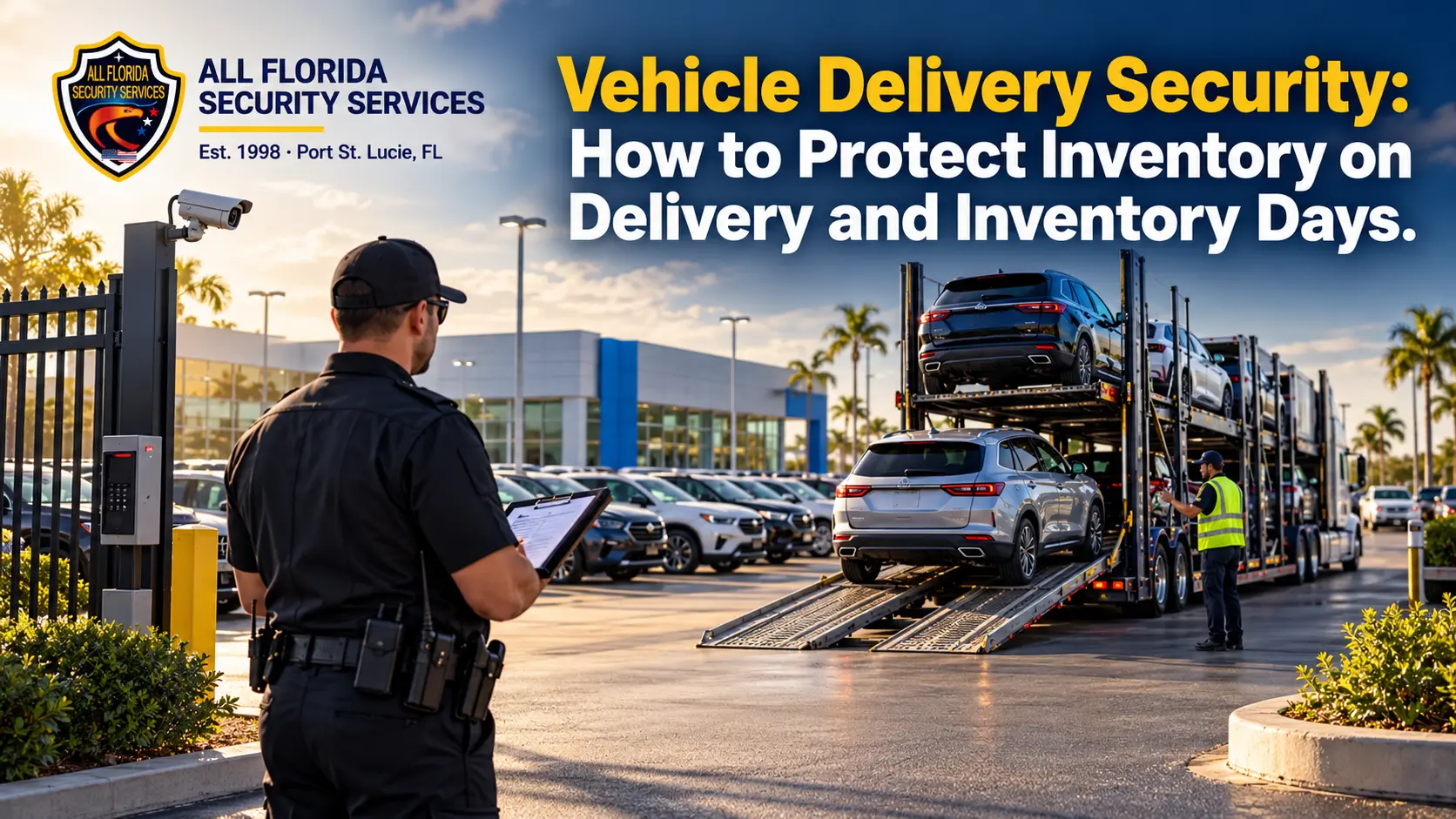
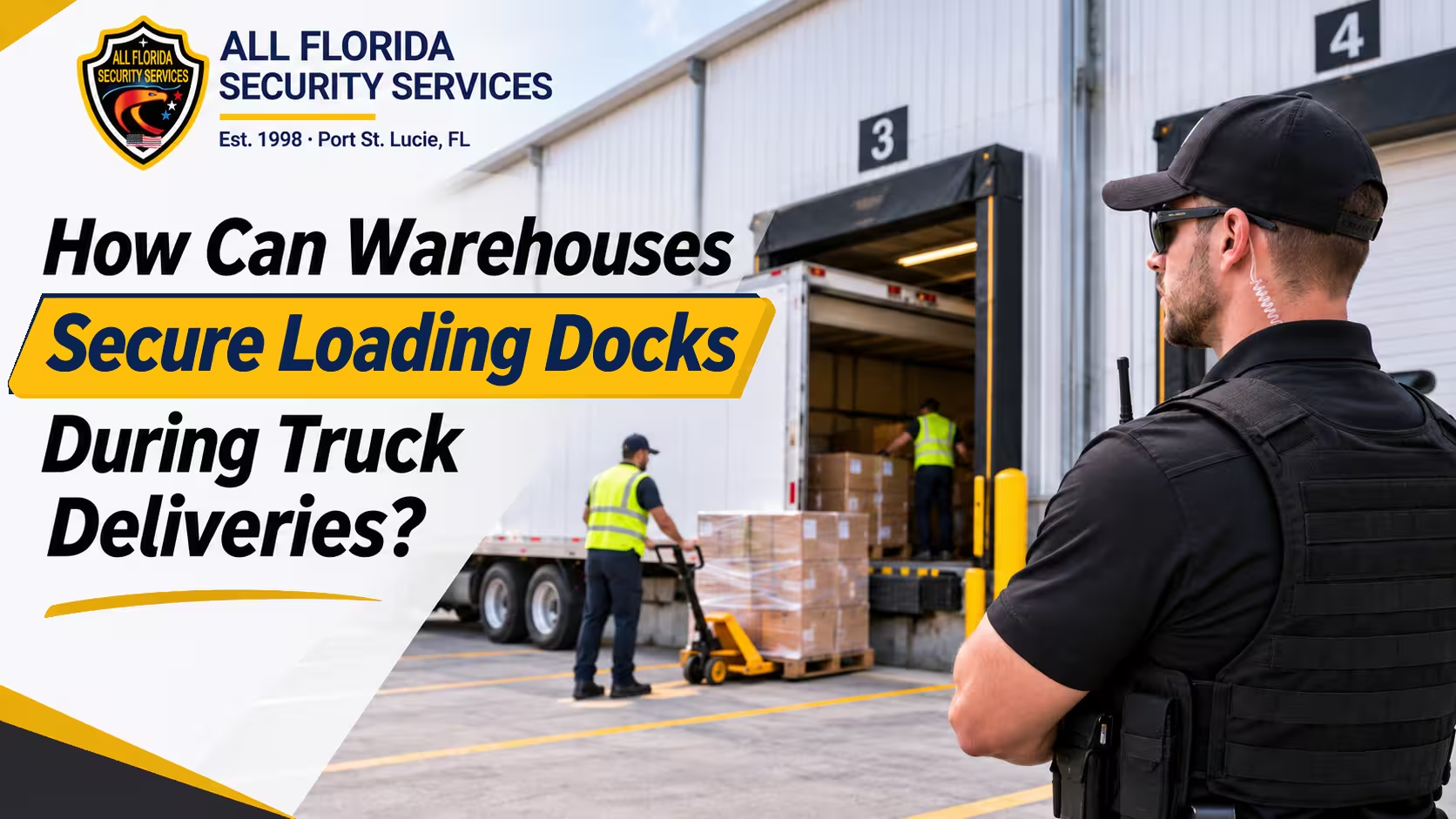
A truck arrives at a Florida distribution center during a busy afternoon shift. The driver presents a delivery reference, but the appointment is missing from the warehouse schedule. Nearby, workers are preparing another trailer for unloading. If staff allow the truck inside without checking its details, an unauthorized shipment could reach the wrong dock.
This is why loading dock security must cover every stage of a delivery, not just the warehouse entrance. Driver identity, appointment details, trailer seals, dock permissions, cargo counts, and departure records all need to match. A clear handoff process helps warehouse operators prevent unauthorized movement and reduce cargo theft.
Why Loading Docks Need Special Security Procedures
A loading dock connects public roads with valuable inventory and restricted work areas. Drivers, carriers, dock workers, and supervisors handle different parts of a shipment, creating opportunities for mistakes or unauthorized activity.
Common gaps include unverified arrivals, trailer seals removed before inspection, freight moved without approval, visitors entering storage areas, and outbound loads released too early. A clear process assigns responsibility for each check.
Control the Delivery From Arrival to Departure
A secure delivery follows a consistent sequence, with an assigned employee and record for each check.
- Driver arrival and check-in: Confirm identification, carrier information, vehicle details, and the scheduled delivery.
- Shipment and seal verification: Compare the trailer seal and delivery documents before unloading begins.
- Dock assignment: Direct the verified truck to its assigned door and restrict access to authorized personnel.
- Cargo inspection: Match delivered items against the bill of lading and record any discrepancies.
- Outbound authorization: Verify the release documents, driver, trailer, and seal before the vehicle leaves.
A missed check should place the shipment on hold until a supervisor resolves the issue.
Verify Drivers and Delivery Appointments
The first security checkpoint should be outside the active loading area. Staff must confirm that the driver and truck are expected. A familiar carrier name alone does not prove that a delivery or pickup is authorized.
| Verification detail | What staff should check |
| Driver identity | Photo identification and carrier details |
| Appointment | Scheduled date, time, and delivery reference |
| Vehicle | Tractor and trailer identification |
| Shipment | Purchase order or bill of lading |
| Dock assignment | Approved door and receiving contact |
Unscheduled arrivals should wait in a designated area while staff contacts the dock supervisor. Drivers should not choose a dock door or enter the warehouse to seek approval.
Inspect Trailer Seals Before Unloading
Trailer seals help indicate whether freight remained secured during transportation. Before opening a trailer, staff should compare the seal number with shipping documents and check for visible damage or tampering.
A damaged, missing, or mismatched seal does not prove theft, but it requires investigation. Pause unloading and record the seal number, trailer identification, inspection time, seal condition, and employee responsible.
Photographs can support incident records when permitted. Staff should contact the carrier or shipper through an established contact instead of relying only on the driver’s explanation.
Restrict Dock Door Access During Cargo Handoffs
Drivers may need a check-in station or waiting area, but not unrestricted warehouse entry. Dock doors, inventory aisles, staging zones, and shipping offices should remain limited to approved personnel.
Different security measures support different parts of the process:
| Security measure | How it helps |
| Badge-controlled doors | Limits entry to approved employees |
| Visitor logs | Records authorized nonemployee access |
| Vehicle restraints | Helps prevent unintended trailer movement |
| Video surveillance | Records activity around dock doors |
| Security officers | Monitors access and reports suspicious activity |
These measures work best together: camera footage may show an entry, while access logs help establish whether the person had permission.
Match Cargo With Delivery Documents
A correct seal does not guarantee that the contents match the order. Receiving staff should compare the shipment with the bill of lading, purchase order, or warehouse management system.
A receiving inspection should look for:
- Missing cartons or pallets.
- Unexpected products or quantities.
- Damaged packaging.
- Incorrect shipment references.
- Items that do not match the receiving order.
If paperwork lists 40 cartons but staff counts 36, they should recount, document the shortage, and notify the supervisor before finalizing the record. Employees should not change quantities or sign a clean receipt to finish faster.
Secure Outbound Shipments and Trailer Departures
Security checks must continue after unloading. The wrong driver could collect freight, or a trailer could leave without approval.
Before a loaded trailer departs, the responsible employee should confirm that the shipment matches its release documents, the driver and carrier are authorized, and the trailer identification is recorded. Any required seal should be applied and its number entered into the shipping record.
Staff should confirm the dock door is clear and release vehicle restraints according to procedure. Only an authorized employee should approve departure, even if the driver is under dispatch pressure.
Make Cameras, Logs, and Security Officers Work Together
Cameras should cover vehicle entrances, check-in stations, trailer doors, cargo staging areas, and outbound gates. Accurate timestamps help investigators review missing freight or disputed handoffs.
Security officers can monitor access points, verify visitors, observe unusual activity, and report exceptions. All Florida Security Services supports warehouse operations through security officers who monitor loading dock activity and help maintain controlled access. Guards should not approve shipment releases unless that authority is assigned.
What Should Staff Do When a Security Check Fails?
A failed verification should trigger a consistent response, not an informal decision.
| Problem | Appropriate response |
| Driver is not scheduled | Hold the vehicle outside the active dock |
| Seal number does not match | Pause unloading and notify the supervisor |
| Cargo quantity is incorrect | Document the discrepancy before acceptance |
| Unauthorized person enters | Restrict access and report the incident |
| Outbound release is incomplete | Keep the trailer secured until approval |
Managers should review incident records for recurring gaps, such as weak appointment controls, unclear responsibilities, poor camera coverage, or incomplete documentation. These patterns show where procedures need improvement.
Frequently Asked Questions
Why is driver verification important at loading docks?
It helps prevent unauthorized entry or freight collection and confirms the correct carrier has arrived.
Should a warehouse unload a trailer with a broken seal?
Staff should pause unloading, notify a supervisor, and record the seal condition, trailer details, and shipping documents before deciding whether to accept the load.
How do warehouses prevent loading dock theft?
Driver checks, controlled access, seal inspections, cargo reconciliation, cameras, and documented releases help reduce theft.
What information should a loading dock security log contain?
Logs should include arrival and departure times, driver and carrier details, vehicle and seal numbers, dock assignment, shipment references, and discrepancies.
Do security officers need to monitor loading docks?
They can monitor access, verify visitors, observe suspicious activity, and report incidents within their assigned authority.
Final Thoughts: Protect Every Stage of the Cargo Handoff
Loading dock security depends on consistent checks from the moment a truck arrives until its departure is approved. Driver verification, trailer seal inspections, controlled access, accurate cargo records, and outbound authorization help reduce opportunities for theft and unauthorized movement.
For Florida warehouses reviewing their delivery security arrangements, All Florida Security Services provides security coverage for active loading areas, with officers monitoring access points, observing dock activity, and reporting security concerns. Effective oversight supports accountable cargo handoffs while keeping daily warehouse operations organized.