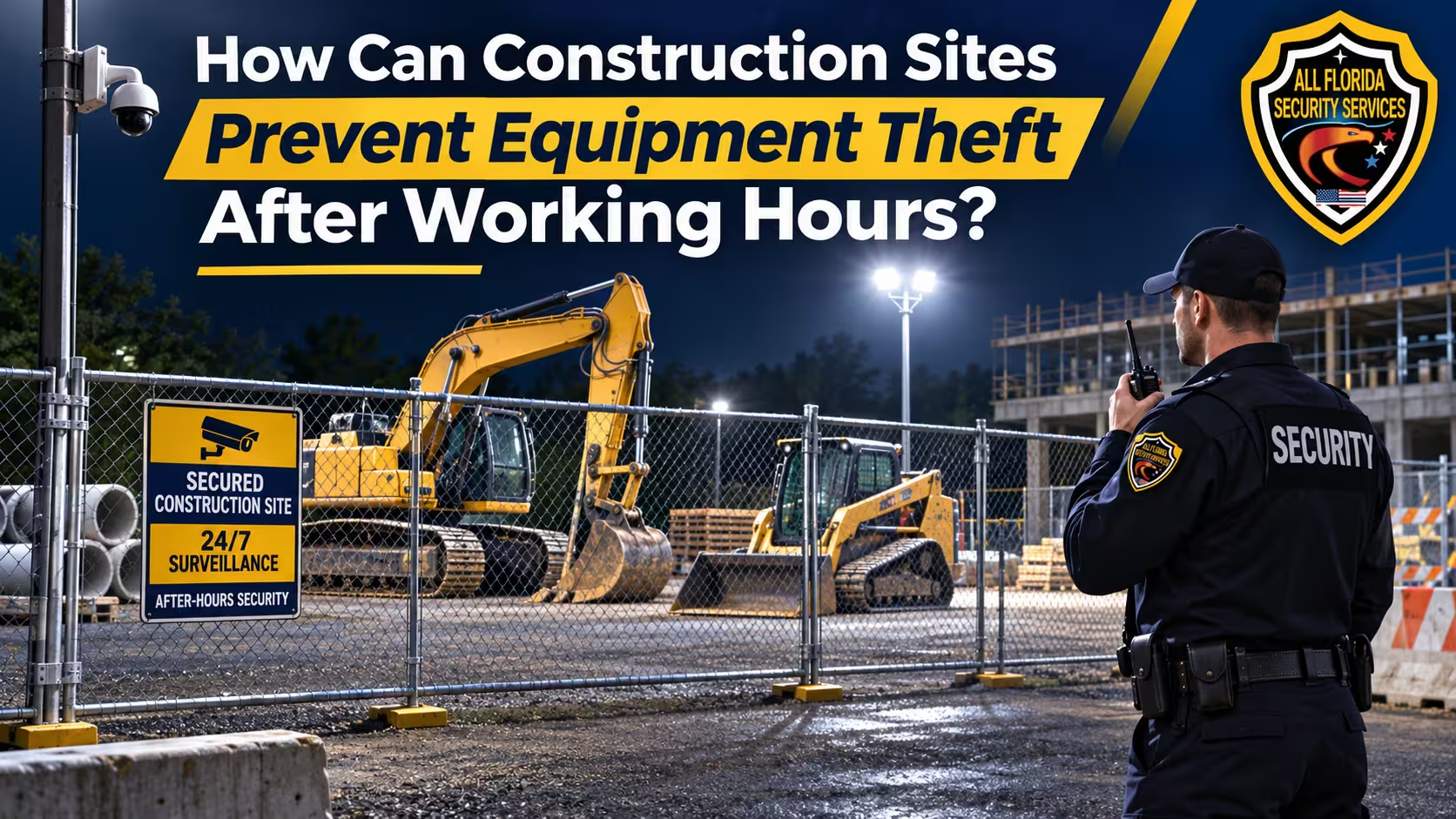
Expensive equipment, tools, trailers and materials are frequently left on construction sites overnight. After the work crews have departed, there is less manpower available to monitor unauthorized access or unusual equipment movement. An excavator left near an open gate or a generator stored in an unlocked container can become an easy target.
The best ways to prevent construction equipment theft include a well-defined closing procedure, keys under control, equipment safekeeping, well-maintained equipment inventories and overnight monitoring. These measures are all combined to facilitate slow access, identification of missing assets and Overnight Observation.
Why After-Hours Equipment Protection Matters
Once the crews leave, deliveries cease, and temporary access points may not be as well maintained. They can steal mobile machinery, portable equipment, or trailers that contain multiple pieces of valuable equipment.
According to the Associated General Contractors of America (AGCA), Florida’s construction industry added $101 billion, or 5.7% of the state’s gross domestic product (GDP), in the 2025 fact sheet. In September 2025, a Florida investigation was announced into approximately $2 million in equipment, trailers, and utility vehicles being stolen in 45 felony cases in 17 jurisdictions.
The case demonstrates that overnight asset protection is an operational issue that the contractor ought not to wait to address as an afterthought.
Make the End-of-Shift Inspection Consistent
Assign a named supervisor or employee to complete and record the same closing inspection each evening.
End-of-shift checklist
- Compare the value of machinery, trailers, generators, etc and tool containers to the current site inventory.
- Park excavators, skid steers, lifts, and other machinery in the designated secured area.
- Dislodge and turn off machinery as specified by the manufacturer.
- Lock toolboxes, fuel areas, site offices and secure cabs and remove keys.
- Close and secure open gates, temporary entrances and perimeter openings.
- Inspect lighting, cameras, alarms and communication systems.
- Record equipment that was taken off site, transferred from one work site to another, or left for the next day.
For example, if the inventory lists two skid steers and one excavator, the closing record should confirm all three locations. If transferring to another project, include authorization & destination.
Control Keys and Restrict After-Hours Access
Leaving a key in an ignition or storing spare keys in an unlocked site office undermines other security measures. Set one process for issuing, returning, and storing keys so supervisors know who has access to each machine.
- Assign keys or access credentials to specific equipment and authorized users.
- Record the person receiving each key and the time it is issued.
- Collect keys at shift end and store them in a locked, access-controlled location.
- Limit spare-key access to designated supervisors.
- Report missing keys immediately and follow the equipment owner’s replacement or reprogramming procedure.
Keep access lists current. Approve after-hours entry, record each visitor’s name and purpose, and specify the permitted area and time.
| Helpful note: A gate code shared among multiple crews is difficult to audit. Individual credentials or a written access log make it easier to determine who entered the site and when. |
Arrange Equipment to Make Removal Harder
The location of equipment matters as much as whether it is locked. Keep high-value machinery away from public roads, convenient loading areas, and isolated perimeter sections when the site layout allows. Store portable tools in locked gang boxes or containers, and secure trailers with suitable hitch or wheel devices.
| Asset | Overnight protection |
| Excavators and skid steers | Park in a controlled area, remove keys, secure the cab, and record the machine ID |
| Trailers and generators | Lock compartments and use approved hitch or wheel security devices |
| Portable tools | Store in locked containers and track assigned kits |
| Fuel and materials | Restrict access and record unusual quantity changes |
Do not position equipment in a way that blocks emergency access, fire lanes, or required clearances. Use immobilizers and other devices only when suitable for the equipment and consistent with manufacturer instructions.
Match Overnight Security Coverage to Site Conditions
Choose coverage based on equipment value, site size, entrances, lighting, public access, incident history, and camera or alarm monitoring. A small renovation site may need a different plan from a large project with several access roads.
Overnight responsibilities should be written down. A security guard’s assignment may include checking approved entry, observing machinery areas, patrolling designated routes, documenting gate or fence conditions, and reporting suspicious activity. If remote video monitoring is used, specify who receives alerts and who responds when activity is detected.
In Florida, All Florida Security Services can assess after-hours construction site exposure and determine guard coverage based on equipment placement, access points, and overnight site conditions.
Warning signs that need follow-up
- A gate, fence panel, or lock is damaged or left unsecured.
- Equipment is not in its recorded overnight location.
- A camera, alarm, or light is not operating.
- An unknown vehicle or person is recorded near storage areas.
- Key records or visitor logs contain unexplained gaps.
Do not ask guards or employees to confront suspected intruders. They should move to safety, follow the site response plan, and contact law enforcement when appropriate.
Keep Inventory and Incident Records Useful
Record each asset’s make, model, serial number, fleet number, photographs, ownership or rental details, and normal location. Update the inventory whenever equipment arrives, leaves, changes work zones, or returns to a rental provider.
If theft or attempted theft occurs, document the discovery time, last confirmed sighting, missing asset details, estimated value, and visible damage. Preserve camera footage and access logs before routine deletion. Photograph disturbed gates, locks, and storage areas, then notify the project manager, equipment owner or rental company, insurer, and law enforcement as appropriate. Avoid disturbing potential evidence until authorities advise.
Review the Plan as the Project Changes
Review security whenever fencing, entrances, equipment, or subcontractors change. Confirm that key holders, access permissions, patrol routes, and equipment locations still match the project.
Frequently Asked Questions
What construction equipment is commonly targeted after hours?
Portable tools, generators, trailers, skid steers, excavators, and utility vehicles may attract thieves because they have resale value or can be moved from a site. Risk depends on equipment, location, and site controls.
Does Installing a Fence Provide Enough Protection Against Construction Site Theft?
No. Fencing creates a boundary, but it does not secure keys, track equipment, verify visitors, or provide a response when someone enters. Combine barriers with closing inspections, controlled access, inventory records, and suitable overnight monitoring.
Should equipment keys be removed every night?
Yes. Remove keys or access credentials after shutdown and store them in a controlled location. Do not leave spare keys inside machinery, vehicles, unlocked offices, or tool containers.
Are overnight guards better than camera monitoring?
Guards observe, verify access, patrol, and report; cameras record activity and may support remote monitoring. The right combination depends on site layout and response arrangements.
Final Thoughts: Protect Equipment Before the Crew Leaves
Construction equipment theft prevention starts before the site becomes empty. A documented shutdown routine, controlled keys, secure storage, current inventory, and defined overnight coverage reduce opportunities for unauthorized access and help supervisors spot problems sooner. All Florida Security Services can evaluate construction site vulnerabilities and provide appropriate after-hours security guard coverage for the project.