
Most HOA boards know they need better security. Where they get stuck is the vendor-selection stage. Without a clear process, boards end up comparing mismatched quotes and picking whoever sounds the most confident on the phone. This article gives Florida board members a complete, sequential HOA Security RFP checklist. It covers everything from legal prerequisites to proposal scoring. It will enable your board to make a well-documented decision instead of choosing based on the lowest bid or a personal referral.
What Is an HOA Security RFP, and Why Does Florida Require a Formal Process?
An HOA Security RFP is a formal, written solicitation document. It is not the same as calling two or three guard companies and asking what they charge. A real RFP spells out the community’s scope of work, licensing and qualification requirements for licensed residential security guards, and how proposals will be scored. Boards should also review sample security incident report templates to understand documentation expectations. Every vendor bids on the same terms, which is the only way your board can compare responses fairly.
Board members owe the association a duty of care in how they spend money, including on security contracts. A documented, competitive RFP process protects the board if a vendor turns out to be underqualified or if a security incident happens later. Skipping that process and hand-picking a vendor can expose individual board members to claims of favoritism or negligent selection.
When a Formal RFP Becomes Necessary
Not every security decision needs a full RFP, but these situations usually call for one:
- The proposed contract value exceeds the board’s discretionary spending authority under the association’s bylaws or Florida Statutes Chapter 720/718 competitive-bid thresholds.
- The community is transitioning from no security presence to guarded or gated access control.
- A prior vendor’s contract is expiring or being terminated for performance issues.
- The board is responding to a security incident, insurance requirement, or resident petition.
Florida HOA Security Requirements Boards Must Confirm Before Issuing an RFP
Before you write a single line of scope, confirm your community actually has the legal footing to move forward. This step gets skipped more often than you’d think, and it’s where a lot of Florida boards run into trouble later.
1. Verify FDACS Security Licensing (Class B, D, and G)
Florida runs a three-tier private security licensing system through the Florida Department of Agriculture and Consumer Services. A Class B license is the agency license a company must hold to legally operate and staff guards. Class D covers individual unarmed officers, and Class G covers individual armed officers. A guard holding a Class D or G license doesn’t mean the company employing them is licensed to operate as a security firm. Only an active Class B license grants that authority.
Require proof of active Class B licensing directly in every RFP response. Don’t stop there. Check the license status yourself through the FDACS public licensing database before anyone signs a contract. Vendors misrepresent or let licenses lapse more often than boards expect, and self-reported credentials aren’t proof of anything.
2. Set Minimum Insurance and Bonding Requirements
Insurance gaps are one of the most common blind spots in HOA vendor contracts. Set these minimums before you accept a proposal:
- General Liability Coverage: Require a minimum coverage amount, commonly $1M–$2M per occurrence for community-facing security work, and require the association be named as an additional insured on the certificate.
- Workers’ Compensation: Confirm the vendor carries active coverage for all deployed personnel, since Florida law requires this for most employers with security staff on-site.
- Fidelity/Crime Bonding: Require bonding for personnel who will have access control credentials, keys, or fobs, given the elevated theft and liability exposure in gated and condominium settings.
3. Align the RFP Scope With Governing Documents and State Statutes
Before drafting scope language, check what your declaration, bylaws, and Florida Statutes Chapter 720 (HOAs) or Chapter 718 (condominiums) actually authorize. That includes security spending limits and competitive bidding disclosure requirements for contracts above statutory thresholds. Skipping this step is one of the most common reasons an otherwise well-run RFP process gets challenged by residents after the fact.
HOA Board Security Checklist: The Step-by-Step RFP Process
With the legal groundwork confirmed, it is time to build the actual RFP. This is the part of the HOA Board Security Checklist your board will follow start to finish.
1. Conduct a Community Security Assessment Before Writing the RFP
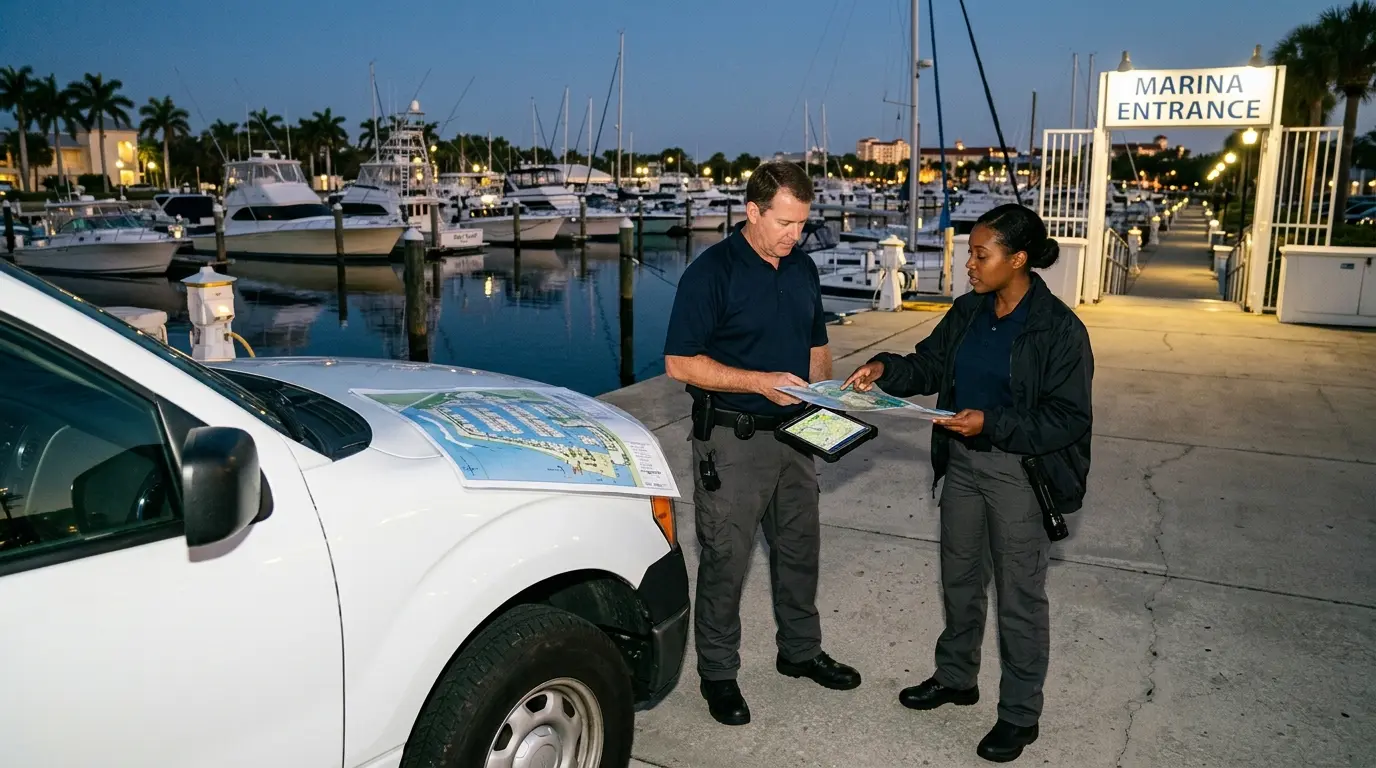
An RFP written without a prior risk assessment produces vague proposals that can’t be scored against each other. Document crime trends in the surrounding area, prior on-site incidents, and unsecured entry points. A board member can do this walkthrough, or you can bring in a third-party security consultant. Either way, do it before drafting the scope language.
2. Define Scope of Services by Community Type
Scope language needs to match your property, not a generic template. Different community types carry different risk profiles.
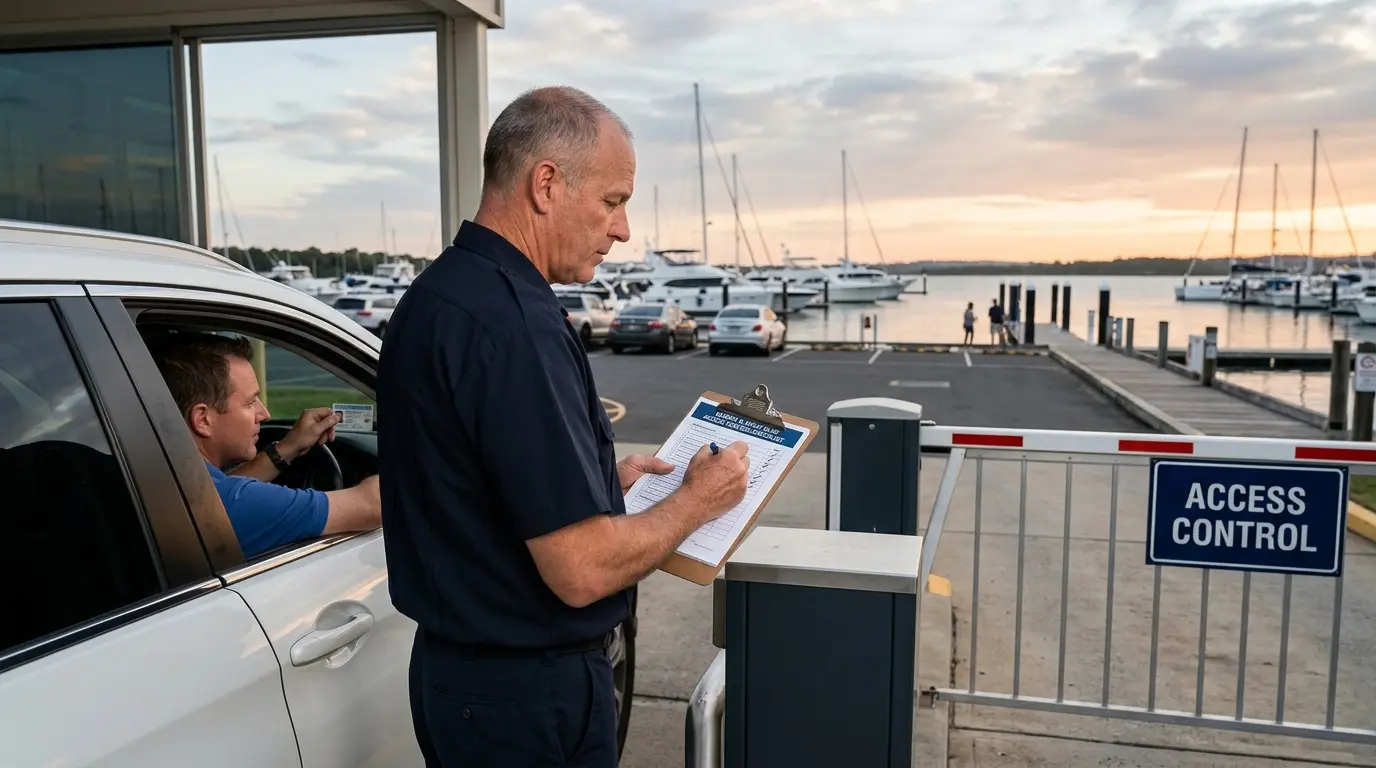
- Gated Community Security Services: Specify gatehouse staffing hours, visitor verification protocol, and gatehouse access procedures, vehicle patrol frequency, and license plate recognition requirements if applicable.
- Condominium Security Checklist Items: Specify lobby or concierge coverage, elevator access control, parking garage patrol, and package room monitoring given shared building risk.
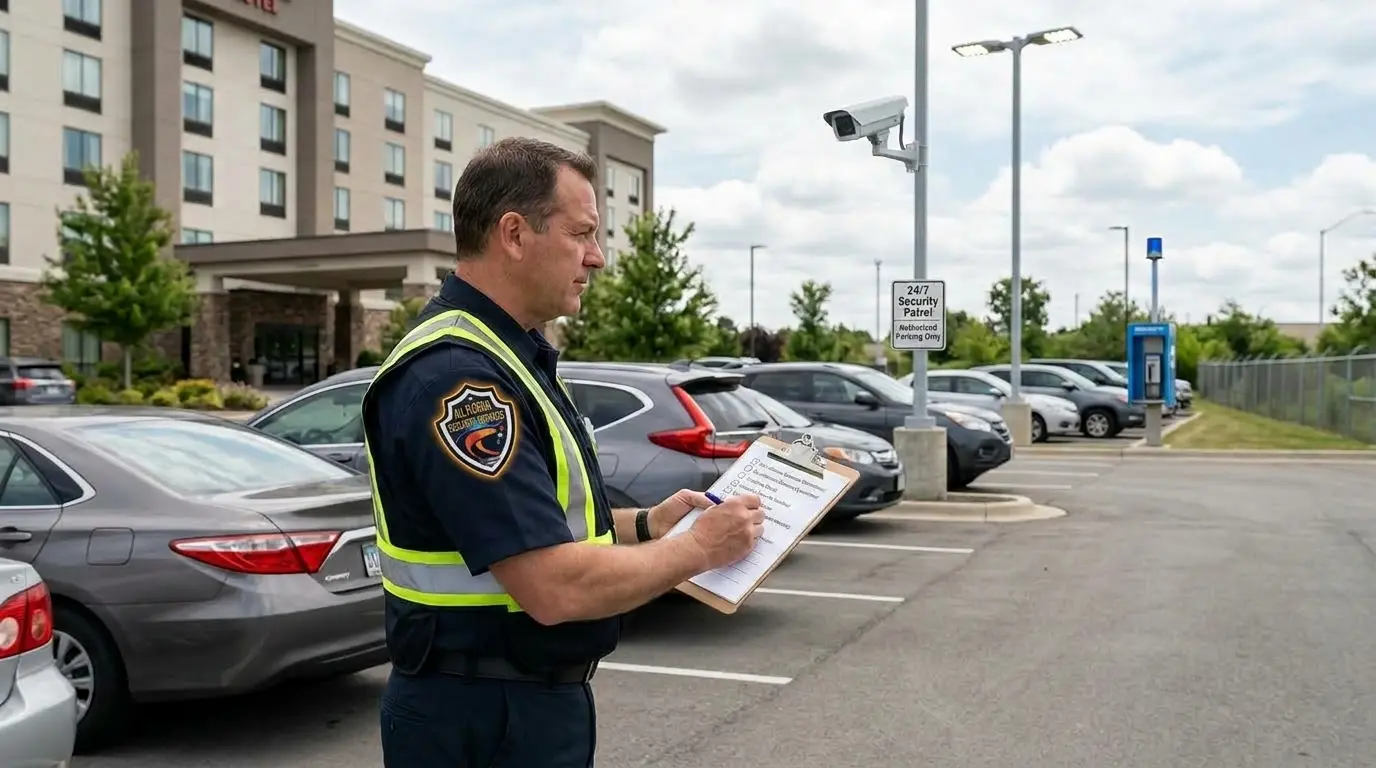
- Single-Family HOA Patrol Needs: Specify mobile patrol frequency, common-area checks, and after-hours response protocol where there’s no controlled perimeter.
3. Draft Vendor Qualification Requirements
Every vendor response should include the same non-negotiable disclosures: an active FDACS Class B license number and proof of insurance meeting your board-set minimums. Also look for their years operating in Florida, staffing and supervision ratios, and at least three references from comparable Florida communities. Ideally those references come from gated or condominium properties with a similar unit count, so the comparison actually means something.
4. Set Evaluation Criteria in Advance
Assign numeric weights to evaluation categories, pricing, staffing quality, patrol log evaluation standards, technology, references, and local presence before vetting any proposals. Deciding weights after you have seen the bids invites bias, even unintentionally. Setting them in advance keeps scoring objective and gives the board a defensible answer if a losing vendor or resident questions the outcome.
5. Set Submission Requirements and Timeline
- A clear timeline keeps the process fair and prevents any one vendor from getting an information advantage.
- Require a mandatory or optional pre-bid site walk so all vendors quote against the same physical conditions.
- Set a firm written-question deadline and distribute one consolidated addendum to all bidders, not individual answers.
- Set a submission deadline and a target board decision date, allowing time for reference checks and license verification before the vote.
Security Vendor Selection Criteria: How to Score Competing Proposals
Once the bids are in, the real work starts. This is where a lot of boards default to whoever quoted the lowest number, and it’s a serious mistake.
The lowest-priced proposal is rarely the best value once staffing quality and licensing risk get factored in. The following scoring table will keep your board’s decision grounded in evidence instead of sticker price. Use it during your HOA security proposal evaluation meeting so every board member is scoring against the same standard.
| Evaluation Criteria | What a Strong Proposal Shows | Red Flags to Watch For |
| Pricing Structure | Itemized cost per post/hour, clear overtime and holiday rates | Flat lump-sum with no breakdown |
| Licensing & Compliance | Active FDACS Class B number, per-officer Class D/G verification process | Reluctance to provide license numbers |
| Staffing & Supervision | Named supervisor, defined guard-to-post ratios, and HOA security guard evaluation criteria, backup coverage plan | No named on-site supervision |
| Training Standards | Site-specific onboarding beyond the state-mandated 40-hour course | Generic, one-size-fits-all training |
| Technology Integration | Compatible with existing access control/camera systems | Proprietary systems requiring full replacement |
| References & Track Record | Multiple current Florida HOA/condo references, similar unit count | References limited to commercial, not residential, clients |
Matching Security Services to Your Property Type
Scope language that ignores your property type weakens the whole RFP. Community association security planning works best when the requested services actually match the risks your property faces.
| Community Type | Primary Security Priorities | Typical RFP Scope Items |
| Gated Single-Family HOA | Perimeter control, visitor screening | Gate staffing, LPR technology, patrol frequency |
| Mid-Rise/High-Rise Condominium | Building access, shared amenity monitoring | Concierge/front desk staffing, elevator credentialing, parking garage coverage |
| Non-Gated HOA | Deterrence and rapid response | Mobile patrol schedule, lighting audits, incident reporting protocol |
Boards choosing between mobile patrol vs gate guard options should factor community layout into their RFP scope.
Common Mistakes Florida Boards Make During Security Vendor Selection
Even boards that follow most of this process trip up on a handful of recurring issues. Watch for these before you finalize a contract.
- Choosing on Price Alone: Awarding the contract to the lowest bid without weighting staffing quality or licensing compliance. You will have to absorb the cost of turnover and retraining later.
- Skipping Independent License Verification: Trusting a vendor’s self-reported FDACS status instead of confirming it directly through the state database.
- Vague Scope Language: Writing scope so loosely that bids are not comparable, forcing the board to negotiate terms after the vendor is already selected.
- No Defined Exit Clause: Signing a contract without a termination-for-convenience or performance clause, leaving the association locked in even if service quality drops.
HOA Security RFP Checklist (Quick-Reference Summary)
Bring this list into your next board meeting or attach it to the RFP file for reference.
- Complete a community security risk assessment before drafting scope.
- Confirm governing document and Florida Statute authority for the spend level.
- Set minimum FDACS Class B licensing and insurance requirements.
- Define scope by community type (gated, condo, or single-family).
- Draft vendor qualification and reference requirements.
- Set weighted evaluation criteria before proposals are received.
- Schedule a site walk and set a firm submission deadline.
- Score proposals against the criteria table, not price alone.
- Independently verify licensing before signing.
- Confirm the contract includes a clear termination clause.
Get a Florida-Licensed Security Proposal for Your Community
Building an RFP from scratch takes time your board may not have, and getting the scope wrong costs even more. All Florida Security Services works with HOA and condo boards across Florida to scope security plans, provide licensed guard proposals, and help boards compare options with confidence. If your community is ready to start the process, reach out to All Florida Security Services for a site assessment and a residential HOA security proposal built around your property’s actual needs.
Frequently Asked Questions
Does a Florida HOA legally have to issue a formal RFP for security services?
Not always. Florida Statutes set competitive-bid thresholds that trigger a formal process once a contract exceeds a certain dollar amount. Even below that threshold, running an RFP protects the board’s fiduciary standing and gives residents confidence the selection was done carefully.
How do I verify a security company’s FDACS license is real?
FDACS runs a free public Division of Licensing lookup tool online. Search the company’s license number or name and confirm the status reads “active” with no disciplinary flags. A lapsed or pending license is a dealbreaker, no matter what the vendor claims.
Should the board or the property management company run the RFP process?
Either one can handle the day-to-day logistics, like distributing the RFP and collecting responses. The board still holds final approval and fiduciary responsibility for the decision, regardless of who manages the paperwork along the way.
How many vendor proposals should a board collect before deciding?
Aim for at least three qualified bids. Fewer than that makes it hard to judge whether pricing and service levels are competitive. It also weakens the board’s position if the decision is ever questioned.