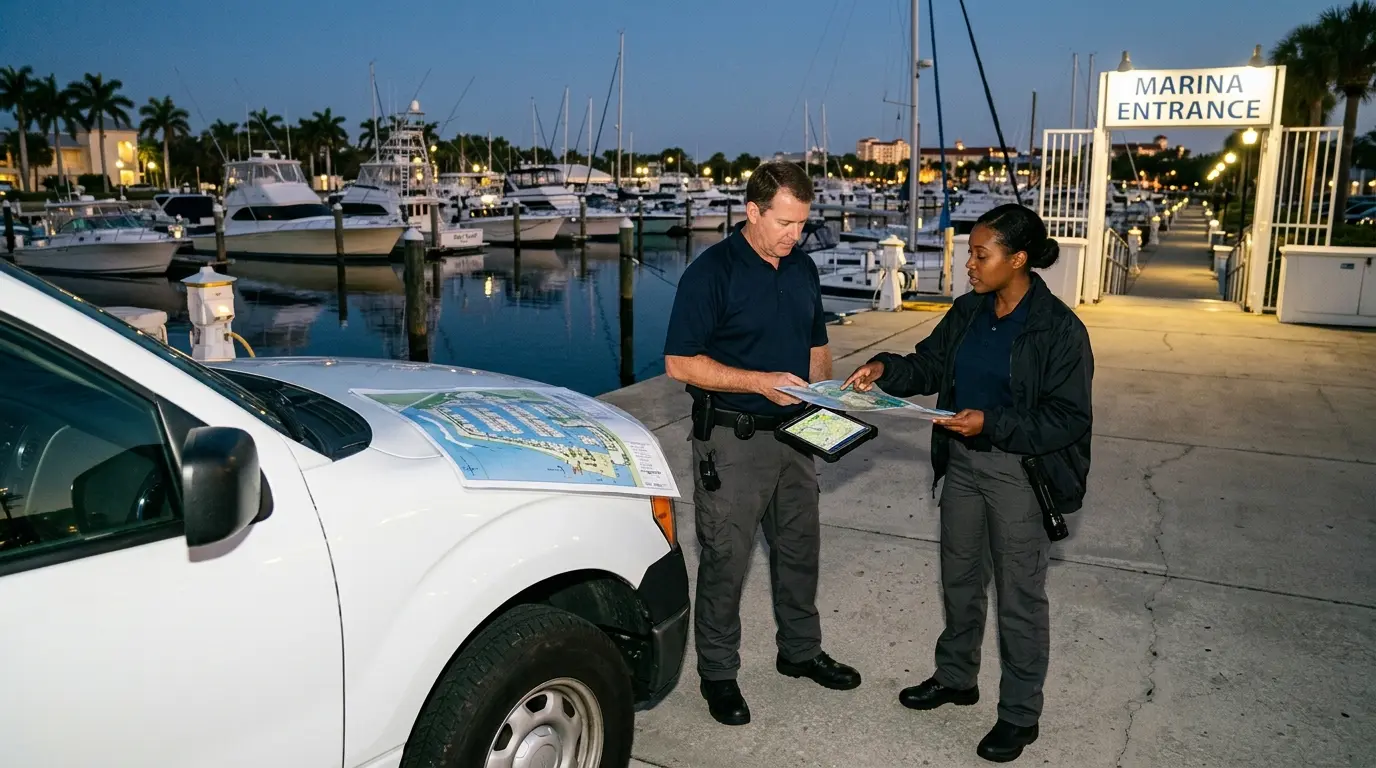
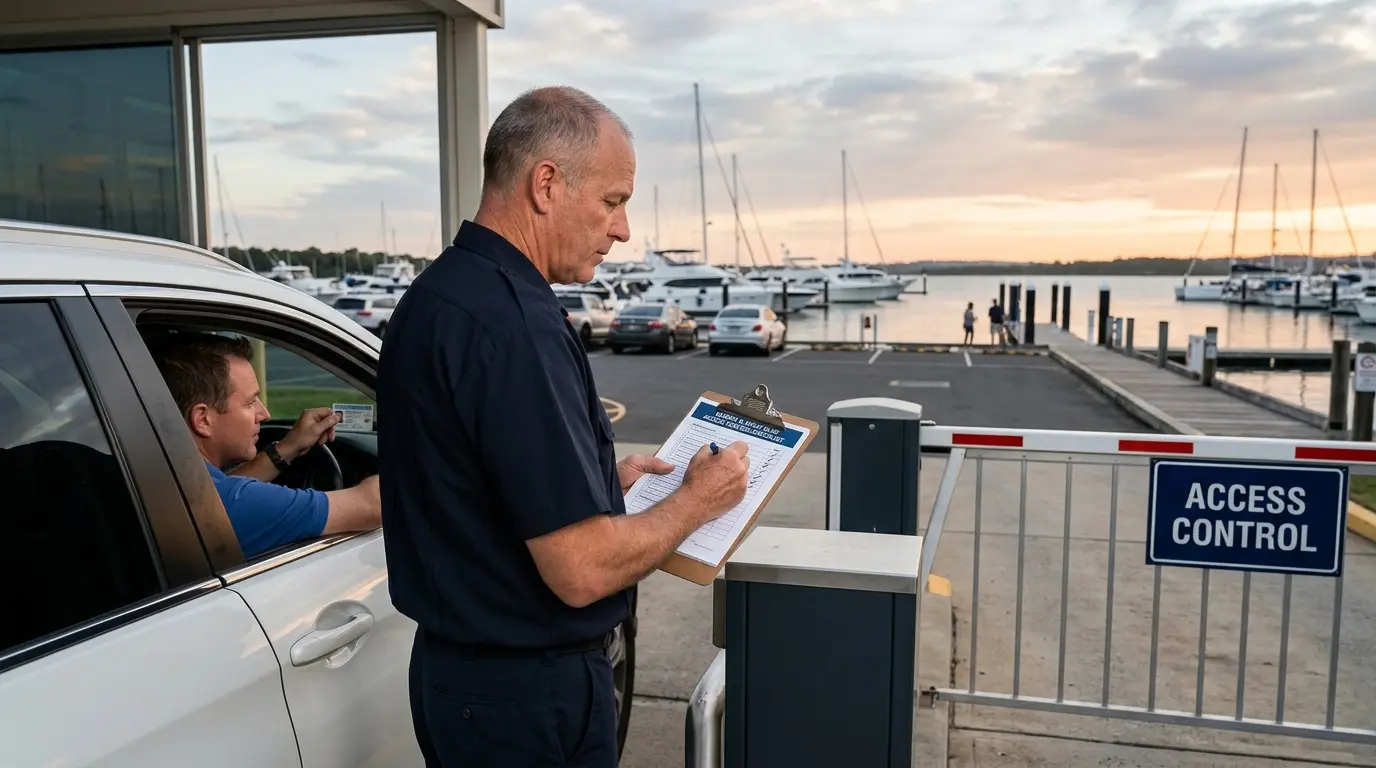
A marina sits with water on one side and open pavement on the other, rarely fenced the way an office building or gated community would be. Behind that thin boundary sit boats worth six and seven figures, with nothing but a gate and a gangway standing between them and anyone who walks up.
You cannot treat marina access control as an afterthought. A gate propped open for a delivery becomes the same opening a stranger uses to walk the docks unnoticed, past boats and gear. With compromised access control, there is no one questioning why they are there. That opening can turn into theft, vandalism, or even a liability claim if that stranger slips on a wet dock and gets hurt.
Properties that avoid this outcome pair physical entry points with trained security personnel who verify who’s actually walking through. Yacht club access control works best as a partnership between hardware and people, and the checklist below covers both halves of that equation.
The Marina and Yacht Club Access Control Checklist
Treat this as a working list. Walk your own property against each item this week and note what fails.
1. Lock Down Every Dock Gate and Entry Point
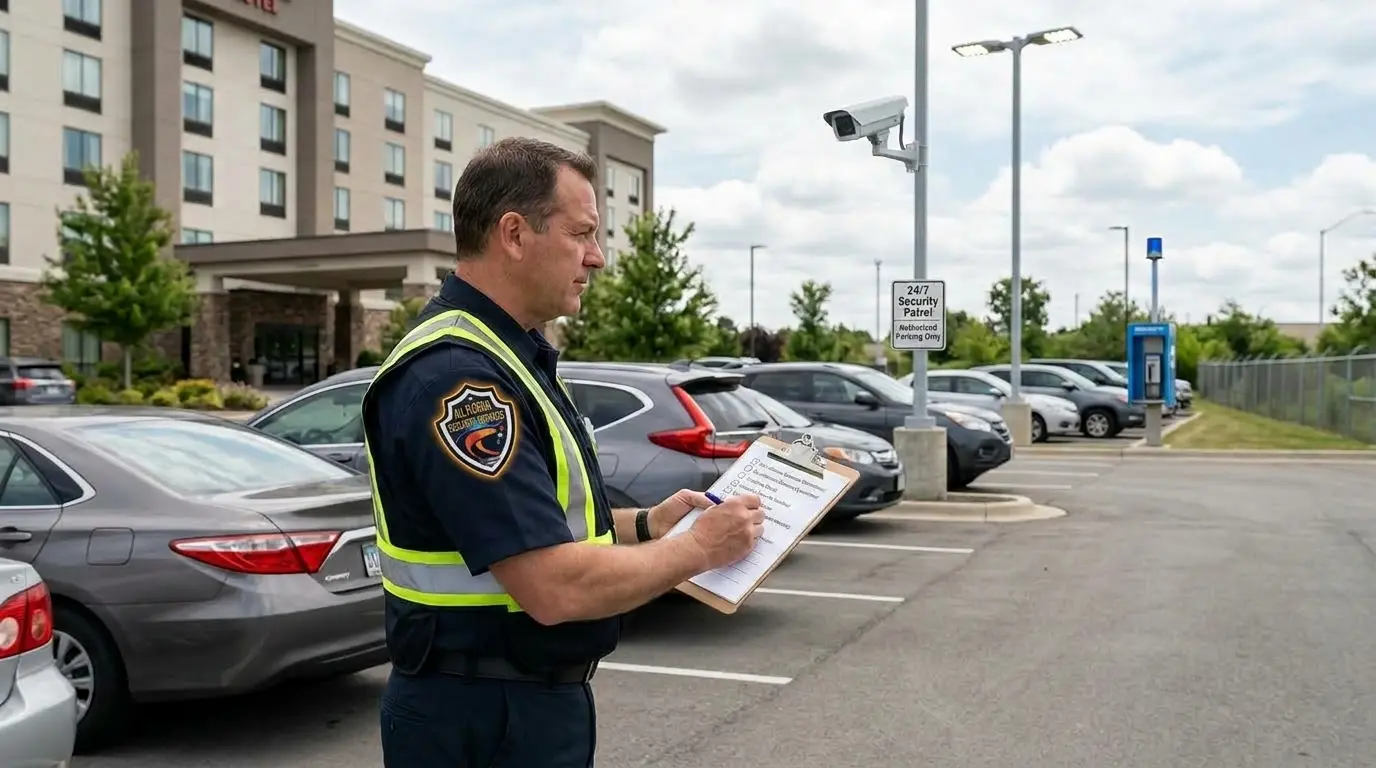
Dock access control starts at the gate itself, not at the parking lot fence. Every dock gate along the pontoons needs to latch and lock reliably, since one gate that swings free undoes every other control on the property. A marina gate security check should also cover gates rarely used, like utility or maintenance access points. These points get forgotten precisely because they’re used less. The same principle applies to parking areas, where a broader parking lot security checklist can help identify overlooked entry and surveillance gaps.
2. Verify Credentials, Don’t Just Accept Them
Key fobs, PIN codes, and mobile credentials confirm that someone has access. They don’t confirm that person is who they claim to be. A fob works the same whether it is in the hand of the boat owner or a stranger who found it on the ground. Security personnel stationed or patrolling near entry points catch the impersonator by checking their face against a named ID. For properties that need dedicated waterfront protection, marina security guard services can add trained personnel around docks, gates, and other access points.
3. Manage Guest Passes, Contractors, and Vendors Separately From Slip Holders
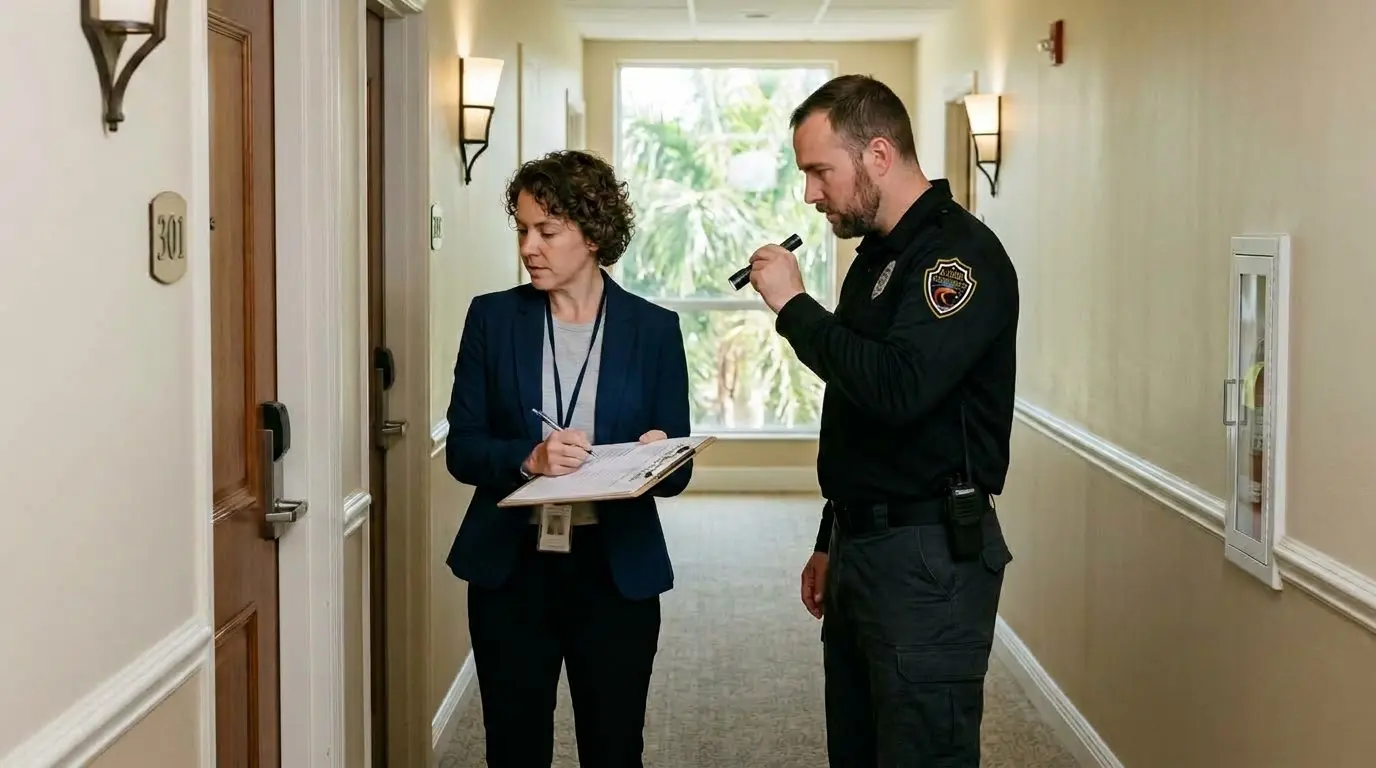
A marina has two populations to manage differently: slip holders with standing access, and everyone temporary, such as guests, contractors, and vendors. Temporary credentials left active past their visit are one of the most common ways unauthorized access happens later. Make it a habit: every guest pass gets a defined end date, and every contractor or vendor signs a visitor log on arrival and departure instead of getting waved through.
4. Watch the Property in Real Time, Not Just on Recording
Cameras that record tell you what happened after the fact. A security operator monitoring feeds in real time can catch suspicious activity while it’s still happening. They can catch someone testing gate handles or someone following a boat owner in without badging through. That real-time layer is what turns a camera system into an actual security solution instead of a records archive nobody checks until something’s already gone wrong.
5. Keep Access Logs Current and Revoke Credentials Immediately
A departed slip holder or a fired contractor whose credential was not revoked becomes a walking security gap. Access logs should be reviewed on a schedule, and any credential tied to someone no longer authorized should get revoked the same day. A layered approach that combines credential management with access control security guards can help keep physical and electronic entry controls working together.
6. Choose Gate and Access Hardware Built for the Waterfront
Waterfront property punishes hardware differently than a standard commercial site. Salt air, humidity, and constant moisture corrode standard locks and readers faster than most operators expect. Corrosion resistant gate hardware and readers rated for marine environments should be the baseline for waterfront access control.
Why Marina Security Needs People for Access Control
No gate, fob, or camera system can decide on its own whether the person standing in front of it belongs there. Automated access control answers whether a credential is valid. Only a trained person can judge whether the person’s behavior looks right.
Tailgating is a good example of why you need active security guards for Marina access control. A second person walks through a dock gate directly behind an authorized boat owner, right before it closes, riding on someone else’s valid entry instead of presenting their own. This defeats even the best access control system on the market. Only a security officer physically present or watching in real time catches it as it happens.
Liability doesn’t wait for a security system upgrade cycle. If someone unauthorized gets hurt on a dock, or a boat is damaged overnight, the marina answers for it regardless of whose fob was used to get inside. Security professionals patrolling gates and dock approaches give an operator a documented answer to that liability the moment something goes wrong.
Frequently Asked Questions
How often should a marina review its access control checklist?
A quarterly walkthrough catches most gaps before they become incidents. Add an extra check any time slip turnover is high, such as after a busy season ends.
Can security guards work alongside an existing gate or fob system?
Yes, and that combination is usually stronger than either alone. Guards verify identity and behavior in person while the gate system handles routine, everyday entries. This layered approach is part of a broader security services strategy for protecting commercial properties and their access points.
What’s the biggest access control mistake marinas make?
Leaving temporary guest or contractor credentials active after they’re no longer needed. It’s a small oversight that quietly becomes the easiest way for unauthorized entry to happen.
Secure Your Marina With Trained Security Personnel
Gates and fobs handle the routine. All Florida Security Services provides trained security personnel who handle everything they miss — verifying identity, catching tailgating, and responding to a gate alarm in real time. Visit our website to talk through a security plan built around your marina or yacht club’s specific layout.