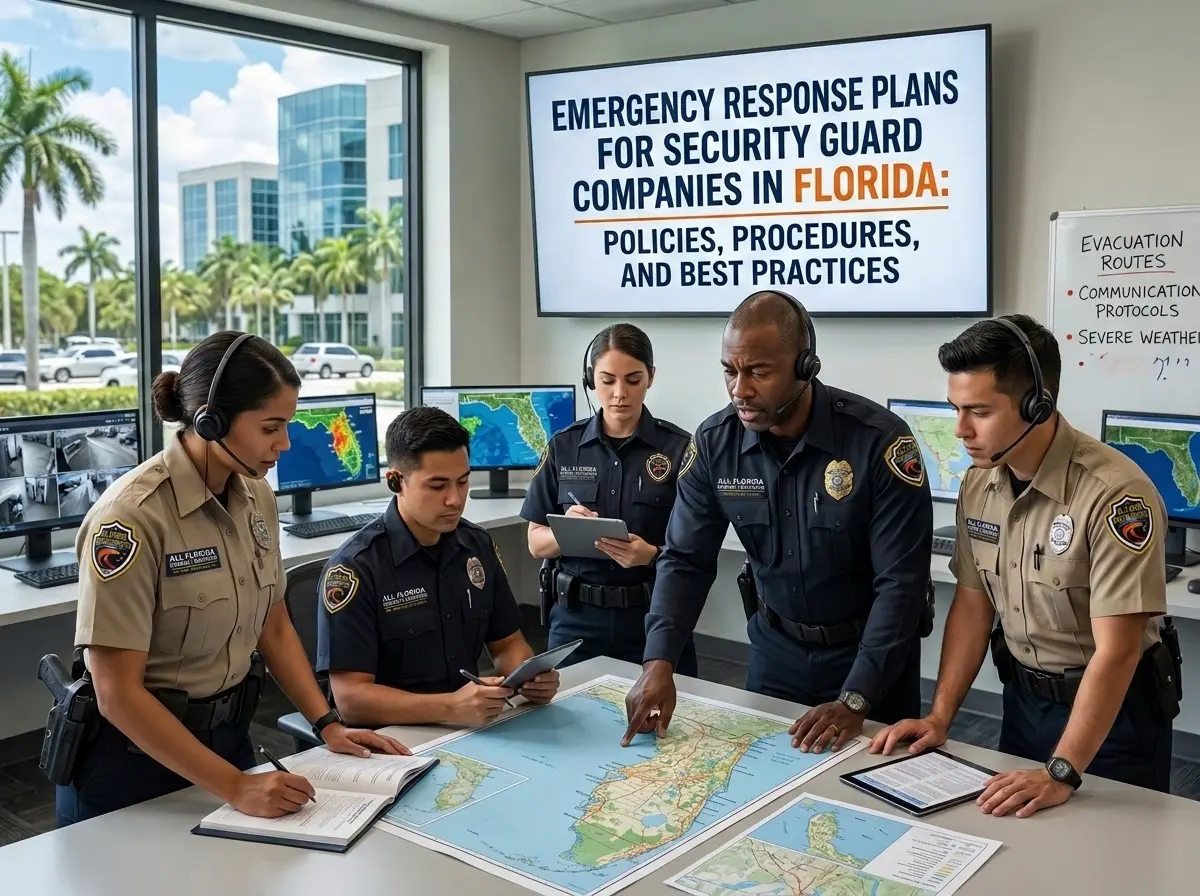
When an active threat, a hurricane, or any other crisis hits in Florida, the security team on the ground is the difference between controlled response and catastrophic failure. For a professional security agency, a well-built security guard emergency response plan is not optional. It is the operational backbone that keeps the assets protected and businesses legally covered when everything goes wrong. For the client-facing overview of rapid deployment, guard responsibilities, and disaster protection, read our complete guide to emergency security guards in Florida.
Understanding the Role of Security Guards in Emergency Situations
How security personnel perform in the first minutes of any crisis determines how the rest of the response unfolds.
Security guards are the first trained professionals on scene before police, fire, or EMS arrive. In those initial minutes of a fire or medical emergency, on-site guards execute basic emergency response protocols without waiting for any orders. That response window before emergency services arrive is where proper training and a solid emergency response plan come in.
Duty of Care & Risk Mitigation
Florida property owners risk real legal exposure when no structured emergency response procedures for their security guards exist. Without defined protocols, liability falls directly on the property after a preventable incident. Clear procedures reduce that exposure by creating a documented chain of action. It gives insurance carriers evidence that reasonable safety measures were taken to protect human life and limit asset damage.
Core operational expectations of emergency security personnel include:
- Scene Stabilization: Establishing physical boundaries, preventing secondary access, and mitigating immediate threats to human life.
- Incident Suppression: Executing swift, localized interventions such as operating fire suppression gear or applying basic life-saving medical aid.
- Order Maintenance: Preventing mass panic and directing systematic egress during high-stress facility evacuations.
Core Components of a Security Guard Emergency Response Plan
A professional security guard emergency response plan requires a precise technical framework that field officers can execute under pressure, every time.
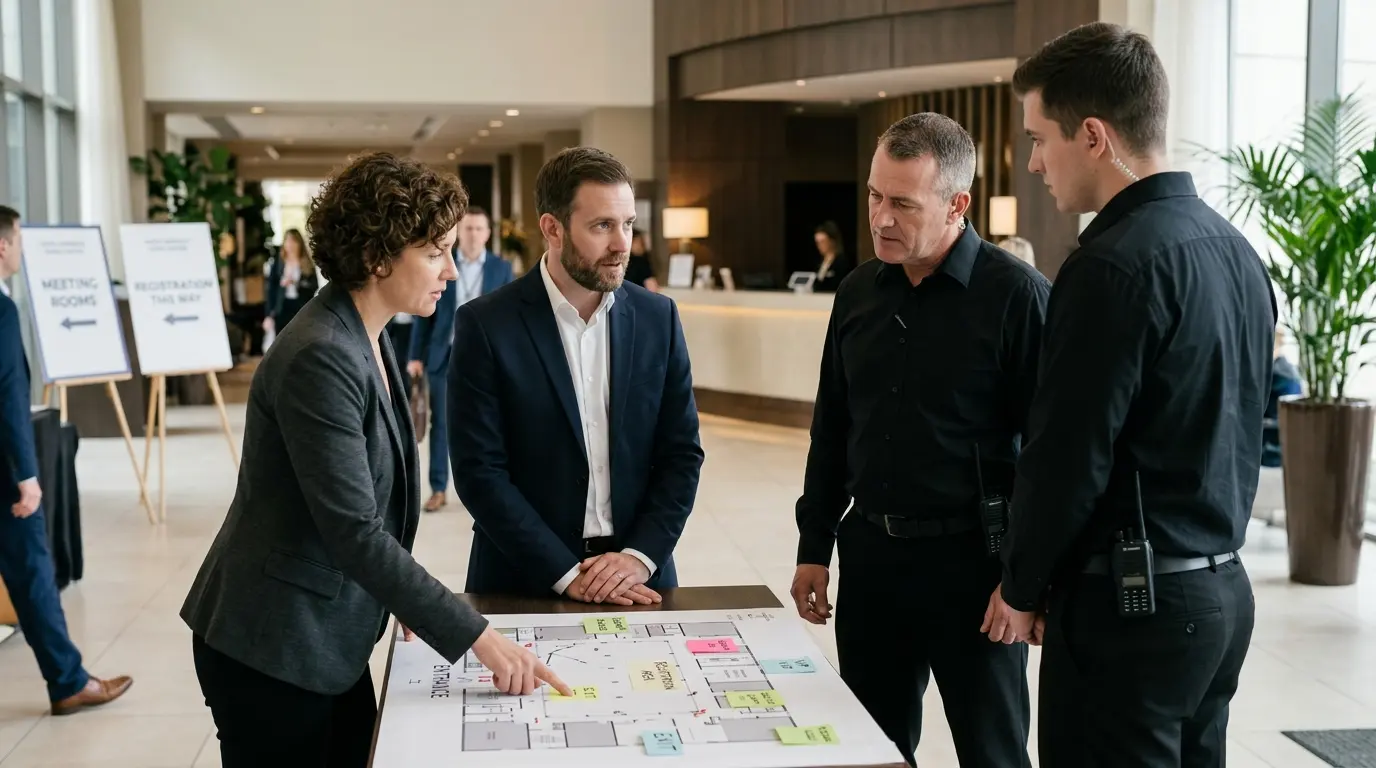
Generic templates fail the moment reality hits. Every site has a unique floor plan, utility configuration, and local hazard profile. Emergency protocols must reflect actual conditions, i.e., where the gas shutoffs are, which stairwells feed primary egress routes, where AED units are mounted. Guards operating from generic plans hesitate when it is time to act.
Essential operational pillars of a professional emergency action plan include:
- Primary Threat Matrices: Action plans categorized by threat level, detailing exact responses for fire, weather, intruder, and medical emergencies.
- Egress and Shelter Architecture: Floor-by-floor evacuation diagrams, primary and secondary assembly points, and designated safe zones.
- Asset Protection Directives: Protocols for securing sensitive data, high-value goods, and hazardous materials during forced evacuations.
Pre-Deployment Risk Assessment Before Guard Onboarding
Before placing a single officer on a new site, Florida security companies must conduct a structured threat assessment — because responding to emergencies you never anticipated is where plans break down fastest.
Mapping Structural Vulnerabilities
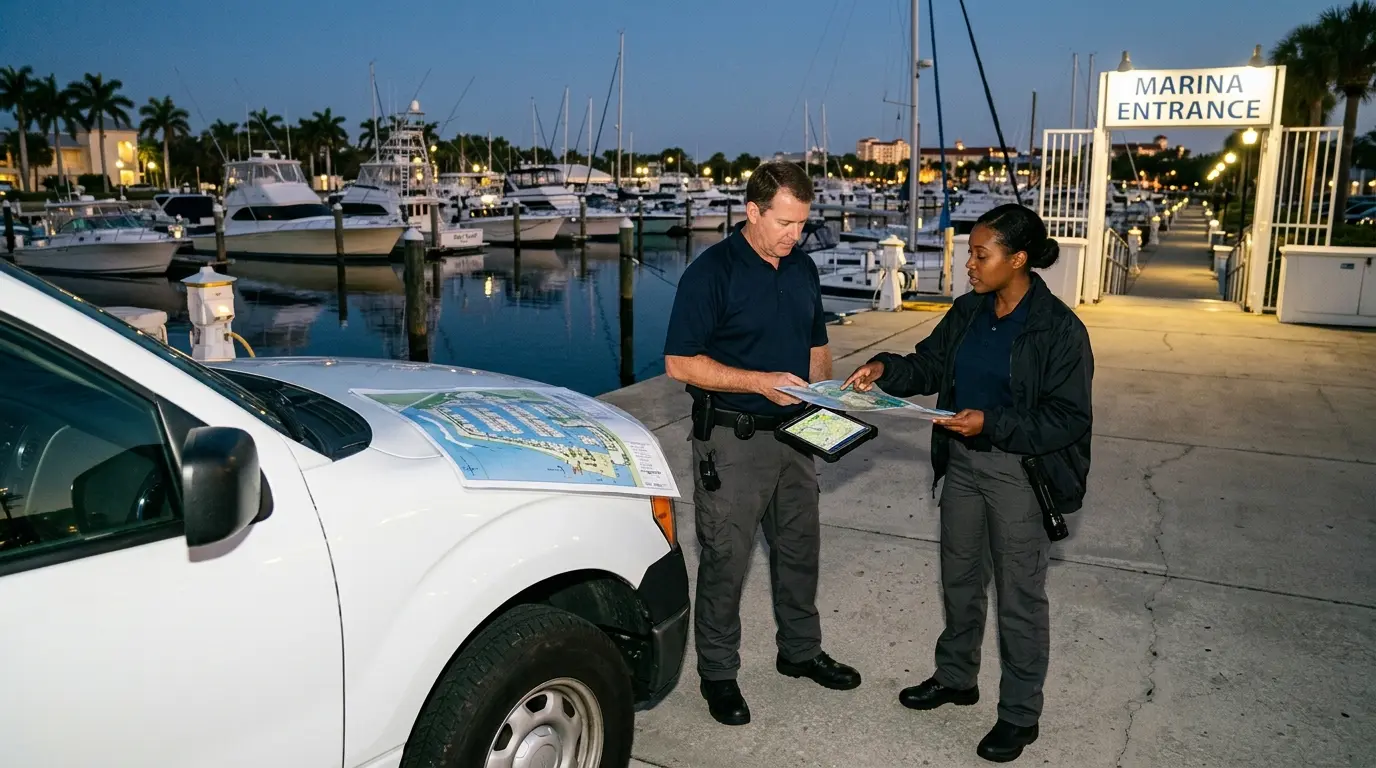
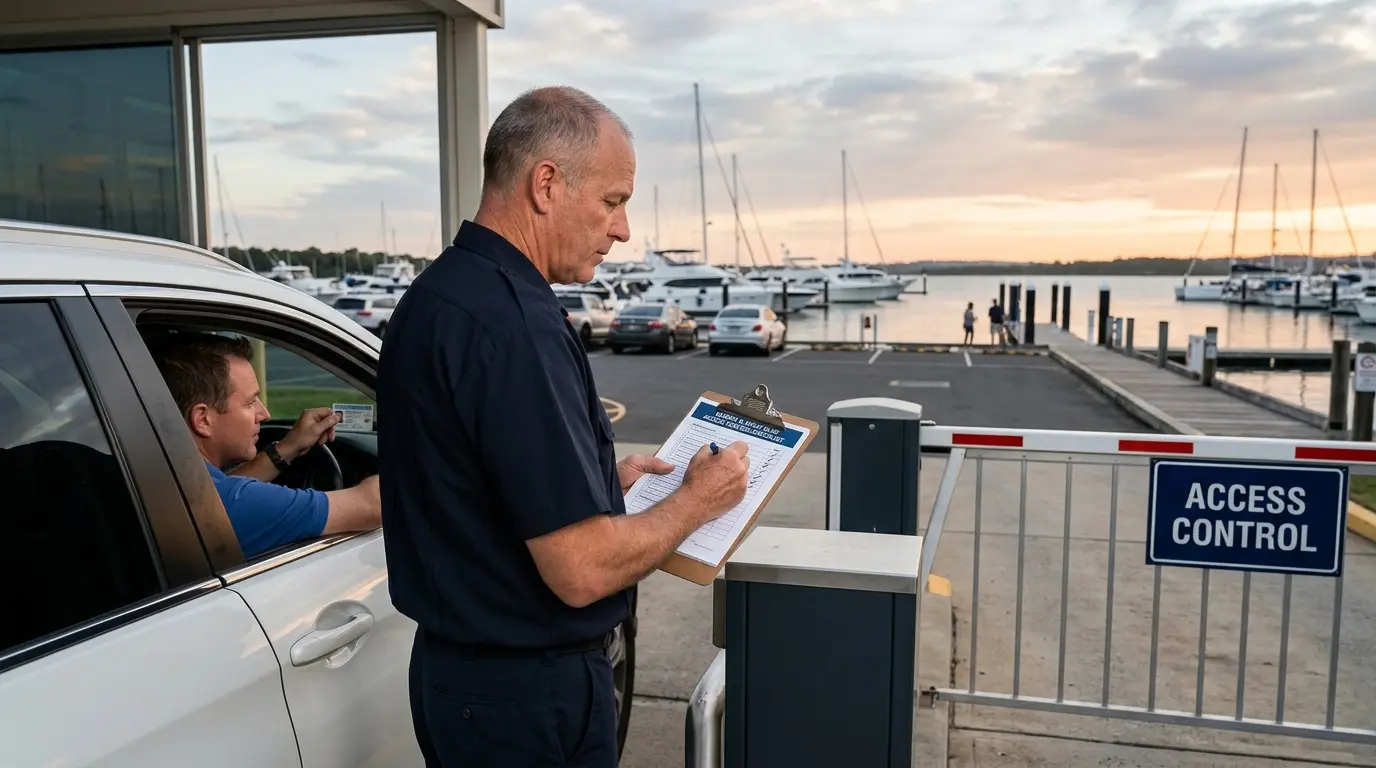
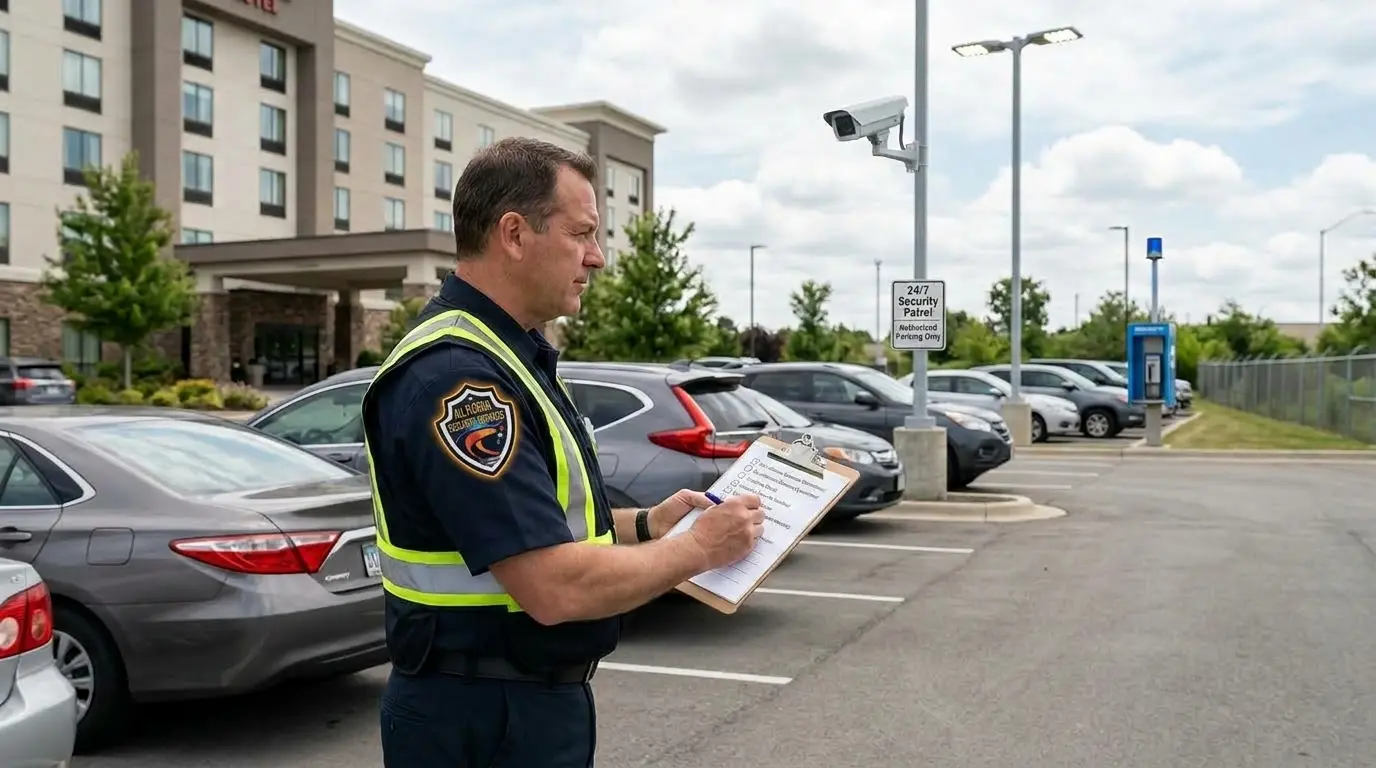
A thorough on-site audit examines the physical facility from perimeter to core. Security managers should inspect fencing integrity, electronic access control systems, CCTV blind spots, and whether fire exits remain unobstructed. On commercial properties, this includes checking loading dock access, stairwell lighting, and unsecured rooftop points. Every structural weakness identified here becomes a targeted item in the site’s security guard procedures.
Florida-Specific Threat Profiling
Florida’s risk environment is unlike any other state. Security agencies here must account for hurricane exposure, flash flooding, tropical storm power outages, and the crowd dynamics of high-tourism zones like Orlando, Miami, and Tampa. A coastal resort faces different threat vectors than a central Florida distribution warehouse — and emergency planning must reflect those differences precisely.
Critical steps of a pre-deployment threat evaluation include:
- Review historical incident logs and local law enforcement crime reports for the immediate geographical radius.
- Identify high-risk structural features, including unmonitored loading docks, remote parking structures, and unsecured rooftop access points.
- Audit the proximity and average response times of municipal emergency services, fire stations, and trauma centers.
Establishing the Emergency Chain of Command
When a crisis breaks out, every second of confusion costs lives. A defined chain of command eliminates hesitation and keeps security teams coordinated from the first alert.
Command Structure and Incident Command System (ICS) Integration
A functional security chain of command moves in three clear tiers.
- On-duty field guards handle immediate scene assessment and initiate notifications.
- Shift supervisors coordinate guard positions and manage tactical communication.
- Central dispatch monitors live feeds, alerts emergency services, and notifies corporate stakeholders in real time.
Each tier has a distinct lane, and crossing them without cause creates unnecessary confusion that costs lives.
Handover Protocols for Public Safety Officers
When police, fire, or EMS arrive, the handover must be immediate and complete. The on-site supervisor delivers them a concise situational brief regarding type of emergency, casualties, current building status. He then hands over site maps and access credentials to the incident commander. Guards then shift into a support role: holding access points, guiding responders, and managing perimeter crowd control.
| Security Command Level | Primary Emergency Responsibility | Decision-Making Authority |
| On-Site Field Guard | Scene assessment, emergency notifications, initial crowd guidance | Localized tactical response and scene containment |
| Field Security Supervisor | Coordinating guard positions, managing evacuations, liaising with dispatch | Operational tactical shifts and resource deployment |
| Central Dispatch / Operations | Alerting emergency services, monitoring CCTV, notifying stakeholders | Enterprise resource allocation and executive escalation |
Crisis Communication Protocols: Radio, Dispatch, and Control Rooms
Clear, fast communication keeps response efforts coordinated and prevents small incidents from becoming full-scale disasters.
Radio Etiquette and Codes
Modern emergency communication has moved away from complex 10-code systems toward clear-text, plain-English transmissions. When multiple agencies respond to the same incident, code misinterpretation between organizations creates dangerous gaps. Plain-language radio ensures every responder on every channel understands what’s happening, where it’s happening, and what action is needed right now.
Control Room and Dispatch Integration
A 24/7 central monitoring station is the nerve center of any professional security operation. Dispatch operators process field alerts, monitor live CCTV feeds, track lone-worker check-ins, and auto-dial 911 when a panic button fires. In Florida, where severe weather can knock out communications without warning, dispatch protocols must include backup contact procedures and storm-resilient data links.
Redundant communication tools required for high-risk operations include:
- Two-Way Radio Systems: UHF/VHF digital radios equipped with dedicated emergency panic channels and repeaters.
- Mobile Guard Management Apps: Real-time push-to-talk, GPS incident tagging, and automated man-down alerts.
- Backup Satellite/Cellular Data Links: Secondary transmission lines ensuring control room connectivity during severe Florida power grid failures.
Mandatory Emergency Training and Florida Class D & G Statutory Requirements
Florida sets a clear statutory baseline for what every licensed security officer must know before stepping on post.
FDACS Chapter 493 Curriculum Standards
The Florida Department of Agriculture and Consumer Services mandates a minimum 40-hour Class D training course for all licensed guards. That curriculum includes basic emergency response protocols, CPR orientation, fire control fundamentals, and scene preservation. Agencies that treat Chapter 493 as a checkbox exercise produce officers who can pass a test but freeze in an actual emergency situation.
Armed Officer Protocols (Class G)
Class G licensed armed officers carry heightened responsibilities when emergencies turn violent. Their training covers active threat neutralization, Florida’s strict use-of-force legal framework, and live coordination with responding law enforcement. Armed guards must understand the precise legal boundaries of lethal and non-lethal force under Florida statute, as post-event legal scrutiny of Class G officers is significant and unforgiving.
Ongoing professional development modules include:
- Conducting mandatory quarterly scenario-based simulations, including active shooter tabletop exercises and fire evacuation drills.
- Maintaining active Red Cross or American Heart Association First Aid, CPR, and AED certifications.
- Practicing verbal de-escalation techniques to defuse hostile crowds before situations escalate to physical force.
Handling Specific Florida Emergency Scenarios
Florida’s climate, geography, and dense population centers create a distinct set of emergency scenarios that security personnel must handle with precision and speed.
1. Hurricane and Severe Weather Preparedness
In the 48 to 72 hours before landfall, guards secure outdoor furniture, verify backup generator fuel, test storm shutters, and audit emergency supply kits. After the storm, officers patrol for structural damage, avoid downed power line hazards, and establish visible perimeter control against looting — which peaks in the first 24 to 48 hours before power and alarm systems are restored.
2. Active Threat and Violent Incident Procedures
During an active threat, guards direct occupants through RUN, HIDE, FIGHT in sequence — leading rapid evasion when routes are clear, coordinating shelter-in-place lockdowns when egress is blocked, and using physical defense only as an absolute last resort. Electronic and manual lockdown procedures must both be drilled, since access control systems can fail exactly when they’re needed most.
3. Medical Emergency Interventions
The responding guard confirms scene safety first, then assesses the patient — checking responsiveness, clearing the airway, initiating chest compressions if needed, and deploying the nearest AED within the first two minutes. A secondary officer simultaneously handles EMS access logistics: holding elevator doors, unlocking perimeter gates, and meeting paramedics at the entrance to escort them directly to the patient.
4. Fire and Hazardous Material Events
The RACE protocol (Rescue, Alarm, Confine, Extinguish) governs fire response. Guards move people away from danger, activate alarms, and close fire doors to slow spread. They only attempt extinguishment on small, contained fires with a clear exit route behind them. For chemical spills or gas leaks, officers isolate the area, position all personnel upwind, and notify the fire department HazMat unit immediately. No officer without protective equipment enters the contaminated zone.
Post-Incident Protocols: Reporting, Evidence Preservation, and Plan Reviews
What happens in the hours after an incident defines how well the agency learns and improves from every emergency it faces.
The Six Pillars of Professional Incident Reporting
Florida security officers must produce objective reports answering six key questions: Who, What, When, Where, Why, and How. Subjective language and assumptions have no place in professional incident documentation. Every fact should be timestamped and corroborated by CCTV footage, witness statements, or dispatch logs.
Scene Preservation and Chain of Custody
After any serious incident, the scene must be secured and access restricted immediately. Officers log the name, time, and reason for every individual who enters the cordoned area. CCTV footage must be flagged and preserved before automatic overwrite cycles delete critical evidence. The chain of custody stays in security hands until police formally take ownership of the scene.
Post-emergency plan revision steps include:
- Operational Debriefing: Structured debrief sessions with field personnel, property managers, and first responders within 24 hours of the event.
- Gaps Analysis: Comparing actual field performance against written SOPs to identify communication delays or equipment failures.
- Plan Updates: Revising emergency response policy documents, post orders, and guard refresher modules based on identified vulnerabilities.
Why Security Companies Without Emergency Plans Fail During Incidents
When no protocols exist, panic fills the vacuum. Guards abandon posts and radio transmissions turn contradictory. Without a defined chain of command, no one knows who is in charge and the scene is out of control before first responders make it.
The fallout from a badly handled emergency is swift. Property owners file gross negligence claims. Clients cancel contracts immediately. FDACS can revoke a firm’s Chapter 493 license after documented failure to meet mandated standards. Insurance premiums spike or policies are dropped. Security companies without documented, practiced emergency plans are at constant risk of facing legal exposure that ends operations permanently.
| Prepared Security Agency | Unprepared Security Agency | |
| Response Time | Rapid, structured execution within seconds of threat detection. | Delayed, confused reaction while waiting for off-site instructions. |
| Communication | Clear, plain-text radio updates following strict command hierarchy. | Radio silence, panicked transmissions, or conflicting orders. |
| Regulatory Standing | Fully compliant with Florida Chapter 493 and OSHA mandates. | Subject to state fines, license suspension, and civil liability. |
| Client Retention | High trust, long-term commercial contracts, and insurance premium discounts. | Immediate contract cancellation following preventable incidents. |
Partner With a Florida Security Company That Plans Before Crisis Strikes
At All Florida Security Services, emergency preparedness is built into every deployment, every post order, and every officer we place on your property. Our licensed security professionals are trained under Florida FDACS Chapter 493 standards and backed by an in-house security training school that builds real-world emergency competency. Whether you manage a commercial complex, residential community, or industrial facility, we build site-specific plans that match your environment and your risks.
Don’t wait for an incident to find out whether your security provider is ready. Contact All Florida Security Services today to request a site assessment.
Frequently Asked Questions
Are Florida security guard companies legally required to have site-specific emergency plans?
FDACS requires 40-hour emergency training for all licensed guards, and most commercial contracts and corporate insurance carriers explicitly mandate site-specific emergency action plans to limit liability.
What is the difference between an evacuation and a shelter-in-place order?
Evacuation moves occupants out of a compromised facility to an external safe area. Shelter-in-place directs them to secured internal rooms during severe weather, toxic releases, or active external threats.
How often should a Florida security company review and update its emergency procedures?
Emergency response plans should be formally audited at least once annually and immediately after any major incident, facility renovation, or significant change in local threat conditions.