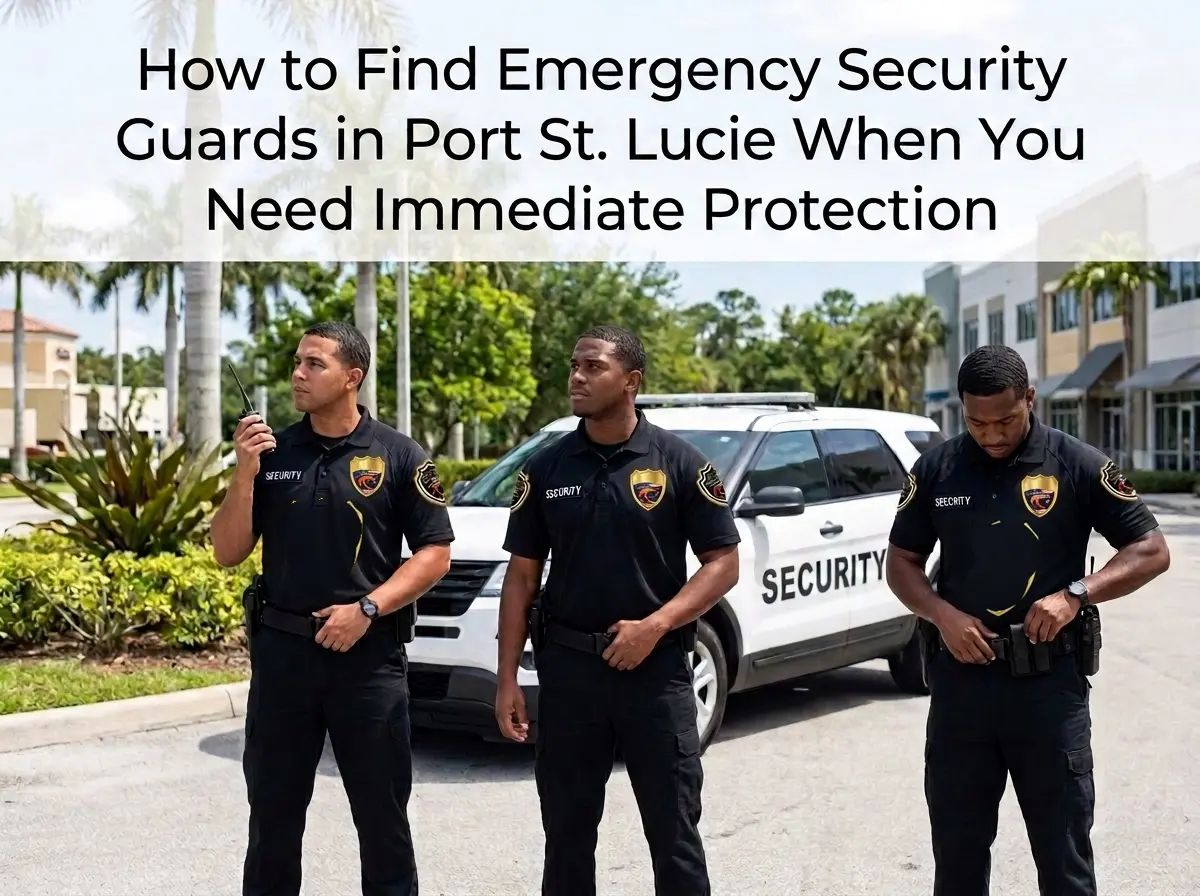
A break-in at 2 AM after the storm. A fire suppression system failure during peak business hours. Cases like that happen to local businesses and residential communities every season in Port St. Lucie. When they do, you need boots on the ground fast. Not tomorrow. Not after a quote process. Right now. This guide shows you exactly how to find, vet, and deploy emergency security guards in Port St. Lucie so you can stop the losses before it gets worse. For a broader statewide overview of guard roles, response phases, and disaster protection, review our complete Florida emergency security guide.
The Reality of Immediate Security Crises in Port St. Lucie
Local businesses and residential communities across St. Lucie County need emergency security guards in Port St. Lucie more often than most people realize. Alarm system outages, hurricane-force winds that compromise perimeter fencing, and active trespassing on unoccupied property can all create dangerous security voids within minutes.
High-Risk Scenarios That Demand Urgent Patrols
When a physical security gap opens up, your property is exposed immediately. Law enforcement from the Port St. Lucie Police Department or the St. Lucie County Sheriff’s Office will respond to active crimes, but they cannot post a dedicated officer at your location for hours. That gap is exactly where private security services become essential to protecting your assets and your people.
Here is what a qualified emergency response looks like when it works correctly:
- Response Speed Window: Deploying certified rapid response security teams to Port St. Lucie job sites within 2 to 4 hours of contract authorization.
- Continuous Coverage: Establishing 24/7 security guards to maintain a round-the-clock physical presence until permanent repairs or security systems are fully restored.
- Flexible Engagement: Utilizing temporary security guards for short-term crises — ranging from 24 hours to 30 days — without long-term contract lock-ins.
Hidden Costs of Delaying Emergency Security
Every hour you wait after a security breach, the financial and legal exposure grows. Business owners often underestimate how quickly an unmonitored property shifts from a manageable situation to a costly liability. The damage compounds fast, and the cost of deploying security personnel is almost always far less than the damage caused by inaction.
Unmonitored commercial and residential properties in Port St. Lucie are magnets for repeat criminal activity. Florida premises liability law adds another layer of risk that commercial property managers often overlook. If your business suffers a break-in or perimeter breach and you fail to take reasonable steps (like engaging private security services), your insurance carrier may deny your claim outright. Under Florida property law, it is your legal duty of care to document that you took corrective action immediately after a known security event.
Critical Risk Warning: Following physical property damage or fire alarm monitoring failures, Florida commercial property insurance policies often require site operators to maintain continuous fire watch or security guard presence to validate ongoing coverage claims.
Armed vs. Unarmed Security Guards: Matching Guard Types to Emergency Levels
Not every emergency calls for the same level of response. Deploying the wrong guard type to your site wastes money, misses the threat, and can create compliance issues. Understanding the functional difference between armed security guards and unarmed security guards helps you make the right call quickly under pressure.
Determining Your Property’s Operational Risk Level
Unarmed security guards are the right choice for many emergency situations. They handle access control at HOA entry points, conduct fire watch duty during alarm failures, manage parking enforcement at commercial plazas, and deter low-level criminal activity at retail stores. For most residential communities and standard commercial properties, a licensed unarmed officer is both effective and cost-efficient.
Armed security guards are necessary when the threat level escalates beyond deterrence. High-risk employee terminations, facilities handling large amounts of cash, active threat deterrence at industrial properties, and protection of high-value assets in transit all require officers with a Class G firearms authorization. In Port St. Lucie’s higher-crime industrial corridors, deploying armed security guards sends a clear message that the property is protected.
| Security Model | Mandatory Licensing | Key Equipment & Gear | Primary Emergency Application |
| Unarmed Security Guards | Florida Class D License (40-hr state training) | Radio, flashlights, high-vis uniform, digital incident reporting devices | Fire watch, retail deterrence, access control gate posts, construction site watch |
| Armed Security Guards | Class D + Class G License (28-hr firearms qualification) | Duty firearm, body armor, less-lethal restraints (pepper spray, baton) | High-value asset protection, active dispute mitigation, executive protection |
Essential Criteria for Vetting Port St. Lucie Emergency Security Providers
Finding a security company fast is easy. Finding one that’s properly licensed, adequately insured, and actually capable of deploying to your St. Lucie County location within hours is a different challenge. Use the criteria below to evaluate any provider before you sign anything.
1. Verify FDACS Licensing and Class B Agency Compliance
Florida’s security guard industry is regulated by the Florida Department of Agriculture and Consumer Services (FDACS) under Florida Statute Chapter 493. Any private security company operating in Port St. Lucie must hold an active Class B Security Agency License. Every individual guard must carry a current Class D license at minimum, or a Class G license if carrying a firearm. Ask for documentation before deploying anyone to your site.
2. Confirm Local Guard Availability for Rapid Dispatch
A security company’s ability to meet a 2- to 4-hour deployment window depends entirely on where their guards are located. Many national dispatch centers route calls through remote call centers and pull from poorly maintained rosters. If a provider doesn’t have licensed security personnel actively stationed in St. Lucie County or on the Treasure Coast, they cannot reliably meet an emergency arrival window. Always ask directly: “Do you have guards available in Port St. Lucie right now?”
3. Review Real-Time GPS Tracking and Incident Reporting Capabilities
Modern licensed security guards use GPS officer-tracking software, digital geofencing tools, and automated shift logging systems that generate timestamped reports in real time. This technology ensures full accountability during emergency coverage — you can verify when a guard arrived, where they patrolled, and what incidents they logged. If a vendor can’t show you these capabilities, keep looking.
Before signing any emergency service agreement, confirm the following:
- Demand proof of a minimum $1,000,000 General Liability policy along with workers’ compensation insurance naming your business as an additionally insured party.
- Request verification that guards deployed to your site have completed background checks verified by the Florida Department of Law Enforcement (FDLE) and FBI.
- Ensure the provider offers clear, transparent hourly billing structures for temporary security guards without hidden surge pricing or mandatory multi-month lock-in contracts.
Tailored Emergency Security Solutions for Port St. Lucie Sectors
Emergency security isn’t one-size-fits-all. Different property types face different threats, and the right deployment strategy depends on your sector. Here’s how rapid response security protocols apply across Port St. Lucie’s primary property categories.
Residential Communities & Gated HOAs
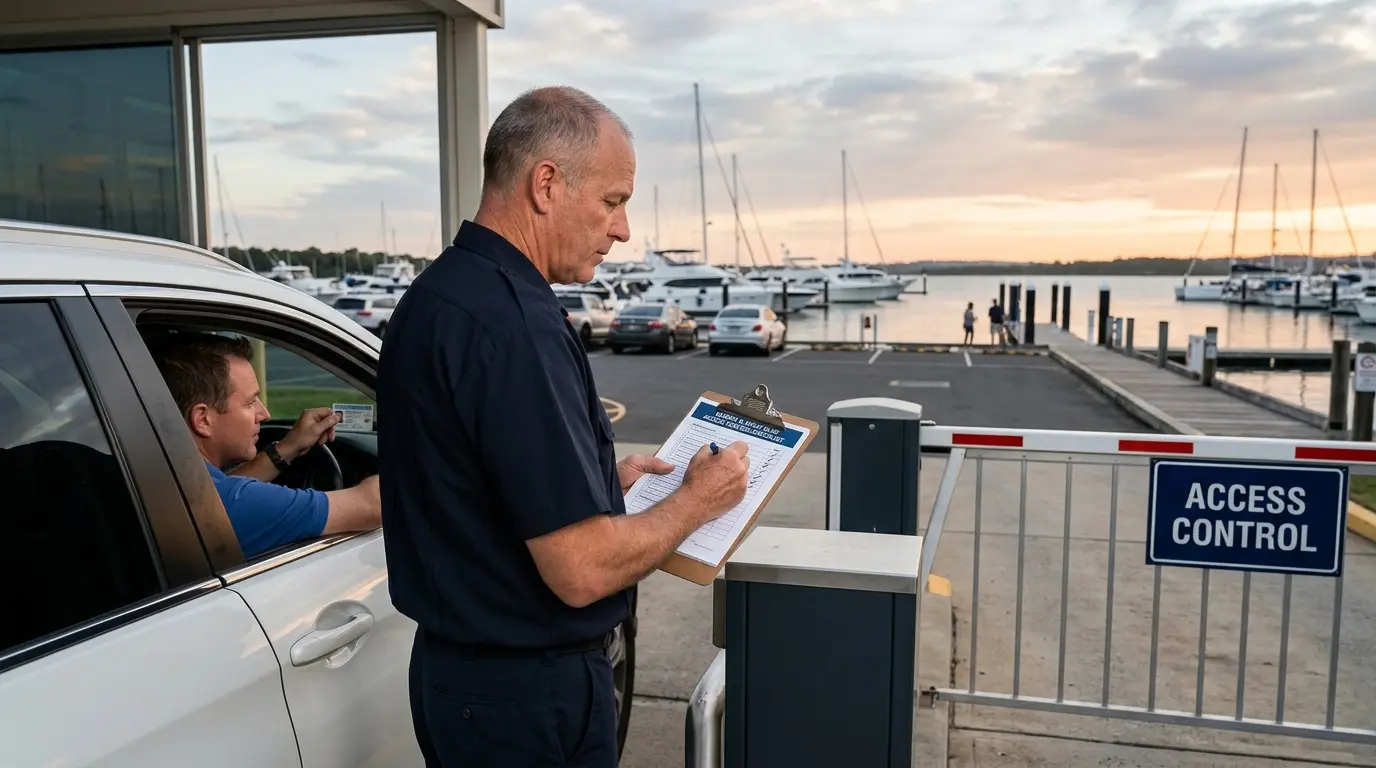
Gated communities and apartment complexes in St. Lucie West and Tradition face unique emergency scenarios. Gate barrier malfunctions during a storm can leave an entire neighborhood open to unauthorized vehicle access overnight. Emergency security guards can manage entry points manually, conduct neighborhood patrols, assist with storm evacuation coordination, and remove trespassers from common areas quickly and lawfully. For HOA board presidents, this level of response prevents resident complaints and reduces board liability.
Commercial & Retail Plazas
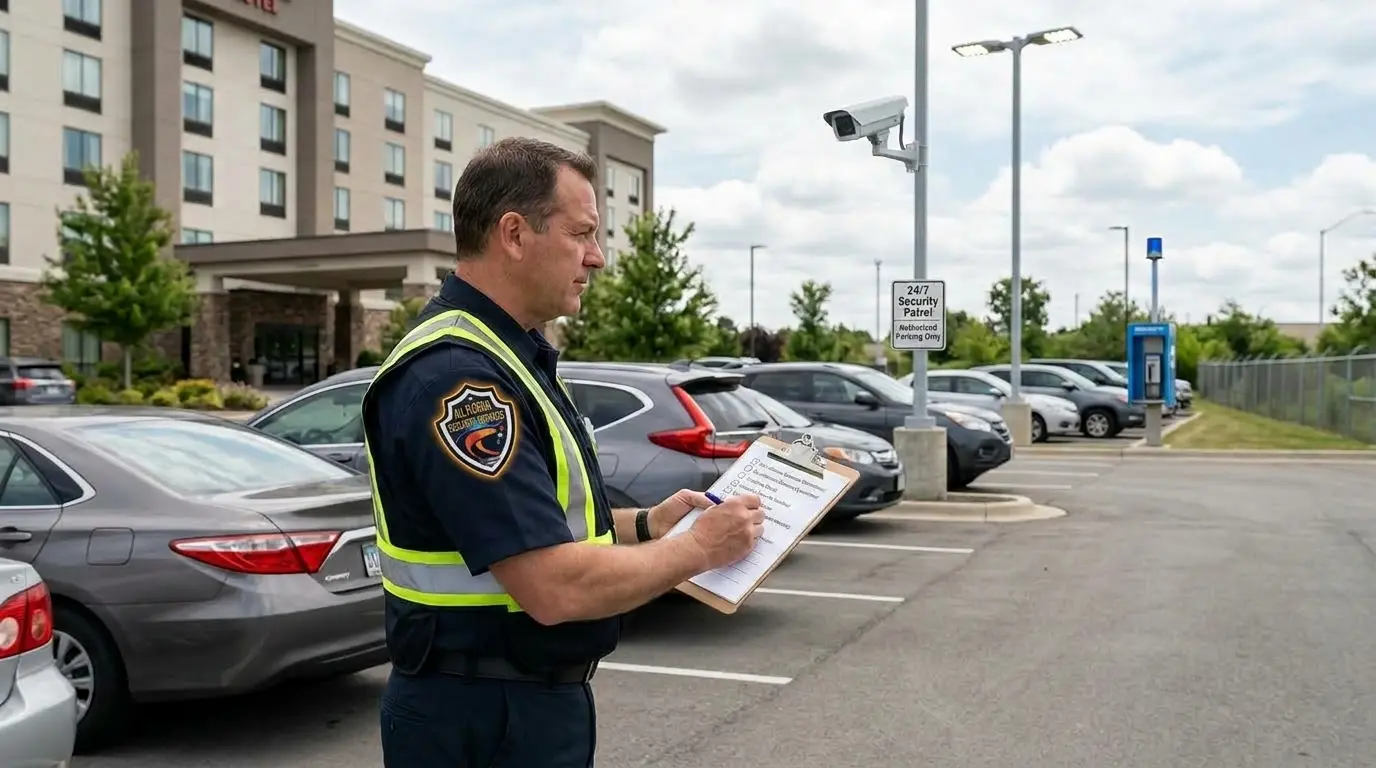
Shopping centers along US-1 and Port St. Lucie Boulevard face specific risks during alarm failures and after-hours breaches. Shattered storefront glass from a break-in or storm leaves merchandise exposed and creates liability for every business in the plaza. Commercial security services provide overnight perimeter patrols, crowd management during high-traffic retail events, and immediate physical deterrence when electronic alarm systems go offline. A visible guard presence alone reduces opportunistic theft dramatically.
Construction Sites & Industrial Parks
Active construction developments in Port St. Lucie are high-value targets after hours. Heavy equipment, copper wiring, lumber, and tools are routinely stolen from unguarded sites. Emergency security guards deployed to industrial warehouses and active job sites prevent vandal damage, deter unauthorized access during non-operating hours, and protect your project timeline from expensive setbacks. A single theft event can delay a build by weeks — emergency coverage is far cheaper by comparison.
Steps To Secure Emergency Protection in Port St. Lucie Within Hours
Follow these four steps in order to get licensed security professionals on-site as fast as possible and keep your property, people, and assets protected.
Step 1: Rapid Site Risk & Scope Assessment
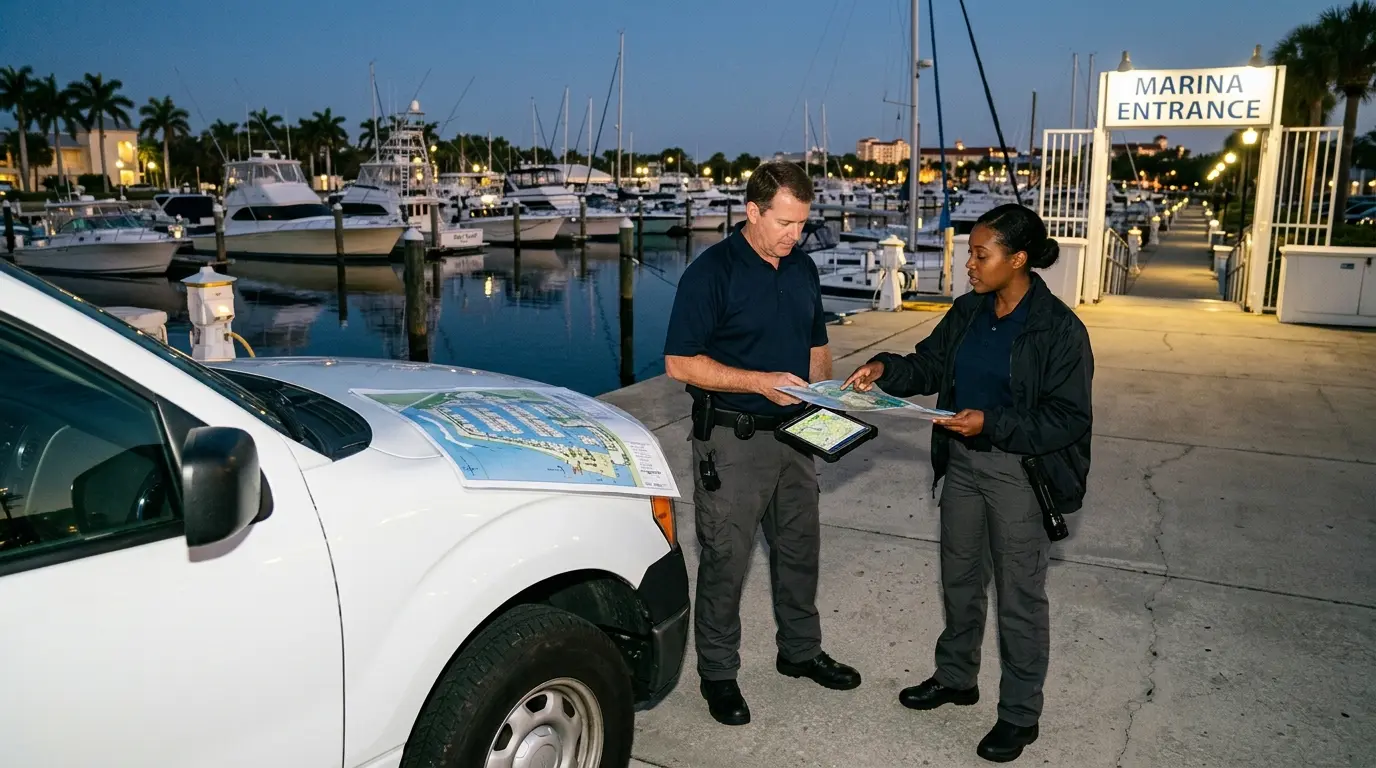
Identify the immediate vulnerability a broken entry point, a fire watch requirement, an active threat, or a perimeter breach. Then calculate the number of guards needed, the required shift hours, and the specific post locations. A clear scope upfront allows any security guard company to respond faster and price accurately without unnecessary back-and-forth.
Step 2: Contact Local 24/7 Security Dispatch
Call a provider that offers genuine 24/7 security guards in Port St. Lucie not a national call center. State clearly whether your situation requires armed or unarmed officers and request an immediate ETA. A credible local provider will confirm guard availability and give you a deployment window before the conversation ends. If they can’t tell you when guards will arrive, call someone else.
Step 3: Review and Execute Emergency Work Order
Read the temporary service agreement carefully before signing. Confirm the hourly billing rate, the specific post orders, and what insurance coverage applies. Post orders should spell out exactly what guards are authorized to do — logging visitor access, conducting timed perimeter patrols, and contacting law enforcement if needed. Vague post orders create gaps in your emergency security response.
Step 4: On-Site Guard Onboarding & GPS Verification
When your security personnel arrive, brief them immediately. Walk officers through physical property boundaries, known hazards, access codes, and your emergency contact chain. Then verify that their GPS tracking system is actively logging check-ins. This step takes less than fifteen minutes but ensures full accountability for every hour of emergency coverage on your site.
Ready to Deploy Emergency Security in Port St. Lucie?
When your property is exposed and every hour counts, you need a security guard company that knows Port St. Lucie and can move fast. All Florida Security Services provides licensed, FDACS-compliant armed and unarmed emergency security guards for commercial properties, residential communities, construction sites, and retail plazas across St. Lucie County and the Treasure Coast. Whether you need a single-shift fire watch or multi-week perimeter coverage, our rapid response security teams are available around the clock.
Don’t wait for the situation to get worse. Visit our website or call us now to get a licensed guard on the way to your Port St. Lucie property within hours.
Frequently Asked Questions
How fast can emergency security guards arrive at my Port St. Lucie property?
Reputable local providers in St. Lucie County can deploy licensed guards within 2 to 4 hours after you execute a temporary service contract and confirm your site location and guard requirements.
What is the difference between a Class D and Class G security guard in Florida?
A Class D license covers unarmed security work after 40 hours of state training. A Class G adds 28 hours of firearms qualification, allowing the officer to carry a duty weapon on-site.
Do I need to sign a long-term contract for emergency security services?
No. Emergency coverage is available on a temporary basis, from a single overnight fire watch shift to several weeks of continuous coverage following structural damage or a prolonged security breach.
Are private security guards in Port St. Lucie authorized to arrest trespassers?
Yes. Florida security officers hold citizen’s arrest authority and can lawfully detain individuals committing felonies or unlawful trespass on private property until law enforcement officers arrive on scene.