
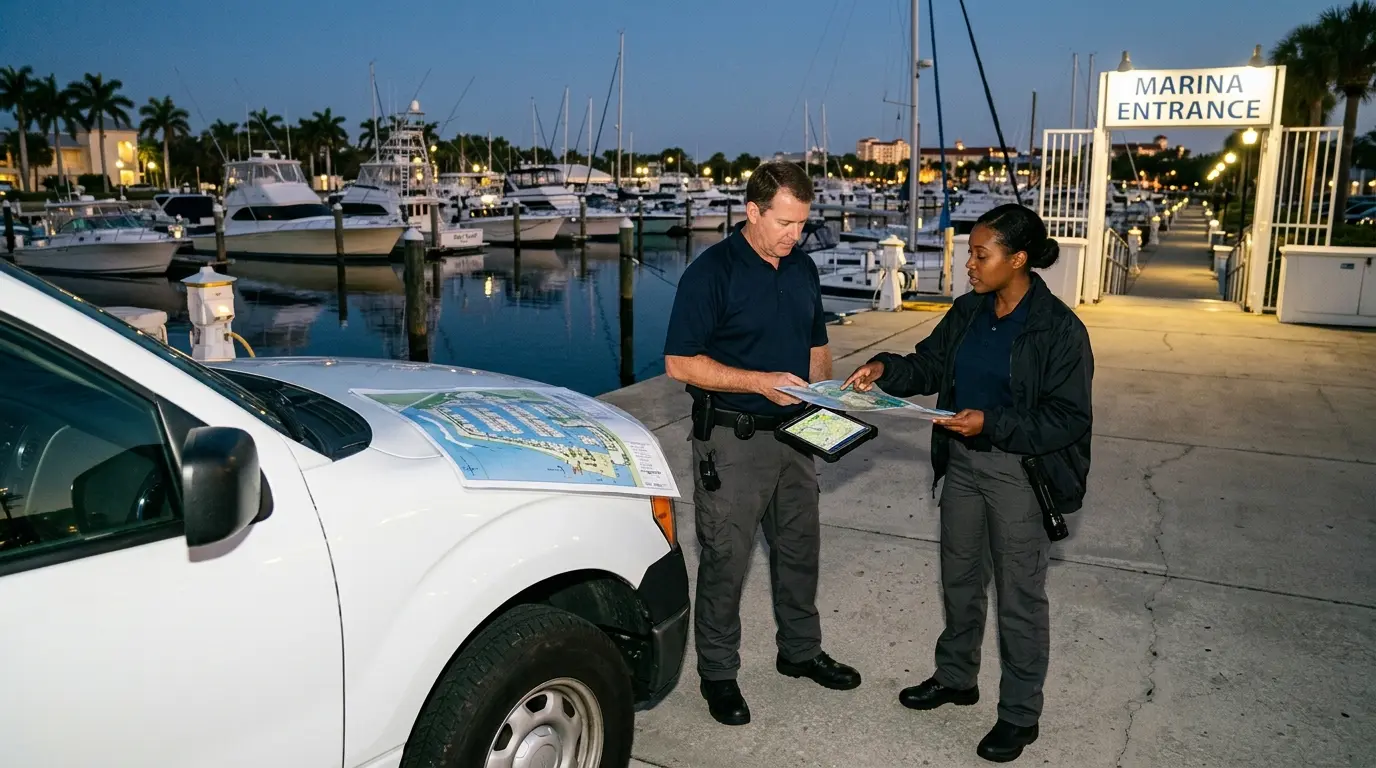
Once the marina office closes and the docks empty out, your property goes unattended for eight or more hours a night. Boats and gear worth six figures apiece sit behind nothing but a fence and a gate. This is the window when vessel theft, trespassing, and vandalism happen the most.
A marina security patrol needs more than good intentions to close that gap. This article hands over a real marina night patrol route built zone by zone. It covers the checkpoints that matter most, answers why the patrol timing has to stay unpredictable, and tells exactly what belongs in the patrol activity report.
Why After-Hours Marina Security Looks Different From Daytime Coverage
Daytime security relies on visibility. Staff work the office while boaters come and go. This activity makes bad behavior stand out fast. After dark, that visibility disappears, and a marina operator is trusting empty docks and a locked gate to hold until morning. Poor nighttime lighting makes it worse, since low visibility makes it harder for anyone to spot a person who doesn’t belong.
Specific security risks concentrate overnight: unauthorized access, theft from boats or dry storage, and fuel dock tampering where flammable materials sit unattended. Simply installing more cameras is not a solution for these risks. They call for a security officer physically moving through the property, since a patrol in motion catches what a fixed camera misses every time.
Building a Night Patrol Route for a Florida Marina
For a night patrol to work, walk the route in the same order every time a baseline is set, then deliberately break from that order on later passes. The fixed sequence below is that baseline, and the timing variation will be covered in the next section.
Start at the Waterfront Perimeter and Parking Areas
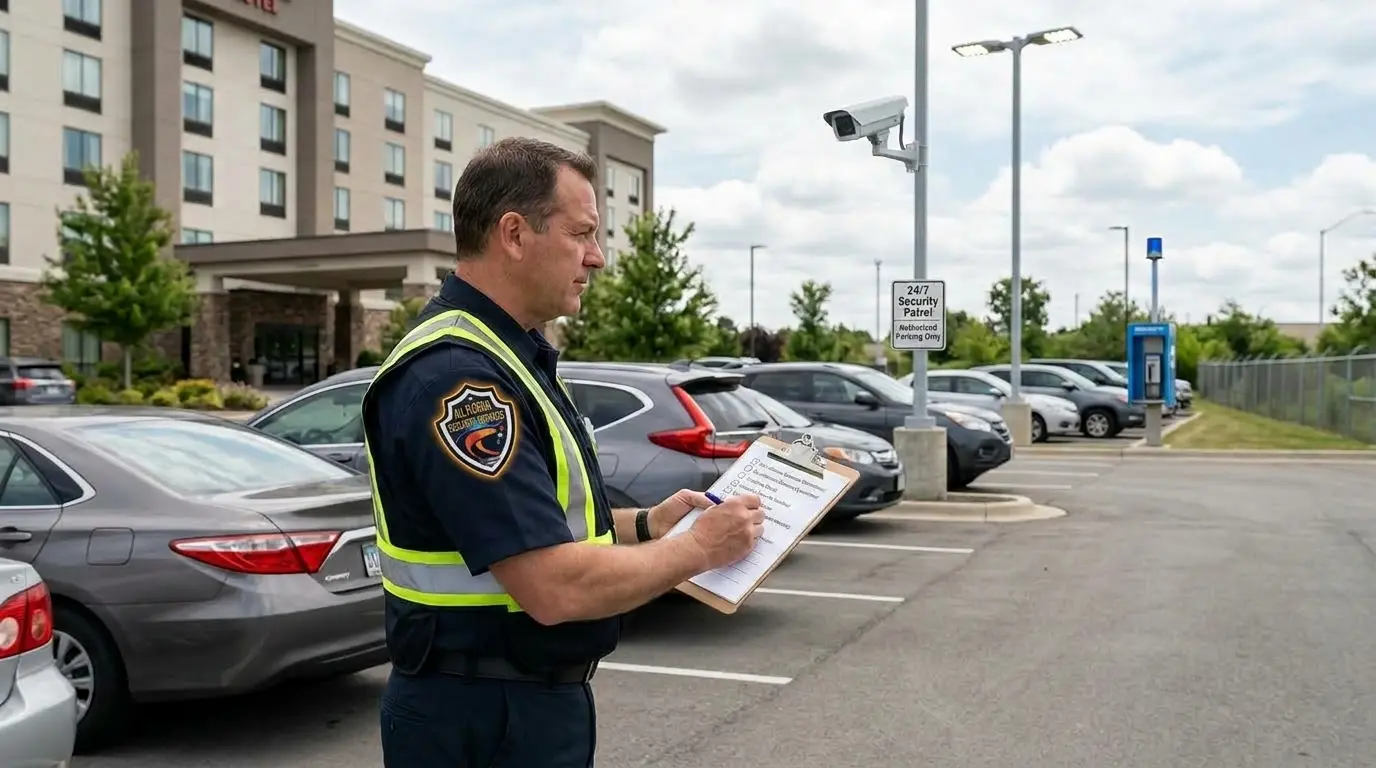
An after hours marina patrol starts at the property line. The waterfront perimeter and the parking areas form the first checkpoint, because anyone approaching by land has to cross them first. Here the officer checks for fencing gaps, parked vehicles that don’t match the tenant list, and any car sitting unusually long near the water’s edge.
Check Every Access Point and Dock Gate Before Moving Inward
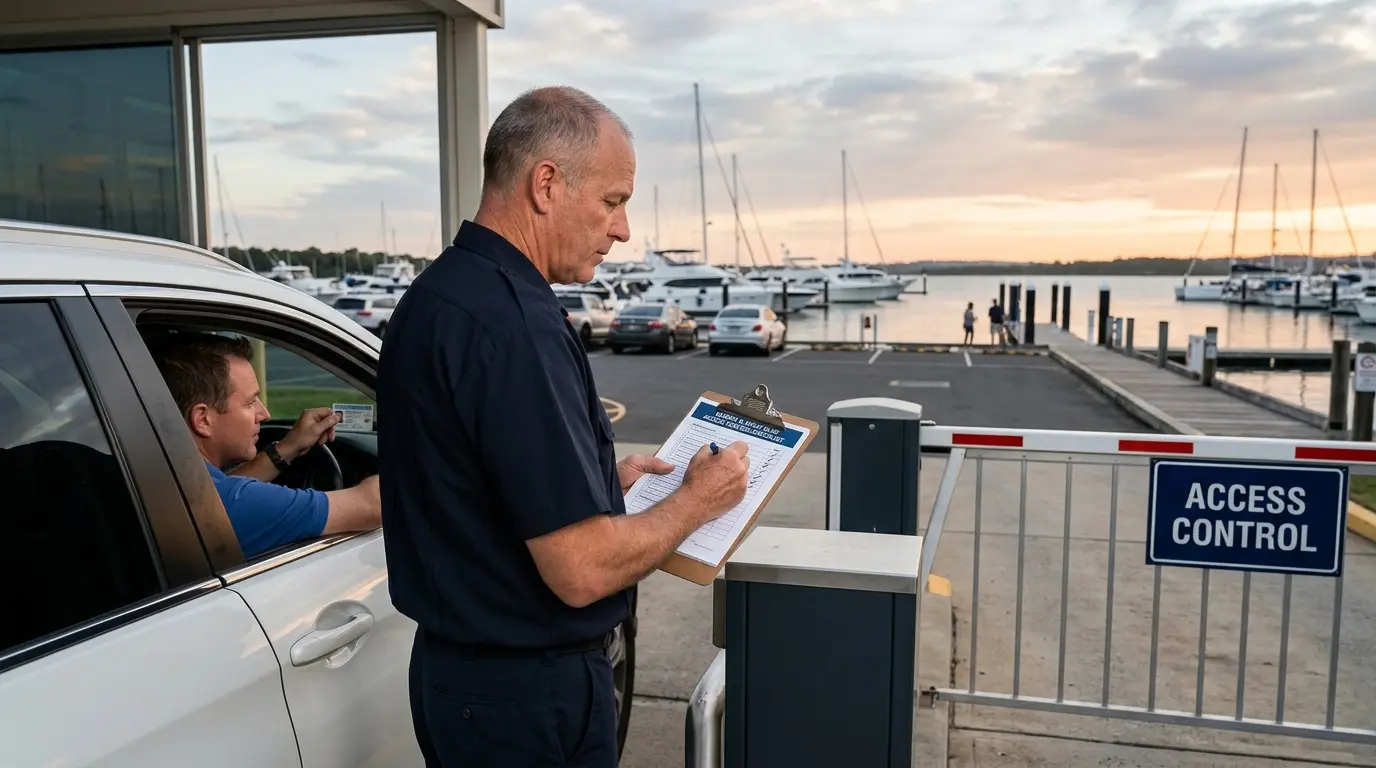
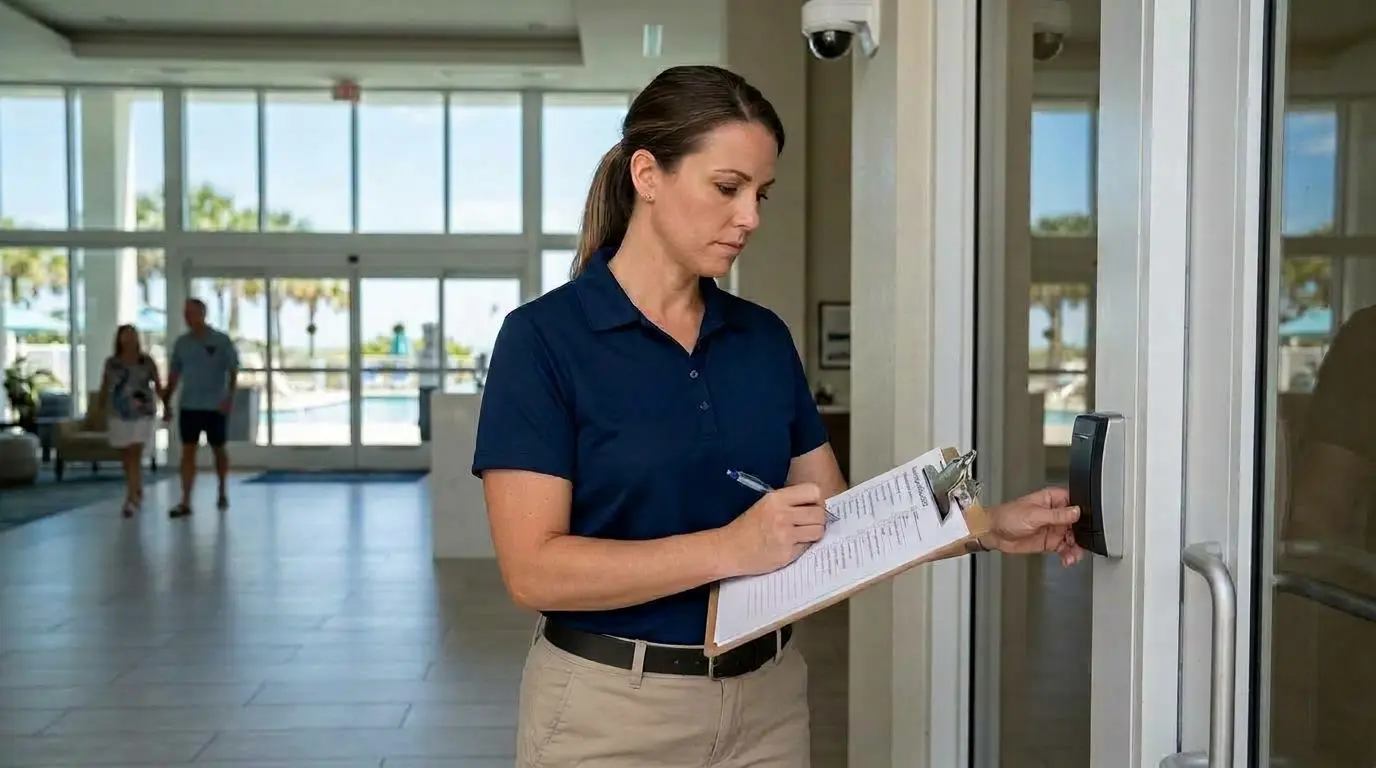
The route moves to the access points next. Every dock gate gets checked for a working latch before the officer proceeds past it, since a single propped gate defeats the rest of the route. This step also covers inspecting any access control systems on-site. The officer is not just walking past a card reader, but confirming it’s actually functioning and hasn’t been bypassed.
Walk the Dock Fingers, Slips, and Fuel Dock
The route moves onto the water itself. A proper dock security patrol means walking each dock finger and checking boat slips for anything obviously wrong. Some big red flags are lines that have come loose, a hatch left open, and a vessel sitting lower in the water than it should. The fuel dock gets a direct check every single pass, since unattended fuel areas carry both a security risk and a safety hazard after dark.
Cover Dry Storage, Boat Ramps, and Remaining Structures
The route extends to the areas that are otherwise easy to skip. Dry storage areas hold boats and equipment just as valuable as anything in the water, and they see less foot traffic, which makes them a target of opportunity. Boat ramps and any storage buildings get a final check before the officer loops back, since these sit at the edges of most routes and are often missed when a patrol runs short on time.
Close the Loop With a Randomized Second Pass
The route does not end after one lap. A second pass covers the same zones later in the shift, but it shouldn’t run on a fixed schedule. The goal of the second pass is catching anything that changed since the first one.
Why Patrol Timing Should Never Be Predictable
Anyone watching the marina for a few nights can learn when the patrol passes and when the property sits empty. Randomized patrols fix that problem for good. Vary the start time, the direction of the route, and the length of the pause at each checkpoint, so no outside observer can predict the gap in coverage. An officer who reverses the route order on alternate passes removes the easiest pattern a trespasser could exploit.
What Security Officers Inspect at Every Checkpoint
Before moving to reporting, it helps to know exactly what a proper inspection covers at each stop along the route.
- Are all dock gates latched and locked, with no signs of forced or propped entry?
- Is dock and pathway lighting functioning, with no new dark patches since the last pass?
- Are all boats in their assigned slips, secured, and free of visible damage or tampering?
- Is the fuel dock area clear of unattended equipment, unauthorized vehicles, or open access?
- Are there any unfamiliar vehicles in the parking areas, particularly ones parked near the water after hours?
- Is there any sign of suspicious activity — voices, movement, or lights in areas that should be empty?
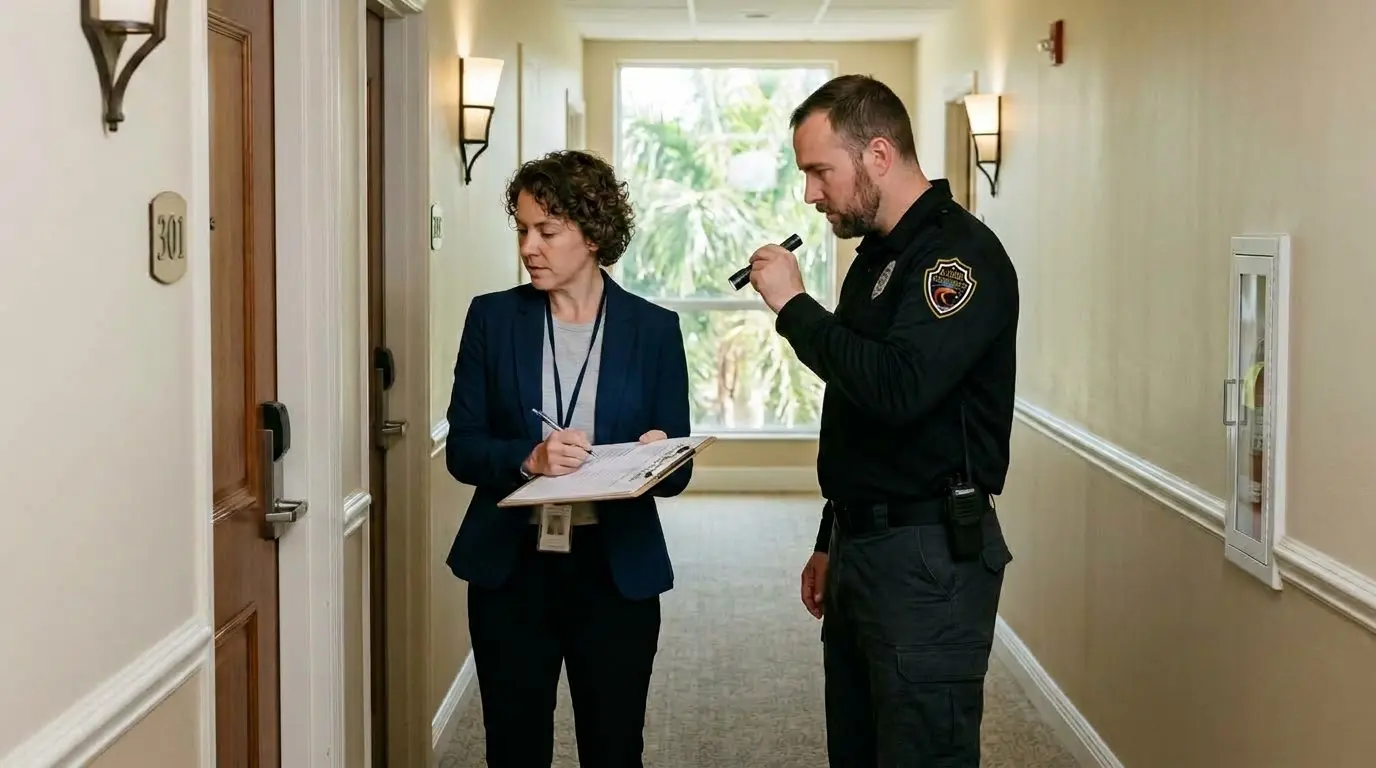
When something looks wrong, document it, radio it in, and only approach directly if it’s safe to do so. A marina patrol officer’s job is to detect and report, with local law enforcement handling anything that escalates beyond a security response.
What Must Appear in the After-Hours Activity Report
A patrol that is not documented gives a marina operator nothing to act on, whether that’s an insurance claim or a pattern of recurring issues. Every shift should produce a report covering the same standing requirements.
- Checkpoint Timestamps: The time the officer reached each zone on the route, confirming the full patrol was actually completed.
- Observed Conditions: Lighting outages, damaged gates, or hazards noted at any point along the route.
- Incident Notes: Any suspicious activity, trespassing, or unauthorized access observed, along with what action was taken.
- Shift Handover Summary: Open items passed to the next officer or to marina management the following morning.
A marina operator reviewing these reports weekly can quickly spot problematic patterns, such as a gate that keeps failing or a zone that keeps showing activity.
Frequently Asked Questions
How many officers does a marina need for after-hours coverage?
Most mid-sized marinas run effectively with one dedicated officer covering the full route, provided the property size allows a complete pass within a reasonable window. Larger marinas or ones with a separate yacht club section may need a second officer splitting the property in half for a full yacht club security patrol.
Should a marina patrol officer carry a weapon?
That depends on the property’s risk profile and local licensing requirements, and it’s a decision best made with the security provider directly. Most marina patrol services offer both armed and unarmed officers trained to the same detection-and-report standard.
Does a marina still need patrols if it has cameras and access control systems?
Yes. Technology and personnel cover different gaps. Cameras record what happened and access control checks credentials, but only a person walking the route in real time can judge whether something looks wrong and respond on the spot.
Protect Your Marina Around the Clock
A night patrol deters criminals only when trained officers walk it, night after night, without fail. All Florida Security Services provides professional security guards experienced in marina and yacht club patrol, from route planning to shift documentation. Contact us to build an after-hours patrol plan for your property.