Every growing business hits a point where informal safety measures stop being enough. You have more employees, more locations, more inventory, and a lot more at stake. At that point, security starts being the framework that protects everything you have built. The businesses that scale sustainably are the ones that treat protection with the planning and respect it deserves.
This article details both the physical and the digital aspects of security for businesses. It also uncovers what a cost-benefit analysis for a modern security arrangement looks like.
The Link Between Security and Business Scaling
Scaling a business directly means more exposure and high risk. As your brand visibility expands, you become a more attractive target for theft, fraud, and physical threats. The access control systems that worked in your startup phase stop being enough after you have scaled to a multi-site, high-traffic operation. Ad-hoc safety measures have gaps, and criminals exploit those gaps as your presence widens.
Security as a Business Enabler
Modern business protection services are not about locking things down — they are about keeping the operation moving safely. When your physical security infrastructure is solid, you can expand into new markets and scale your supply chain. Security creates the stability and peace of mind that aggressive business growth depends on.
The Trust Dividend
A demonstrated commitment to risk management signals maturity, and that builds trust with the clients who matter most. A complete corporate safety strategy delivers four macro dividends that compound over time:
- Enhanced Customer Trust: Securing sensitive consumer data builds the long-term brand loyalty that drives repeat business.
- Regulatory Compliance & Market Access: Meeting industry security standards unlocks enterprise contracts and international market entry that competitors can’t access.
- Operational Continuity: Preventing physical breaches, internal theft, and localized disruptions keeps your business running without costly downtime.
- Bottom-Line Protection: Reducing shrinkage, vandalism losses, and inflated insurance premiums directly strengthens your profit margin.
Physical Security for Businesses: Protecting Your Foundation for Growth
Your physical infrastructure is the engine of your business. It includes the company’s facilities, inventory, equipment, and people. Protecting that engine requires more than a lock on the front door. As companies scale, they need layered physical defenses that are proactive, visible, and mutually integrated.
The sections below break down the three pillars of a professional physical security strategy that grows with your business.
Deploying Professional Security Guard Services
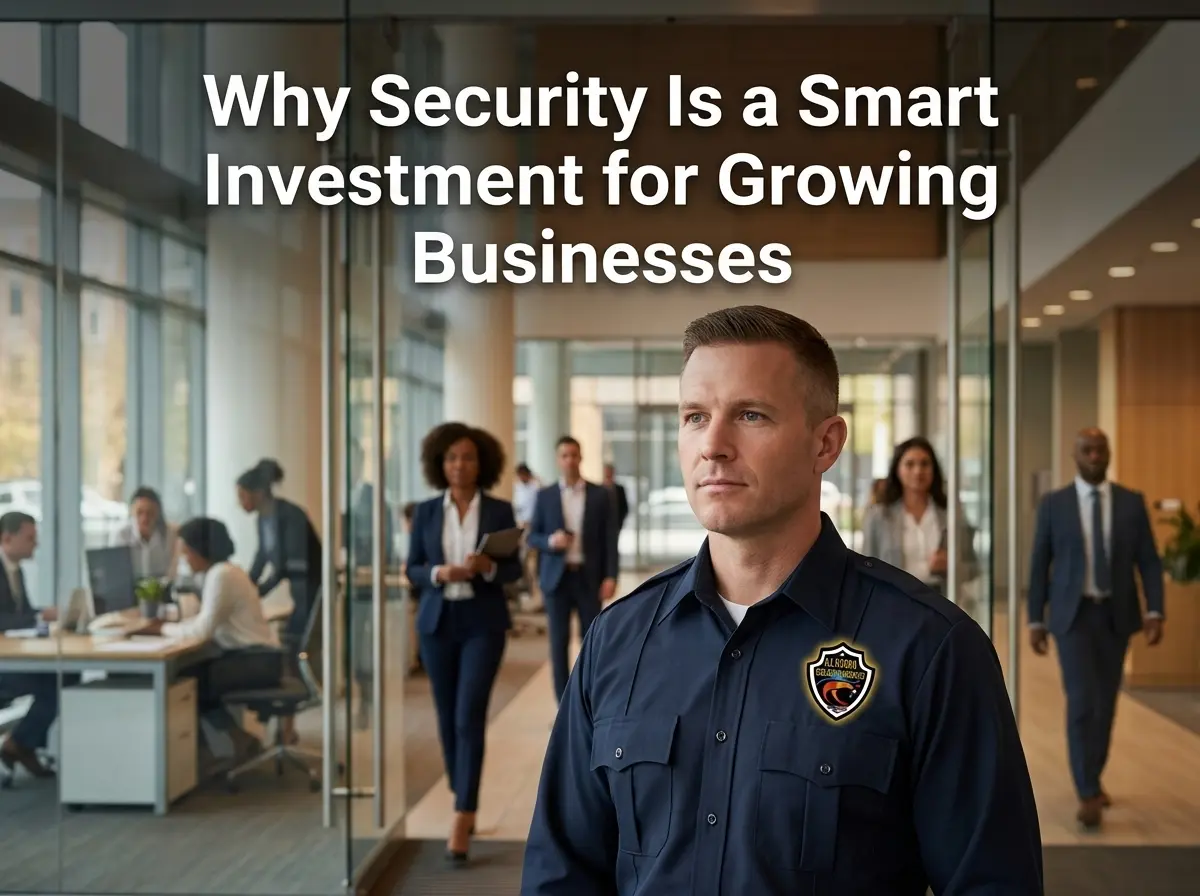
The presence of a uniformed officer from a private security company changes a potential criminal’s behavior instantly. Criminals and internal bad actors tend to avoid environments where detection is likely. Visible security guard services reduce the probability of incidents rather than just responding to them. That deterrence effect alone justifies their deployment cost for most commercial facilities.
When an incident does happen, response time is everything. Public emergency services are not fast enough to contain an active physical breach or manage a medical crisis. Professional security guard services provide immediate intervention, making critical decisions in the first moments before outside responders arrive.
Implementing Advanced Access Control and Visitor Management
Mechanical keys and badge-swipe systems were fine for smaller operations. Growing businesses need biometric checkpoints and logged visitor management systems. These systems restrict access to sensitive corporate zones without relying on human memory or manual verification. Access control infrastructure creates an auditable boundary between your general workspace and your restricted areas.
Well-integrated commercial security services pair technology with trained personnel at high-traffic entry points. Security officers handle visitor check-in, video monitoring, and credentials verification without slowing down the workflow. That integration separates a functional access control system from one that creates unnecessary friction and causes frustration for employees.
Modern Surveillance with Monitored Alarm Systems
Modern video surveillance goes well beyond just recording footage for review. Smart CCTV systems come with real-time video analytics. They allow security teams to detect unauthorized access attempts and respond before the situation escalates. Commercial security systems with their intelligent sensors give your security professionals a complete picture of the facility.
Physical protection assets serve distinct roles within that broader security ecosystem:
- Perimeter Patrols: Active monitoring of external boundaries, loading docks, and parking facilities to reduce cargo theft and prevent vehicle vandalism overnight.
- Stationary Access Guards: Officers at main lobbies or executive suites to verify credentials and manage visitors throughout the day.
- Asset Tracking Personnel: Corporate security services to monitor high-value inventory in transit and protect storage areas from internal and external threats.
Cybersecurity: Defending Your Expanding Digital Footprint
Physical growth and digital exposure scale together. Every new device and employee account you add creates a new potential entry point for data theft. A breach in your network can halt your physical operations just as effectively as a break-in.
1. Network Hardening and Endpoint Management
Every laptop or printer connected to your corporate network represents a potential access point for attackers. Unmanaged endpoints on local networks are the digital equivalent of leaving a side door propped open. A comprehensive security investment includes auditing every connected device, enforcing patch management protocols, and segmenting sensitive systems from general-use networks. Also, controlling what physical media (USB drives, personal hardware) enters your facilities is a foundational element of corporate security.
2. Establishing Human Firewalls via Employee Training
The most sophisticated network protection in the world fails if an employee clicks a malicious link. Intruders specifically design phishing attacks to exploit human trust, urgency, and routine behavior. Ongoing employee education programs teach staff to recognize suspicious communications. They learn to verify requests through proper channels and report potential threats before they can cause a security breach.
Remote employees introduce specific threats that require specific protocols. They need mandatory VPN deployment and clear guidelines around public Wi-Fi usage. Connecting to an unsecured airport network without the right protections can expose the entire corporate infrastructure in minutes.
Cost-Benefit Analysis for Commercial Security Investment
The financial argument for security investment is straightforward when you run the actual numbers. A proactive security posture has a predictable and manageable cost. The alternative is waiting for a serious security breach or a physical loss, which can destabilize years of growth. This is why every business operator needs to understand the real cost to ROI comparison of their security expenses.
Calculating Security ROI
Compare the cost of retaining a business security company against the financial implications of a worst-case event. The cost of a commercial data breach and property damage combine into losses that most growing SMEs cannot absorb. You may also have to face legal liabilities from an unprotected incident.
A fixed monthly cost of protection is a far smaller risk than the hefty cost of inaction. Certified business security services also directly reduce your insurance overhead. Commercial underwriting agencies apply meaningful premium discounts to facilities protected by recognized private security guard services.
The Security Investment Risk Matrix
These variables determine how your business should model financial risk and allocate security resources:
- The total market value of on-site inventory sets the floor for your protection budget. It also dictates the intensity of your access control deployment.
- Historical crime data in your zip code directly affects commercial property insurance risk scores. It dictates the recommended density of on-site security personnel.
- Operating in regulated industries like healthcare, finance, or defense manufacturing has higher risk. Here, non-compliance fines for security failures will typically exceed the cost of guard deployment by a wide margin.
What to Look For When Sourcing Enterprise-Grade Protection
Not all security providers are capable of scaling with your business. A vendor that works for a single retail location may not have the personnel depth to protect a multi-site enterprise. You also have to consider executive travel, sensitive IP protection, and compliance requirements.
The right provider offers customized security planning for businesses and communicates transparently about everything. Here is how the major security service categories map to real commercial applications:
| Security Service Category | Core Operational Focus | Ideal Commercial Application |
| Commercial Security Services | Facility access control, physical asset tracking, CCTV integration, and night patrols. | Warehouses, manufacturing plants, and sprawling corporate campuses. |
| Corporate Security Services | Executive protection, intellectual property safeguarding, and high-level risk assessments. | Boardroom meetings, shareholder summits, and high-profile corporate travel. |
| Professional Security Services | Rapid emergency response, conflict de-escalation, and specialized crowd management. | Retail centers, financial institutions, and high-traffic public venues. |
Critical Planning Note: A truly resilient growth plan unifies physical and digital defenses without treating either in isolation. Your security provider works with your internal IT team to prevent hardware tampering and identify localized cyber-snooping devices. Remember, physical and digital security are two layers of the same protection strategy.
Frequently Asked Questions
How does a security investment contribute to a business’s revenue growth?
Certified security infrastructure satisfies the strict vendor prerequisites required by enterprise clients. It demonstrates risk maturity, unlocks compliance certifications, and positions your business to win high-value institutional contracts competitors can’t qualify for.
What is the difference between general business protection services and specialized corporate security services?
General protection covers broad asset safety, access gatekeeping, and loss prevention. Corporate security services address data defense and countering sophisticated espionage threats targeting high-value targets.
How often should a rapidly growing business update its security risk assessment?
Conduct a comprehensive assessment annually at minimum. Trigger an immediate review after opening new facilities or deploying major cloud systems that expand your exposure.
Protect What You’ve Built — Before You Have To Recover It
All Florida Security Services provides professional security for businesses with customized planning for every growth stage. Whether you need on-site security officers, access control, or a full security risk assessment, we handle it all. Our team is ready to build a protection strategy that scales with your operation.
Connect with a business security expert and take the first step toward protecting everything your business has earned.