
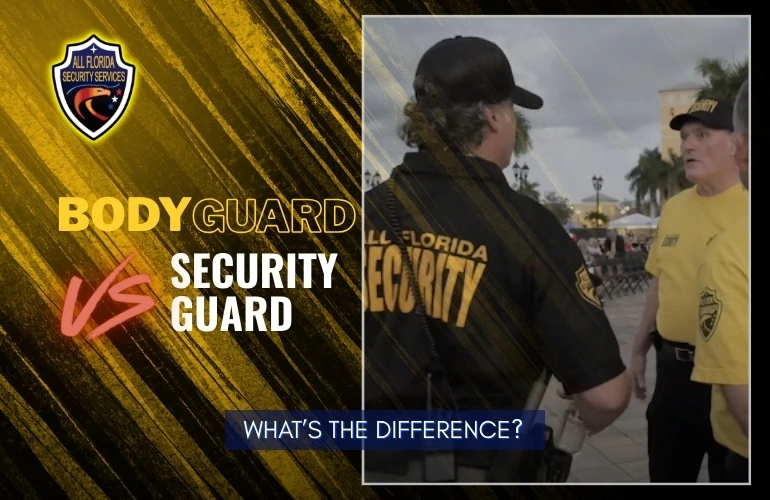
One of the major aspects of the difference between a bodyguard and security guards is the difference in the protection they provide. The security guards usually monitor the property and the movement of the crowds. They will always be seen checking badges at doorways, patrolling parking lots, or on video feeds. Their primary objective is to curb theft, vandalization and unauthorized access before issues come up.
Conversely, bodyguards are normally concerned with the safety of one individual. They are near their client and monitor threats on a real-time basis. A bodyguard would be requested in case you needed personal protection. When you require someone to protect a building, you would normally request a security guard. To further compare them, we have categorized these factors into four distinct aspects as shown in the following table:
| Aspects of Difference | Bodyguard | Security Guard |
| Primary Focus | Provides Personal protection | Ensures Property and public safety |
| Duties | Assessing risks and escorting for physical protection, emergency response | Access control, surveillance, incident response, and reporting |
| Skills and Training | Personal Protection training and situational awareness | Security training and observational skills |
| Job Site | Works in close proximity to the client at various locations | Performs routine patrols at fixed locations |
Primary Focus
A bodyguard, also called a close protection officer, is primarily charged with the task of providing personal protection and security to an individual or a small group of individuals (in most cases, high-profile or risky persons such as celebrities, politicians, executives, etc.).
Conversely, the primary role of security guard services is to guard property, assets, and individuals within a particular premise, like a retail store, office building, or residential complex.
Training and Skills
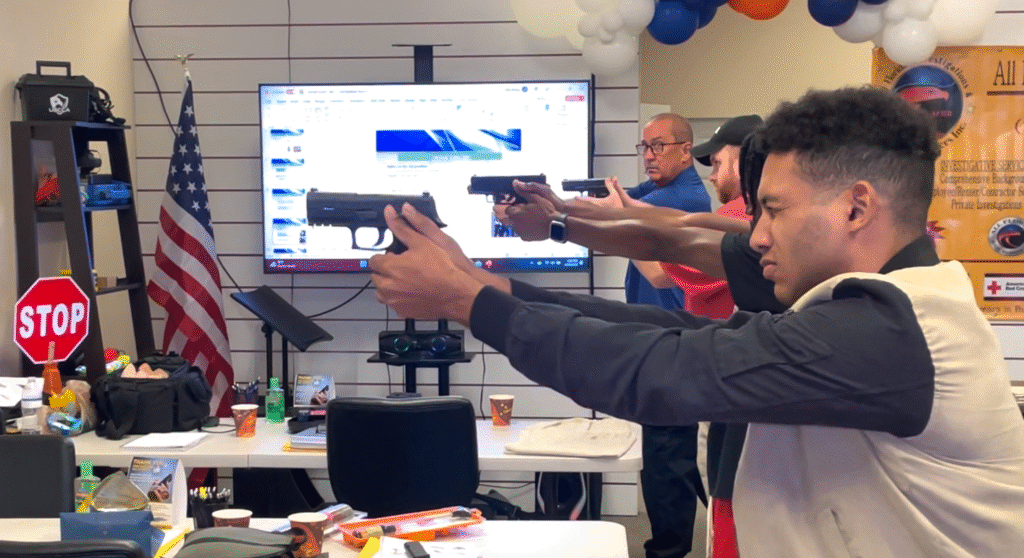
The majority of the security guards begin with a state license. They are taught the fundamentals, how to patrol a building, surveillance over cameras, and minor problems such as lost items or open doors.
Bodyguards, on the other hand, go a step further on those basics. Other than learning defensive techniques, they train on safe driving and closely observe how people behave way before things can go wrong. They also train a lot in first aid and evacuation training, and hence, they are equipped to respond immediately in case a scenario becomes dangerous.
Typical Clients
Security guards are typically used in such settings as office high-rise buildings, shops, car parks, and sports and entertainment venues. An art gallery owner may, as an example, contract them to direct lines when a new exhibition is opening, whereas a warehouse in the suburbs usually has overnight guards to minimize equipment theft.
In the meantime, bodyguards deal with individuals who have more personal risks. They may take entertainers to perform at Soldier Field, guard international guests in town universities, or escort executives to and from downtown.
What Do They Wear and Carry
The uniform of a security guard is made to be visible. It is embroidered with a logo shirt/ jacket, dark trousers, and a utility belt with the radio, flashlight and possibly a baton. Most of the mischief is usually deterred by that uniform.
Conversely, personal security guards wear clothes that are blended. They are typically dressed in plain or custom-made suits and carry concealed equipment, such as handcuffs, pepper spray, or a gun. You may even find them with a hidden camera in their jacket pocket or with a built-in earpiece. This low profile appearance shows the practical distinction between a bodyguard and a security guard.
Costs and Contracts
Finally, cost is something that every client ought to be aware of in advance. Security guards typically charge on an hourly basis or provide a fixed charge on a given shift, depending on your requirements and some other factors.
On the contrary, bodyguards are more expensive due to the special training and personal care. You would probably need to pay a daily or weekly retainer, which includes presence on site and 24/7 on call services. The fee of a bodyguard reflects a completely personalized service that is designed to match the personal requirements of the VIP that the bodyguard is employed to guard.

Conclusion
Bodyguards are concerned with the personal security of individuals and, therefore, they need specialised training and expertise to deal with high-risk environments and closely guard and offer intimate security. Security guards are concerned with property and citizen protection in a given area, but they mostly deal with the more mundane aspects of patrol and control.
Security in Florida is all about your safety and protection in whichever way you might need it. We are concerned about your security and your peace of mind. Being one of the most trusted security organizations in Florida, we are more than willing to assist you in choosing the appropriate service and executing it at a professional level. Contact us today, and our VIP protection providers in Florida will be able to design the ideal protection plan to suit you.