
Mobile patrol makes sense when your HOA has multiple entry points with budget pressure that rules out staffing the gates around the clock. It is also the better fit when your board needs coverage across a large or spread-out layout, along with interior streets and shared amenities.
Many boards also end up choosing a hybrid model that blends a stationed guard with roving coverage. This guide breaks down the specific conditions where mobile patrol wins on its own, so your board can make that call with confidence. By the end, you will know exactly which signals point toward mobile patrol, which point toward a gate guard, and which point toward running both together.
Gate Guard vs. Mobile Patrol: The Core Difference
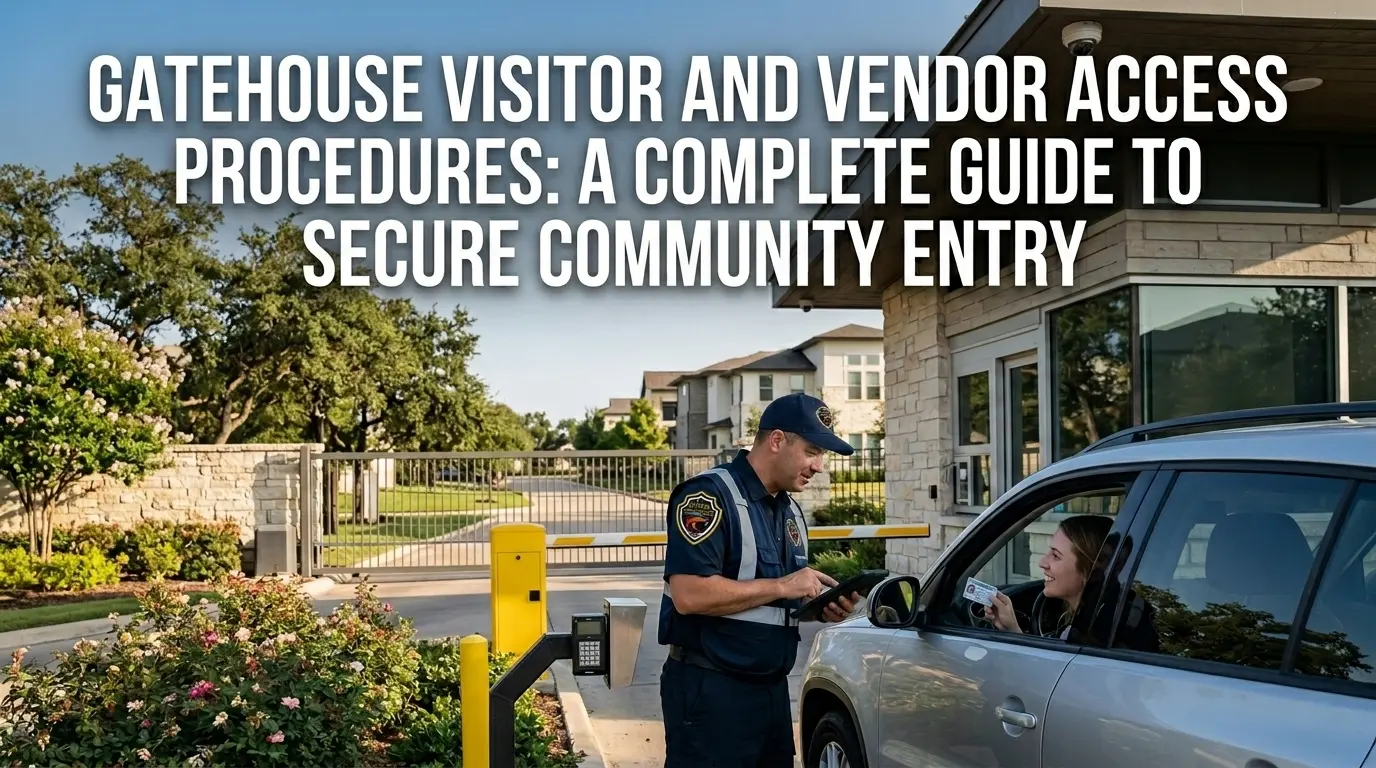
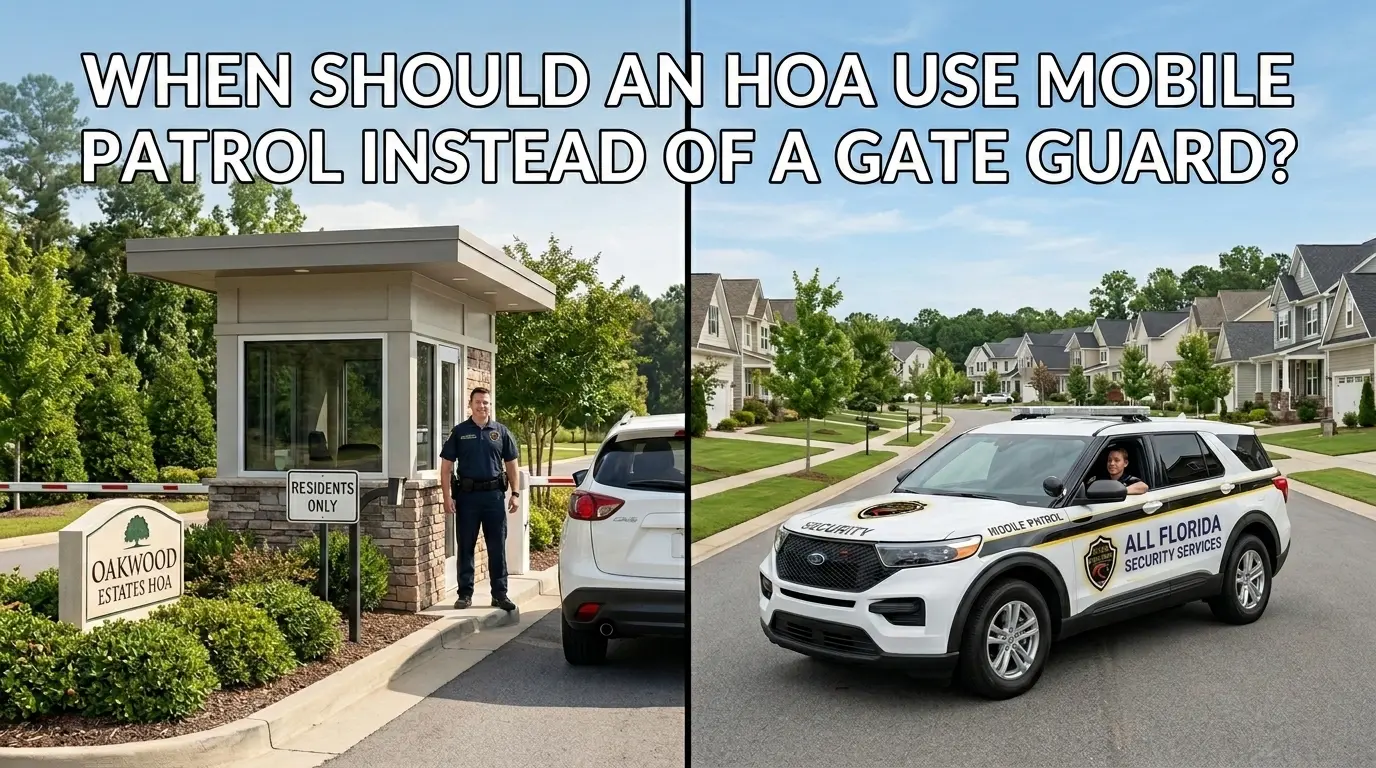
A gate guard is a fixed-post security officer stationed at a single access point, usually a gatehouse, lobby, or front desk. Their main job is verifying identity and controlling who comes through that one entrance. It is a stationary role built around one location.
Mobile patrol works differently. A patrol officer moves through the property on a scheduled or randomized route, covering streets, common areas, and perimeter points. Patrol vehicles are marked, and officers log their route using GPS-verified checkpoints along the way. The following table presents a general comparison of HOA Mobile Patrol vs Gate Guards:
| Feature | Gate Guard | Mobile Patrol |
| Presence | Stationary, single post | Roving, multiple stops |
| Coverage Area | One access point | Entire property footprint |
| Access Control Strength | High at that one gate | Lower, spot-check style |
| Response Style | Immediate at the gate | Scheduled checks, faster overall footprint |
| Typical Cost Driver | Hourly rate x shift count | Visits or shared route pricing |
| Best-Fit Layout | Single defined entrance | Multiple entries or large interior |
6 Signs Your HOA Should Choose Mobile Patrol for HOA Coverage
These six conditions, whether they show up alone or together, are the clearest signs that mobile patrol delivers more value for your community than a stationed guard.
- Your community has multiple entrances or no single chokepoint. A fixed guard can only watch one gate at a time. If residents and visitors can enter from several roads, staffing every entrance gets expensive fast, and a patrol route covers all of them instead.
- Your property spans a large or spread-out footprint. Sprawling single-family developments, multi-street HOAs, and communities with detached amenity areas exceed what one stationary post can realistically observe. A patrol vehicle covers ground a guard booth never will.
- Budget can’t support 24/7 staffing. Round-the-clock guard coverage requires multiple shifts and multiple guards on payroll. A patrol vehicle can service several checkpoints across a single shift, often at a much lower total cost.
- Risk is concentrated in the interior, not the gate. If past incidents involve the pool area, parking lots, or the rear perimeter rather than the front entrance, a fixed gate guard offers little protection against the problem you actually have.
- You need unpredictability as a deterrent. A stationary guard follows a fixed, visible schedule that repeat offenders learn to work around over time. Randomized patrol timing removes that predictability and makes the community a harder target.
- You already have access control technology at the gate. If your community uses a keypad, transponder, or camera-gated entry, a human guard at that post may be redundant. That budget can shift toward patrol coverage of everywhere the gate tech doesn’t reach.
Most boards considering mobile patrol are not dealing with just one of these signs. They’re usually looking at two or three at once, which only strengthens the case for making the switch.
When HOA Gate Guard Services Still Make More Sense
Communities with a single, defined main entrance usually get more value from a stationed guard. This includes high-rises, lobby-style buildings, or gated developments where residents expect a face-to-face check-in. Access control and resident relationship-building both depend on a consistent, dedicated presence at that one point.
Gate guards do have a known weakness: tailgating. A fixed post can be bypassed if an unauthorized vehicle follows a resident’s car through the gate without stopping. Once that vehicle is past the entrance, no one is watching the rest of the property until the next scheduled check. That gap is exactly why layout and interior risk matter as much as the entrance itself.
What Mobile Security Patrol Actually Costs vs. a Gate Guard
The cost structure between the two HOA security options works very differently. A gate guard is billed by the hour, per post, so full-time coverage multiplies quickly across shifts and days. Mobile patrol is billed by the visit or through a shared route, which spreads the cost across the whole property instead of one fixed spot.
As a general market range, 24/7 gate guard coverage often runs into five figures monthly for a single post. Comparable mobile patrol coverage can run a fraction of that cost for many mid-sized communities. Final pricing always depends on region, guard licensing requirements, shift hours, and how often patrols run.
Before comparing quotes, your board should have clear answers to a few budget questions:
- Does the community need continuous coverage, or targeted hours like evenings and weekends?
- Can existing cameras or access control reduce the number of patrol visits needed per night?
- What would one uninsured theft, injury, or a liability claim cost compared to a year of patrol coverage?
The Case for a Hybrid Security Strategy
A common hybrid pattern pairs a stationed guard covering the main gate during peak daytime or evening hours with mobile patrol covering the interior and perimeter overnight. This works well because foot traffic drops overnight, which is exactly when full-time gate staffing gets hardest to justify.
This approach lets a board redirect guard budget toward the hours and areas where a fixed presence adds real value. Instead of paying for a full-time post that sits idle for long stretches of the day, the community gets targeted coverage where and when it actually matters.
How to Decide: A Board-Ready Framework
Treat this as a working checklist to bring to your next board meeting when deciding the right model for your gated community security services.
- Map every entry and access point. Walk or drive the property and note every place a person or vehicle could get in, not just the main gate.
- Pull incident history by location. Review past incident reports to see whether problems cluster at the entrance or spread across the interior and amenities.
- Identify peak-risk hours. Note whether issues happen mostly during the day, overnight, or around specific events like holiday weekends.
- Total the realistic guard-hours needed for full coverage. Estimate what it would actually cost to staff every problem area around the clock.
- Compare that figure against a patrol-based plan. Get a quote from a security company for scheduled or randomized patrol visits covering the same footprint and hours.
- Match the model to your findings. A single, high-traffic entry point points toward a guard. Multiple entry points or a large interior points toward patrol. Overlap in both points toward a hybrid plan.
Get a Security Assessment for Your Community
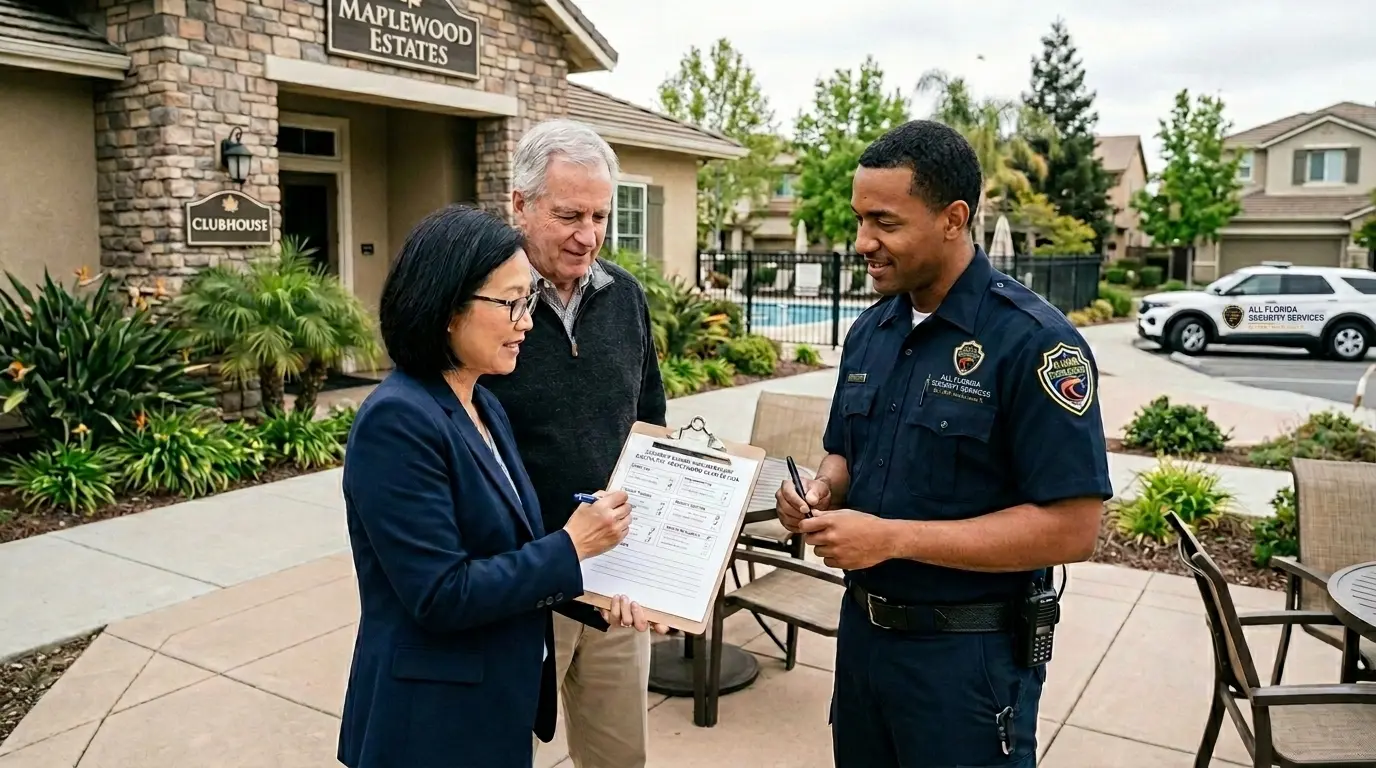
The right model for your HOA depends on your specific layout, incident history, and budget. A professional site assessment gives your board hard data to work with instead of a guess made in a meeting room. All Florida Security Services offers site assessments for HOA boards and property managers across Florida weighing mobile patrol, gate guard services, or a hybrid plan.
Request an assessment or quote to see what ideal security coverage actually looks like for your community.
Frequently Asked Questions
Does mobile patrol provide the same access control as a gate guard?
Patrol officers can check ID during a pass-through, but they cannot verify every vehicle entering the way a stationed guard can. That’s why open communities are the better mobile patrol fit.
Is mobile patrol enough for a gated community with one entrance?
A single, defined entrance usually still benefits from a stationed presence for access control. Patrol works best added as a supplement for the interior, not as a full replacement.
What proof does an HOA get that mobile patrol visits actually happened?
Reputable providers use GPS-verified checkpoints and digital activity reports. That gives your board a timestamped record of each patrol pass instead of relying on the vendor’s word.