Florida’s private security industry is one of the fastest-growing employment sectors in the state. Demand for trained, licensed security personnel keeps climbing across residential communities, corporate offices, hospitals, and high-risk venues. If you are thinking about breaking into the field or moving up from an unarmed role to a higher-paying armed position, understanding Florida’s licensing structure is the first step you need to take.
Overview of The Florida Security Certification Landscape
The Florida Department of Agriculture and Consumer Services (FDACS), through its Division of Licensing, enforces all private security regulations under Chapter 493 of the Florida Statutes. Every licensed school, every approved firearms instructor, and every working security officer operates under this authority. FDACS sets the curriculum standards, approves training providers, and issues the credentials you need to legally work in the state.
Investing in structured security officer training is one of the most direct paths to stable, scalable income in Florida’s labor market. Entry-level unarmed roles serve as a launching pad. With the right credentials, you can move into armed contract work at banks or executive protection, which pay significantly more than standard guard positions.
Unarmed vs. Armed Pathways: Basic Requirements & Career Paths
Class D License Requirements:
- You must be at least 18 years old to apply for an unarmed Class D Security Officer License in Florida.
- You must successfully complete 40 hours of FDACS-approved security officer training before applying.
Both Class D & Class G License Requirements:
- You must be a U.S. citizen, a lawful permanent resident, or legally authorized to work in the United States.
- You must submit an application to the Florida Department of Agriculture and Consumer Services (FDACS).
- You must complete electronic fingerprinting and undergo a criminal background check.
- You must not have any criminal convictions or other legal restrictions that would lead to disqualification.
Class G License Additional Requirements:
- You must be at least 18 years old to apply for a Class G Statewide Firearm License. However, 21 years of age is usually expected/required for many armed security positions due to employer and assignment requirements.
- You must have a valid Class D Security Officer License or qualify for it (or another qualifying Chapter 493 license).
- You must successfully complete 28 hours of FDACS-approved firearms training, including classroom instruction, range training, and firearms qualification.
- The part many candidates overlook is that you must qualify with the specific firearm type and caliber you intend to carry during professional duty.
- You must complete annual firearms requalification training to maintain your Class G license.
Florida Security Career Paths:
- Unarmed guards focus on access control, observation, and incident reporting across general security posts.
- Armed officers are authorized to carry a firearm on duty and are deployed in higher-risk, higher-paying environments.
- Both pathways require completing approved security education through an FDACS-licensed training school before applying.
Unarmed Security Officer: The Class D License 40-Hour Curriculum
The Class D license is your entry point into Florida’s private security workforce. Before FDACS will process your application, you must complete a full 40-hour security training class at a state-licensed DS school. Here is exactly what those 40 hours cover.
Course A: The Core 24-Hour Legal & Safety Foundation
Course A runs 24 hours and covers the legal and operational knowledge every unarmed officer must carry on the job. This course serves as a working knowledge base built on the real situations guards face in the field. Here is what the course cocers in detail:
Legal Frameworks & Liability
This block covers Chapter 493 F.S. in depth, including the limits of citizen arrest authority and retail theft detention protocols. You will learn where your legal power ends and what constitutes unlawful detainment. Also, how misapplication of force will result in certain liabilities.
Emergency Response & First Aid
Guards are often the first on scene during a medical or evacuation emergency. Course A covers basic life support, CPR orientation, and the Florida Good Samaritan Act. You will also train on how to respond to active bomb threats and fire evacuations without creating additional panic.
Patrol & Observation Fundamentals
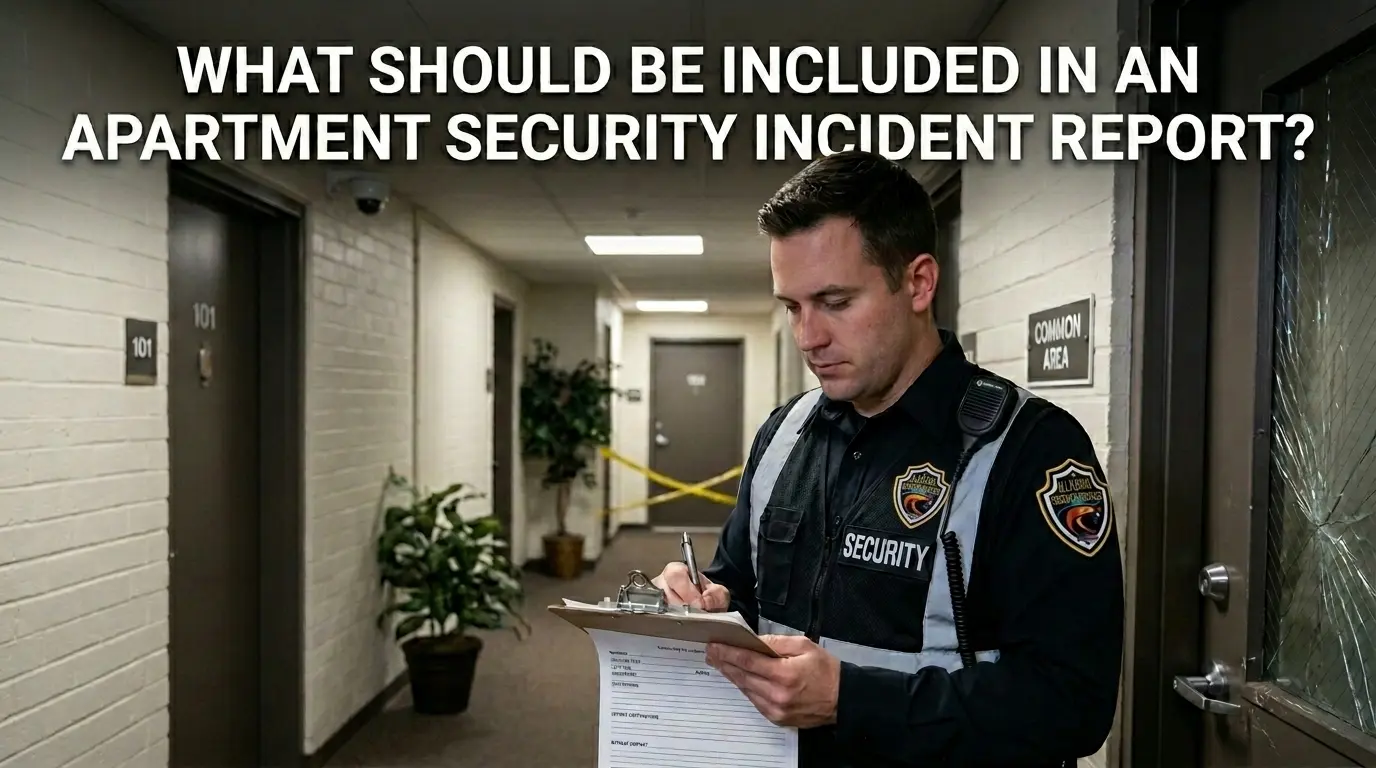
This section builds your core operational skills, which include field note-taking, access control, and structured report writing. Florida’s training standard requires mastery of the six pillars of a complete incident report: Who, What, When, Where, Why, and How. You cannot survive in the Florida security industry with weak documentation.
Course B: The 16-Hour Advanced Operations Specialization
Course B adds 16 hours of applied operations training that prepares you for the social complexity of real security assignments. The course focuses on communication skills, public relations, personal security, specialized assignments, and other topics commonly encountered in security operations.
Interpersonal Communications
Verbal de-escalation is one of the highest-value skills a guard can have. This section covers body language reading, tone management, and public relations techniques for handling agitated individuals. You will also learn appropriate procedures for interacting with media personnel.
Specialized Security Challenges
This block addresses terrorism awareness indicators and crowd management techniques. You will also cover internal and external theft recognition. This is a critical skill for retail, warehouse, and logistics assignments where shrinkage is a constant operational concern.
The Final Examination Requirements
- Students must pass two separate written exams — a 100-question test for Course A and a 70-question test for Course B.
- A minimum score of 75% is strictly required on both assessments to receive a passing result.
- Passing both exams earns you the Certificate of Security Officer Training, which is submitted with your Class D license application to FDACS.
Armed Security Officer: The Class G License 28-Hour Curriculum
The Class G Statewide Firearm License unlocks the highest-paying tier of security work in Florida. To get this license, you need to take a structured 28-hour curriculum that combines legal classroom instruction with live-fire range qualification.
You cannot hold a Class G license in isolation. Florida requires that every Class G applicant either hold an active Class D, Class C (Private Investigator), or Class CC (Private Investigator Interns) license, among a few other options. You can also apply for a Class D and Class G license simultaneously.
The Hybrid 28-Hour Course Breakdown
The 28-hour Class G curriculum is split between classroom instruction and hands-on range work. Both components are mandatory, and neither can substitute for the other.
Classroom & Theoretical Instruction (20 Hours)
The classroom block can be completed via live instructor-led online training, making it accessible for students across Florida regardless of location. It covers Florida Statutes Chapters 775, 776, and 790 — the legal framework governing use of force, weapons possession, and justifiable defense. You will study the use of force continuum, weapon mechanics, and fundamental gun safety principles in depth.
Range & Practical Hands-On Training (8 Hours)
The remaining 8 hours require in-person range attendance. You cannot complete this portion online. This training includes weapon drawing technique and clearing complex weapon malfunctions under stress. You will also learn the basics of grip, stance, and trigger management. These are the physical skills that make your classroom knowledge operational.
Live-Fire Qualification Required for Class G License
The Florida Class G qualification mandates a structured live-fire course. Every round fired and every stage serves a defined assessment purpose.
The 144-Round Course of Fire
The full qualification course distributes 144 rounds across three stages. You fire 48 rounds in a practice pass, followed by two separate 48-round qualification cycles. Your score across both qualification cycles determines whether you meet the state’s minimum passing threshold.
Approved Duty Calibers
FDACS approves a specific list of chamberings for on-duty carry. Authorized calibers include 9mm, .40 S&W, .45 ACP, .380 ACP, and .38 Special. When on duty, you will only be able to carry the firearm and caliber with which you qualified the course. Florida permits both revolvers and semi-automatic handguns for armed security guards.
Specialized Equipment Certifications in Florida: Advanced Security Training
A Class D or Class G license gets you hired. Specialized equipment certifications get you paid more. Florida’s security programs for intermediate force tools are designed to expand your legal toolkit. This gives a boost to your marketability for the clients who require certified less-lethal capability. In fact, the private security market now increasingly requires guards who can demonstrate proficiency in intermediate force options before placement on high-value contracts.
Handcuff, OC, and Expandable Baton Training for Less-Lethal Defense
- Handcuffing Techniques: Training covers safe handcuff application and dual-locking procedures to maintain control without causing injury.
- Pepper Spray (Oleoresin Capsicum/OC): Pepper spray training emphasizes de-escalation before deployment. It covers spray pattern selection, exposure management after use, and cross-contamination prevention to protect bystanders and the officer.
- Expandable Baton Training: Instruction includes defensive blocking angles and approved striking zones. It also covers how the baton fits within the use of force continuum as a proportional intermediate response tool.
Weapon Retention and Close-Quarters Defense
- Holster Security: This training develops the physical habits and techniques an officer needs to maintain firearm control during aggressive confrontations. It helps protect your primary asset before a disarm attempt escalates.
- Disarm Defense Tactics: This module covers hand-to-hand redirection strategies to neutralize suspect attempts to seize an officer’s sidearm.
4 Steps to Florida Security Certification
Getting your Florida security certification does not have to be confusing. The process follows a clear sequence, and you can know exactly what to expect before you start.
- Step 1 — Complete Approved Security Education:
Enroll in an FDACS-licensed DS school and complete your 40-hour Class D curriculum, your 28-hour Class G blocks, or both, depending on your career target.
- Step 2 — Complete Electronic Fingerprinting:
Visit an approved Livescan vendor to submit your fingerprints for mandatory federal and state background checks. FDACS will not process your application without the fingerprints.
- Step 3 — Submit the State Application:
File your completed application through the FDACS online portal, by mail, or at a regional FDACS office. Attach your training certificate, fingerprint receipt, and applicable fees.
- Step 4 — Maintain Compliance:
Class G license holders must complete a mandatory 4-hour live-fire re-qualification every year. Class D license holders renew on a biennial cycle. Missing either deadline triggers automatic license suspension.
Where to Enroll: Finding the Right Security Training Classes in Florida
Choosing the right training school directly affects whether your certificate will be accepted by FDACS when you apply. Not every school offering security training classes in Florida is properly licensed to issue state-recognized credentials.
Before you pay a deposit or sign up for any course, verify that the school holds an active DS (Security Officer School) license through the FDACS Division of Licensing public database. If you are looking for Class G firearm training, the individual instructor must also hold an active K (Firearms Instructor) license. Both credentials are searchable at the FDACS licensing portal at no cost.
Get Licensed and Start Working in Florida Security with Local Training Access
All Florida Security Services provides security training classes across South and Central Florida. They offer Class D and Class G courses, weapons certifications, and flexible scheduling for students in coastal and regional markets. If you are based in Stuart, FL or the Treasure Coast corridor, you have direct access to FDACS-licensed training without having to travel to a major metro hub. Classes are also available for students across Miami-Dade, Broward, Palm Beach, and surrounding counties.
Ready to get licensed and start working? Call (772) 595-5335 or visit All Florida Security’s website to view upcoming class dates and enroll today.
Frequently Asked Questions
Can I skip the training if I have prior military or law enforcement experience?
FDACS does allow exemption applications for qualifying military and law enforcement backgrounds. You must submit documented proof for review, and the state must approve the exemption before any license is issued.
Can I take the Class D and Class G courses at the same time?
Yes. Many licensed schools offer bundled enrollment covering both training blocks back to back. The Class G firearm credential will not activate, however, until the Class D unarmed license is formally issued by FDACS.
Does a Class G license allow me to carry a concealed firearm while off duty?
No. The Class G license is an on-duty professional credential only. Off-duty concealed carry for personal protection requires a separate civilian Concealed Weapon Permit issued through FDACS.