When a fire alarm fails overnight at a commercial property or a hurricane tears through the Treasure Coast, the first question every business owner asks is: Who’s on site right now? That question defines the difference between a contained incident and a catastrophic loss. Emergency security guard services in Florida exist precisely to answer that question with rapid deployment and eyes on your property when conditions are at their worst.
The High-Stakes Reality of Florida Business Emergencies
Florida’s threat landscape is unlike any other state in the country, and businesses here feel that reality. The combination of coastal geography, hurricane corridors, and dense commercial development means disruptions don’t arrive with much warning. A tropical system can intensify overnight. A severe storm surge can compromise a warehouse district in hours. And when vandalism or an unauthorized entry occurs in the middle of that chaos, there is often no one in a position to respond immediately.
During a large-scale localized disaster, municipal emergency services face impossible demands. Police departments are managing road closures and managing evacuations. Fire departments are working structure fires and medical emergencies simultaneously. Response times for property-level security calls can stretch from minutes into hours. That gap is exactly when rapid-response guards become necessary, functioning as the critical first line of defense.
Florida businesses face what security professionals call all-hazards vulnerability. That means no single type of threat dominates. The primary emergency categories worth preparing for include:
- Natural Disasters: Category 3–5 hurricanes, localized flash flooding, and subsequent utility grid failures that leave properties dark and unsecured.
- Technological Failures: Fire alarm system outages requiring mandatory fire watch coverage, structural compromises after impact events, and extended power blackouts.
- Human-Centric Security Breaches: Civil unrest, commercial looting, trespassing following storm evacuations, and active criminal threats targeting exposed properties.
How Compromised Security Preparedness Results in Liability and Losses
In addition to creating security risks, preparedness gaps create financial and legal exposure that can outlast the emergency itself.
When a heavy equipment collision leaves a warehouse door hanging open, it creates opportunities for crime. Without a visible guard presence on-site, the property becomes an open target. Vandalism escalates quickly. Physical inventory disappears. In some cases, equipment, drives, and files are stolen or destroyed.
Florida business owners have significant legal obligations during a crisis. OSHA regulations require employers to maintain safe working environments, including during and after emergencies. Premises liability law holds property owners accountable if someone gets injured on an unsecured site. Local fire marshals can issue substantial fines when exit routes are blocked, or fire watch requirements go unmet during system outages. Compromised safety or security in Florida is in fact a compliance failure with real financial consequences.
Without a site-specific emergency response plan that includes professional security to stabilize the site, business owners routinely face weeks of unnecessary downtime.Every day the property sits unsecured is another day the reopening timeline gets pushed further back.
The Solution: Security Guard Emergency Response
Professional emergency response security guard services operate according to structured emergency response protocols and not improvised decisions made under pressure The following sections break down exactly what trained security personnel do when they arrive on an emergency scene.
1. Immediate Perimeter Control and Asset Protection
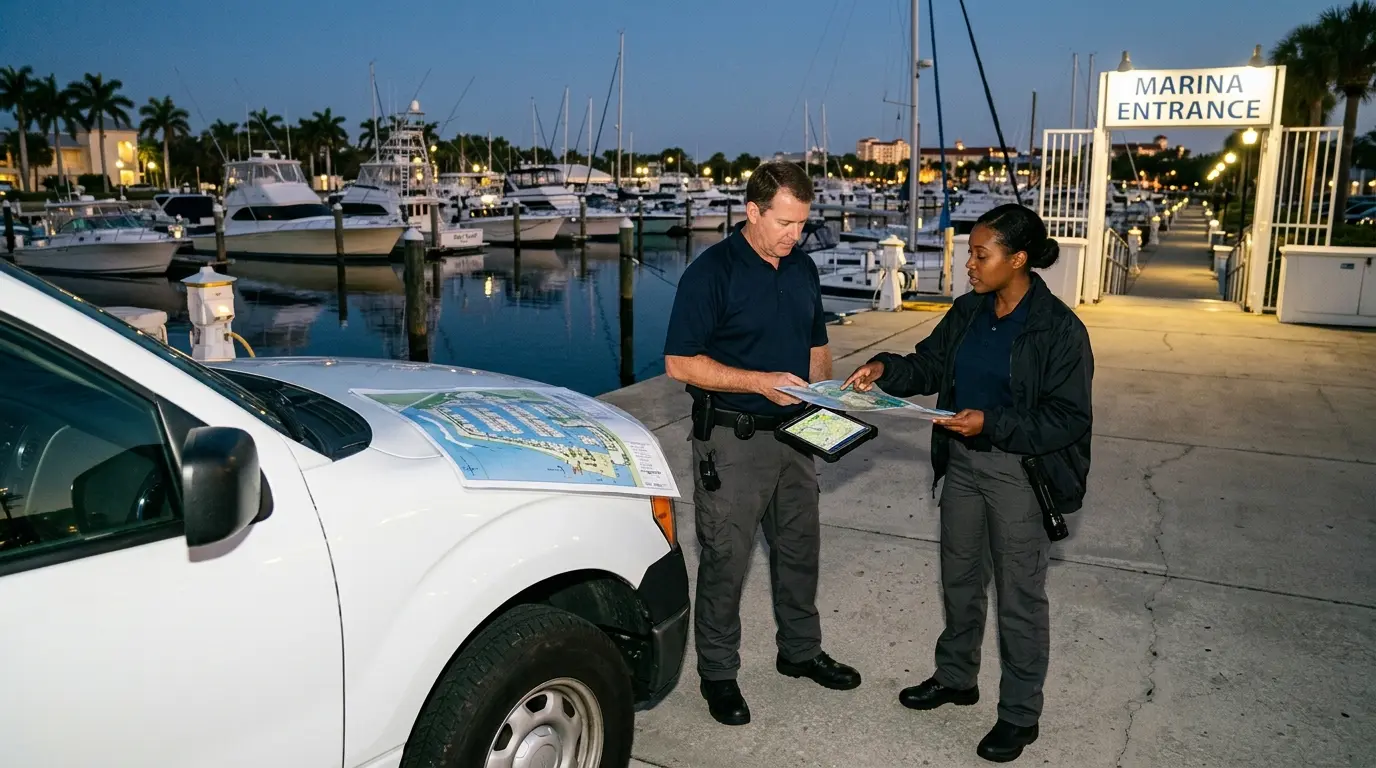
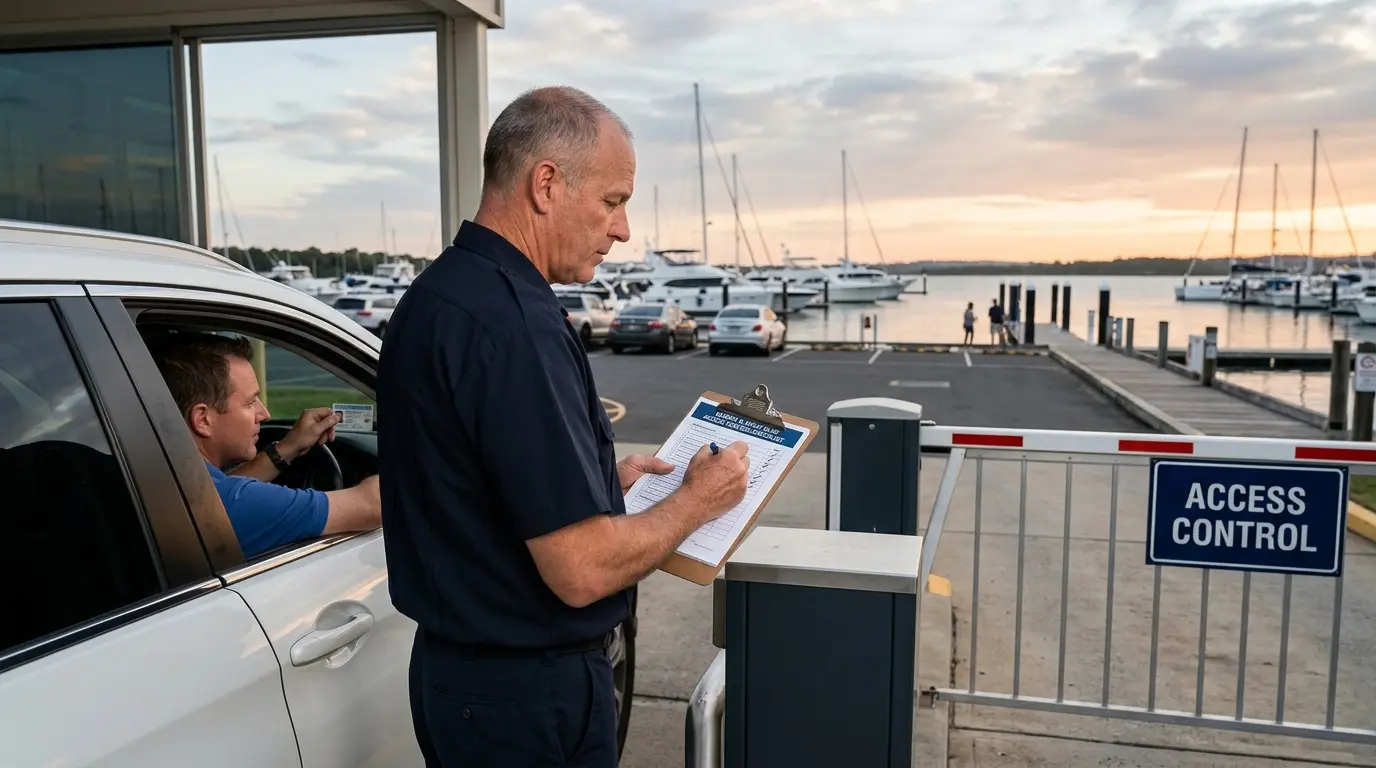
The first priority after any disaster or breach is establishing a hard perimeter. Guards position themselves at all ingress and egress points to control exactly who enters the property. Access is restricted to authorized emergency vendors, licensed inspectors, utility crews, and pre-approved personnel. That control protects the site from unauthorized entry and preserves the integrity of the scene for insurance documentation and law enforcement review.
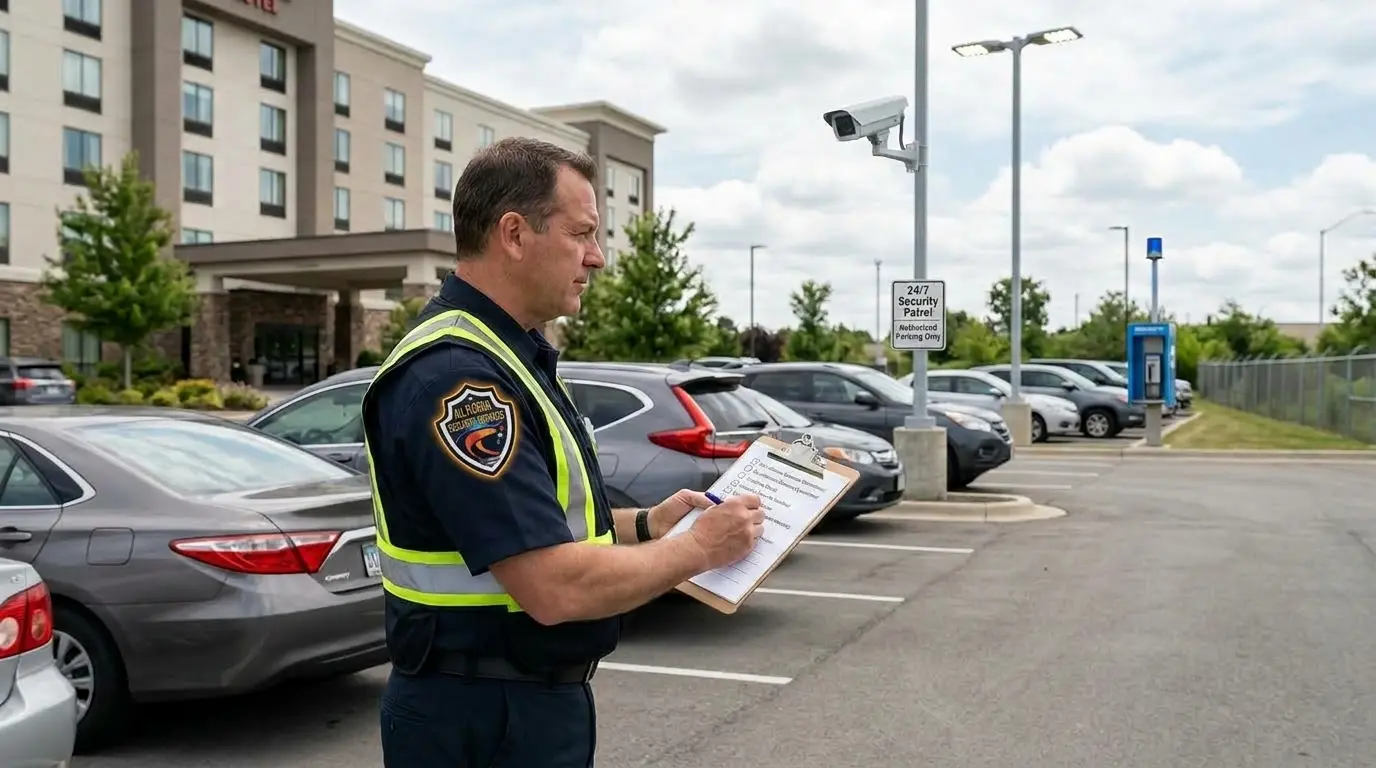
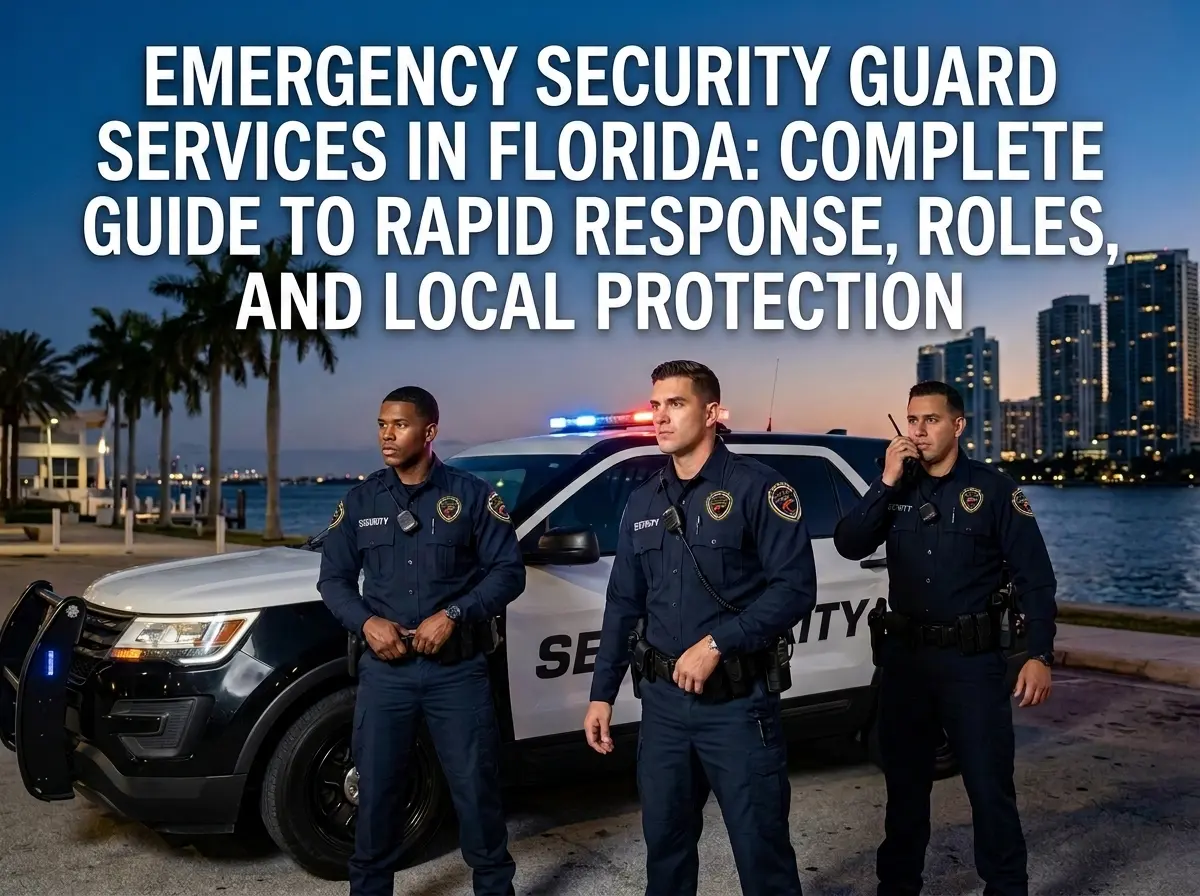
A structured guard presence changes the risk calculus for anyone considering taking advantage of an unsecured property. Mobile patrols — on foot, in marked vehicles, or via golf carts on larger sites — continuously sweep fence lines and vulnerable perimeter boundaries. In low-light post-storm conditions when grid power is down, this physical, visible presence is the strongest deterrent available against theft and vandalism.
2. Structured Evacuation and Crowd Management
Panic is the biggest threat during any emergency evacuation. Trained security guards are positioned to direct building occupants calmly and efficiently to designated assembly points. They clear blocked egress routes — furniture, debris, damaged fixtures — and identify individuals with mobility constraints who need direct assistance. Their presence turns a potentially chaotic situation into a controlled, methodical exit.
Crowd control under pressure requires specific interpersonal skills that go beyond physical presence. Emergency response guards are trained to communicate with authority and calm — delivering clear, simple directions that cut through confusion. That communication stops dangerous misinformation from spreading through a crowd and de-escalates tensions before they become physical confrontations. A calm guard is often the deciding factor between an orderly evacuation and a stampede.
3. Critical Medical Response
In the critical minutes before EMTs arrive on scene, a trained security guard may be the most important person on the property. Guards certified in CPR, First Aid, and AED usage can stabilize injured individuals and prevent preventable fatalities during that window. This isn’t peripheral during a mass emergency, every minute of competent interim care directly affects survival outcomes.
When emergency vehicles finally arrive, security personnel become the on-site coordinators. They clear pathways for ambulances and fire trucks, guide paramedics directly to casualties, and provide incident updates to incoming responders. That liaison function eliminates the confusion that costs critical time when multiple agencies are arriving simultaneously at a chaotic scene. Healthcare facilities face additional clinical and access-control risks, which are explained in our guide to emergency room security requirements in Florida.
4. Continuous Hazard Monitoring and Documentation
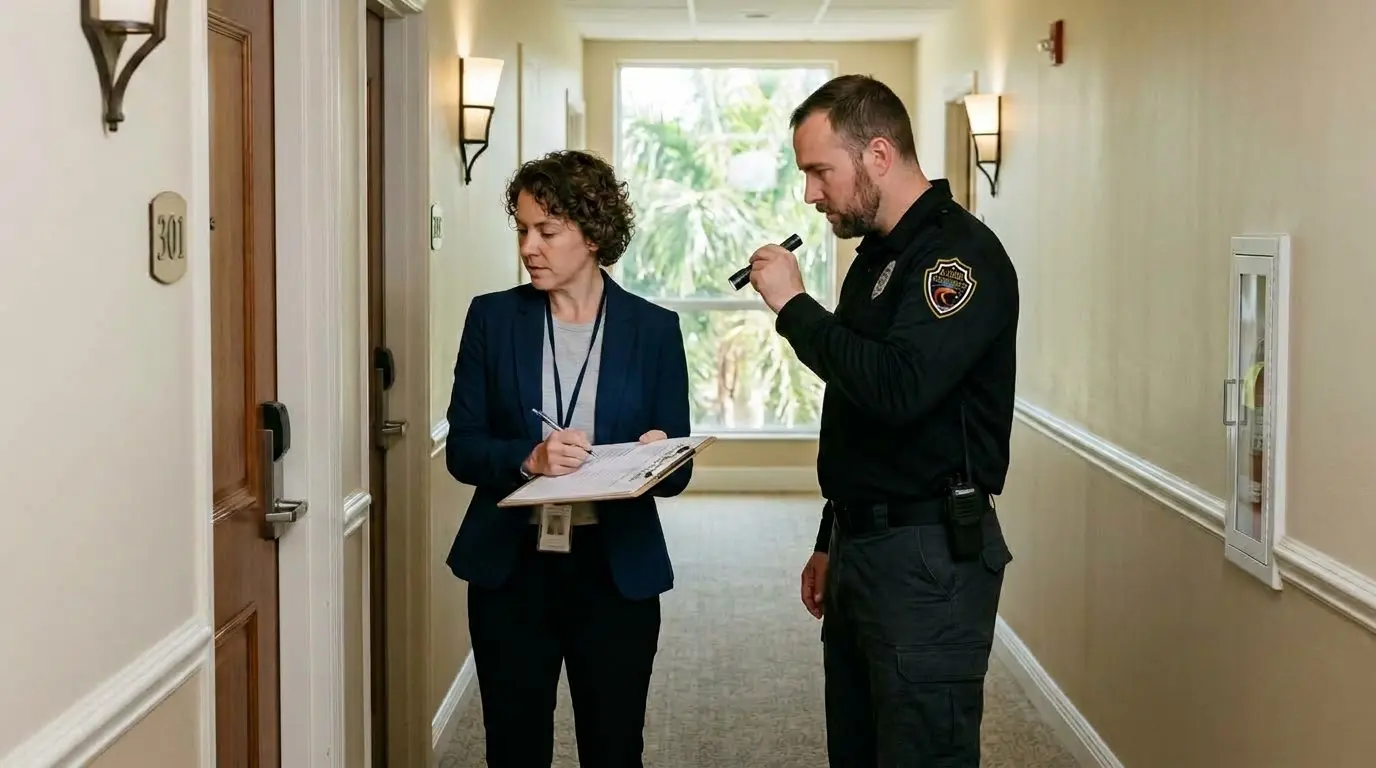
Security personnel on post-disaster duty are not static. They continuously walk the property checking for secondary hazards that emerge after the initial event. Gas leaks, live downed power lines, rising floodwaters inside lower floors, and structural shifting all represent threats that develop after the immediate emergency passes. Catching these hazards early prevents injuries and limits additional property damage during the recovery phase.
Every observation a security guard makes during an emergency should be documented in real time. Shift reports, photographs, time-stamped logs, and written incident accounts create a factual record of the property’s condition from the moment guards arrived. That documentation protects the business against liability claims, provides insurers with the evidence they need to process claims efficiently, and establishes a legal timeline if criminal activity is later investigated.
Deploying Specialized Hurricane and Disaster Recovery Security
Hurricanes are Florida’s defining emergency, and managing security across a storm requires a phased approach. The roles of emergency security guards shift significantly before, during, and after a major storm makes landfall.
The table below outlines specific responsibilities across each phase:
| Disaster Phase | Primary Guard Responsibilities | Core Value to Property Managers |
| Pre-Storm Preparation | Securing loose exterior assets, checking emergency exits, verifying backup power systems, and establishing communication protocols. | Minimizes property damage and prepares the site for rapid post-storm recovery. |
| During the Storm | Sheltering in place, monitoring indoor CCTV systems (where power permits), and logging new structural compromises. | Provides real-time tracking of interior breaches, flooding, or fire hazards as they happen. |
| Post-Storm Recovery | Assessing physical damage, establishing hard access control, preventing looting, and coordinating with utility restoration crews. | Prevents opportunistic theft and ensures the property is safe before employees or tenants return. |
Critical Safety Note: Private security officers are not search-and-rescue teams. During active Category 4 or 5 hurricane landfalls, officers must prioritize personal safety and shelter in place alongside residents. Active perimeter and asset protection resumes only after local authorities have declared outdoor conditions safe.
Selecting Local Emergency Security Services in Florida
Choosing the right emergency security provider in Florida matters for legal compliance and the response speed that comes from operating in the same region your business is in.
Florida-Specific Licensing and Regulatory Compliance
Any security agency you hire must be fully licensed under Chapter 493 of the Florida Statutes. Individual guards must hold active Class D licenses for unarmed security work or Class G licenses for armed security deployment. The Florida Department of Agriculture and Consumer Services (FDACS) manages this licensing system. Always verify credentials before signing a contract. Unlicensed security personnel expose your business to additional liability, not less.
Port St. Lucie Regional Risk and Logistics
Businesses along the Treasure Coast Port St. Lucie, Fort Pierce, and Stuart carry distinct coastal vulnerabilities. Saltwater flooding and barrier island access complications make local operational knowledge essential. Local security providers use marked, high-clearance vehicles capable of moving on flooded regional roads. They maintain active working relationships with the St. Lucie County Sheriff’s Office, which means faster coordination when law enforcement needs to take over a scene.
Working with a security provider who knows the Treasure Coast offers tactical advantages that out-of-area agencies simply cannot match:
- Treasure Coast Geographical Familiarity: Local officers know regional low-lying flood zones, coastal evacuation routes, and traffic bottlenecks that develop during county-wide emergencies.
- Rapid Asset Mobilization: Choosing an emergency security guard service in Port St. Lucie eliminates long-distance transit delays, putting rapid-response guards on your property within hours of an incident call.
- Established Public-Private Liaison: Local agencies maintain active communication with Treasure Coast emergency services, accelerating the transition when police or fire departments arrive on scene.
Protect Your Property Before the Next Emergency Hits
The businesses that recover fastest from emergencies are the ones that already have a response plan in place. They establish direct relationship with a licensed, local security provider they can call the moment a threat develops.
All Florida Security Services provides licensed emergency security guard services across Florida, with specialized rapid-deployment for the Treasure Coast and Port St. Lucie region. Whether you manage an HOA community or a construction site, our team is ready to respond to your call with armed and unarmed security officers. We also provide mobile patrol units and fire watch services tailored to the specific demands of your property.
Contact All Florida Security Services today to discuss your needs for emergency security guard services in Florida and get ahead of the next storm season before it gets ahead of you.
Frequently Asked Questions
How quickly can emergency security guards in Florida be deployed to a site?
Most professional agencies mobilize rapid-response guards within 2 to 4 hours of an emergency call, depending on incident severity and current regional road conditions.
What is the legal difference between armed and unarmed emergency security guard services?
Unarmed guards (Class D) handle fire watch, access control, and evacuation. Armed guards (Class G) are deployed for high-threat scenarios requiring a strong criminal deterrent during active crises.
Can an emergency security guard arrest someone caught trespassing or looting?
Security officers lack police arrest powers but can temporarily detain suspects using reasonable force under Florida law, holding them until law enforcement arrives and preserves the crime scene.